
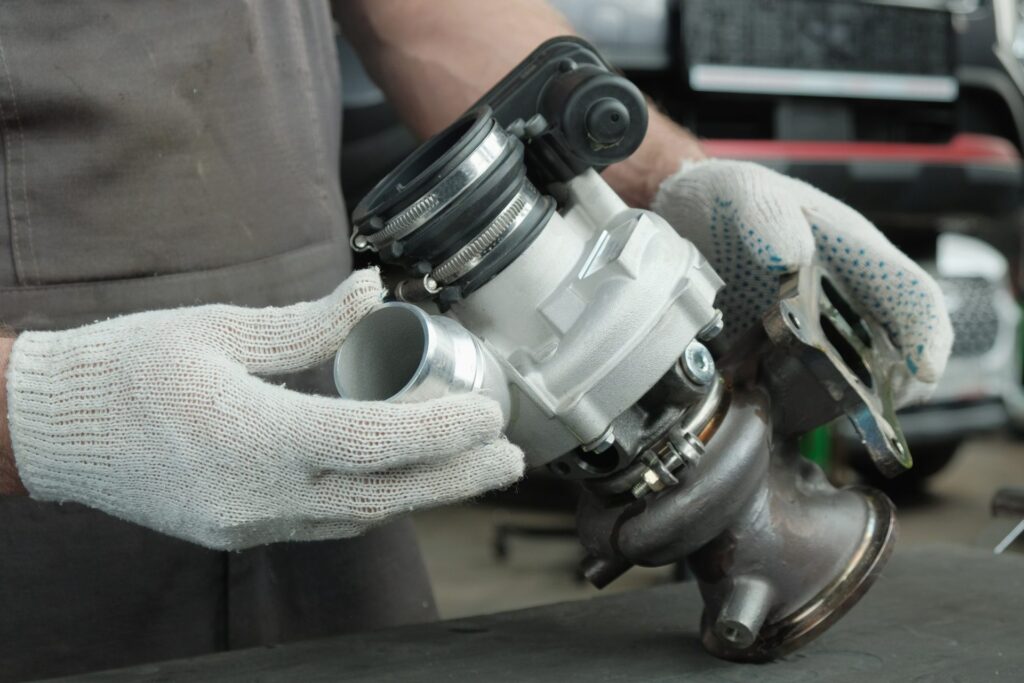
A closer look at the four reasons your GTI feels worse after a bigger turbo often reveals one hard truth. Bigger hardware changes the car’s behavior, so the old setup rarely keeps pace as boost, airflow, and heat rise together. Plenty of GTI owners expect the car to feel sharper right away, yet the first drive often brings a weird flat spot where the fun used to live. That letdown makes sense when the turbo upgrade outruns the rest of the combo.
The ECU Still Thinks Small
Your GTI can bolt on a bigger turbo in an afternoon, but the factory calibration still reads the world like the stock unit never left. Because the ECU follows tables and targets built around stock airflow and stock response, the car often exhibits awkward throttle behavior and a soft midrange pull after the swap. In real driving, that mismatch feels worse than the old setup because the car no longer responds the way your right foot expects it to.
Fuel and Timing Fall Out of Sync
More air sounds great until the fuel and timing strategy stop matching what the engine now sees under load. Once cylinder pressure and heat move in a new direction, the old tune can leave the car feeling dull, hesitant, or uneven through the rev range, rather than crisp and eager. That is also why tuning matters when upgrading a turbo; it’s basically like survival for a street-driven GTI. A larger turbo requires smarter calibration.
The Boost Curve Feels Messy on the Street
Dyno numbers sell the dream, though street drivability decides whether the build feels worth the money. When boost comes in too abruptly, the whole car starts feeling less polished than it did with the smaller turbo. That roughness shows up most in traffic and between shifts, where a GTI should feel playful and quick, not jumpy and out of breath. So even if peak power rises, the seat-of-the-pants experience can still get worse.
Your Supporting Mods Need a Real Plan
A bigger turbo usually pulls other parts into the story, and that is where many GTI builds lose their balance. Larger injectors, different intercooler behavior, fuel system limits, and changed exhaust flow all affect how the car responds, so one shiny turbo upgrade often exposes weak planning everywhere else. Then the owner blames the turbo when the real issue lies in the unfinished combination around it.
That is why a review of four reasons your GTI feels worse after a bigger turbo should push you toward a complete setup rather than a parts-only mindset. Once the boost control, tuning, and supporting hardware start working together, the car usually stops feeling like an expensive compromise. Then the upgrade finally drives the way you pictured it before the install!