
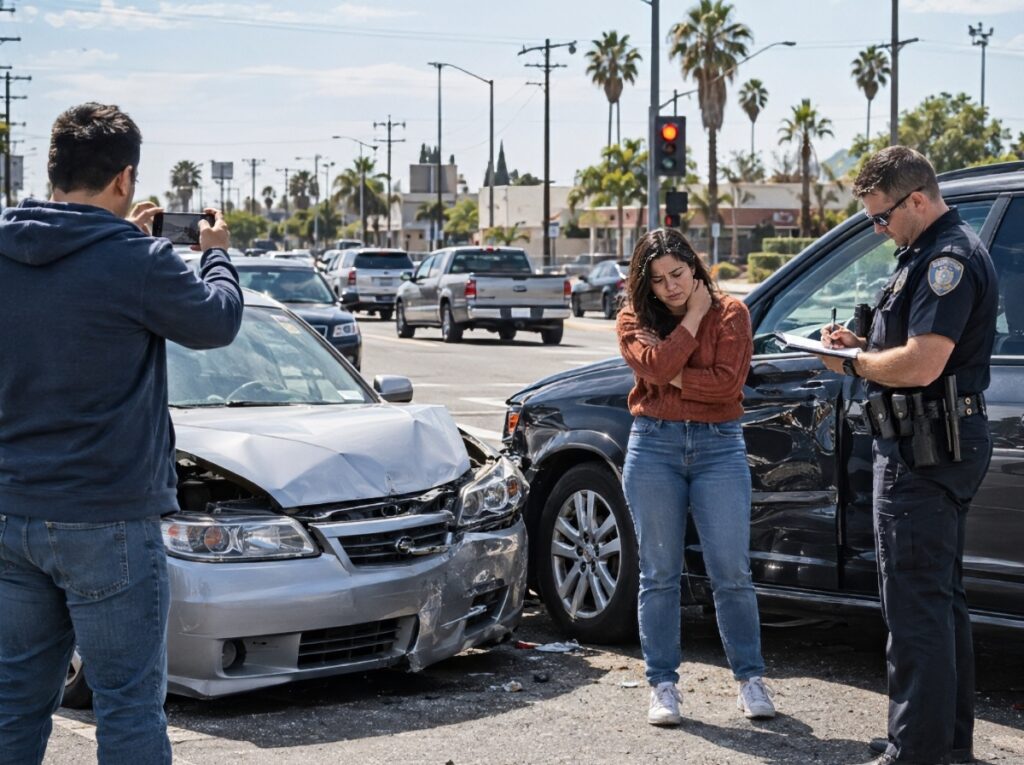
Fresno, California, is a major Central Valley community where residents regularly rely on cars for commuting, work, family responsibilities, and travel to surrounding communities. With so much daily activity on local streets and regional routes, a sudden collision can have consequences that extend far beyond vehicle damage or a single day’s disruption. The circumstances surrounding a collision can influence which parties may bear responsibility and what evidence becomes important when seeking compensation. For Fresno residents seeking to understand their options, Kuzyk Personal Injury & Car Accidents Lawyers can provide guidance on evaluating the circumstances and identifying a practical path forward after a crash.
Distracted Driving
Distraction remains a leading cause of preventable wrecks. Text messages, phone calls, meals, navigation systems, and loose objects can divert visual, manual, or mental attention. At 55 miles per hour, a vehicle travels about 80 feet in one second. That distance can determine whether a driver stops safely or strikes another person. Phone records, dashboard footage, and witness accounts may help establish inattention.
Excessive Speeding and Lost Control
Excessive speed shortens reaction time and increases collision energy. A motorist traveling too quickly for rain, fog, congestion, or a sharp curve can lose control below the posted limit. Investigators may examine skid marks, crush damage, electronic vehicle data, and roadway measurements. A citation can support negligence, although fault analysis also considers visibility, traffic movement, road design, and the conduct of every involved driver.
Alcohol, Drugs, and Fatigue
Alcohol and drug impairment can slow neurological responses, weaken judgment, and reduce coordination. Prescription medication may produce similar effects, particularly when combined with sedatives or other substances. Fatigue creates delayed reactions and brief sleep episodes, both of which can occur without warning. Chemical testing, officer observations, pharmacy records, and work schedules may clarify impairment. In limited cases, an alcohol provider may share responsibility for unlawful service.
Aggressive or Unsafe Maneuvers
Following too closely, changing lanes abruptly, turning illegally, and ignoring traffic signals create common points of impact. Risk rises near intersections, construction zones, and heavily traveled highways. Signal timing, nearby cameras, vehicle positions, and independent witnesses can reconstruct the sequence. California follows comparative negligence, meaning an injured person’s percentage of fault can reduce compensation without automatically barring recovery.
Defective Vehicles and Roads
Mechanical failure can cause a collision before a driver has time to respond. Defective brakes, worn tires, broken steering components, and airbag failures may implicate manufacturers, repair facilities, distributors, or sellers. Road conditions can also contribute through missing signs, inadequate lighting, damaged pavement, or poor drainage. Maintenance files, inspection reports, recall notices, and scene photographs can connect a defect with the resulting harm.
Steps to Take Immediately After Impact
Safety takes priority immediately after a crash. Injured occupants should obtain medical evaluation, even when discomfort seems minor. Concussions, internal bleeding, and soft-tissue damage may develop gradually. When conditions permit, drivers should exchange information, notify law enforcement, and photograph vehicles, roadway features, traffic signs, and visible injuries. A written account of symptoms, conversations, and events can preserve details that memory may later distort.
Building an Injury Claim
A negligence claim generally requires proof of duty, breach, causation, and measurable damages. Useful records include treatment notes, diagnostic images, wage statements, repair estimates, expert opinions, and eyewitness accounts. Gaps in care can prompt questions about symptom severity, making consistent follow-up important. California generally provides two years to file a negligence-based injury lawsuit, although government entities and other defendants may involve shorter deadlines.
Insurance and Settlement Choices
Insurance representatives may request recorded statements, broad medical authorizations, or quick settlements. Each request deserves careful review because an early offer may exclude future treatment, reduced earning capacity, or permanent restrictions. A demand package can organize invoices, diagnoses, employment evidence, and projected expenses. If negotiations reach an impasse, filing suit may create access to discovery, expert testimony, and court-ordered compensation.
Claims After a Death
A fatal crash can support a wrongful death action for eligible relatives, along with a separate survival claim for losses experienced before death. Potential damages may include funeral expenses, financial support, household services, and loss of companionship. Filing deadlines apply, and the proper claimant depends on California law and family circumstances. Relatives should preserve tax returns, payroll records, medical files, account statements, and relationship documents.
Car Crashes and the Role of Legal Guidance
Car accidents frequently involve distraction, excessive speed, impairment, unsafe maneuvers, mechanical defects, or dangerous roadway conditions. Available claim options depend on causation evidence, injury severity, insurance coverage, and filing deadlines. Prompt treatment, accurate records, and careful communication can protect a victim’s position. Families affected by a death may hold additional rights. A review with a qualified California lawyer can clarify potential recovery and preserve important legal choices.