
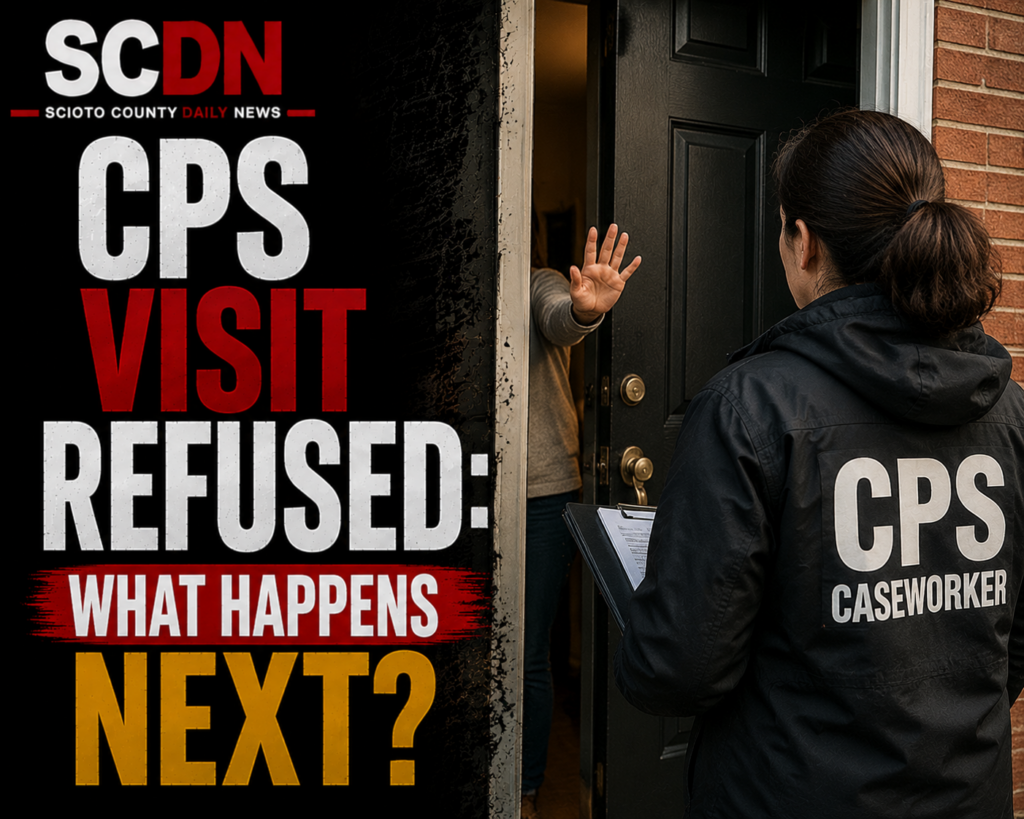
A visit by Children’s Protective Services ended abruptly when a woman refused to cooperate with workers attempting to conduct a welfare check.
According to the report, officers accompanied a CPS worker to a residence as part of an ongoing case.
However, the woman involved refused to take a requested drug test and would not allow CPS workers or officers to walk through the apartment.
The visit ended without the inspection being completed.
🚨 CAN CPS FORCE ITS WAY INSIDE?
Generally speaking, CPS workers cannot simply force their way into a home without a court order, warrant, or emergency circumstances.
Parents retain constitutional rights and can refuse entry in many situations.
However, refusing to cooperate can sometimes create other problems, especially if the parent has already agreed to certain conditions.
⚖️ THE SAFETY PLAN ISSUE
The key question is whether the requested drug test and home inspection were part of an existing safety plan.
A safety plan is often created when CPS identifies concerns but decides children can remain in the home if certain conditions are met.
Those conditions can include:
- Drug screening
- Home visits
- Parenting classes
- Substance abuse treatment
- Mental health treatment
- Supervised contact with children
- Allowing workers to verify living conditions
If a parent voluntarily agrees to those conditions and later refuses to comply, CPS may view that as a violation of the safety plan.
👀 WHAT CAN HAPPEN NEXT?
Refusing a visit or drug test does not automatically mean a child will be removed.
However, it can lead to:
- Additional CPS investigations
- Requests for court intervention
- Emergency hearings
- Changes to custody arrangements
- Increased monitoring
- Allegations that the parent is not complying with the agreed-upon plan
In some cases, judges may view repeated refusals as evidence that CPS cannot adequately assess whether children are safe.
🏠 WHY CPS WANTS TO SEE THE HOME
Home walk-throughs aren’t usually about housekeeping.
Workers are generally looking for things such as:
- Adequate food
- Running water and utilities
- Safe sleeping arrangements
- Obvious hazards
- Signs of drug activity
- Evidence children are being properly cared for
Likewise, drug tests are often requested when substance abuse concerns played a role in opening the case.
⚠️ REFUSING IS A RIGHT. IT MAY ALSO HAVE CONSEQUENCES.
One of the most misunderstood parts of CPS cases is that parents often have the legal right to refuse certain requests.
At the same time, CPS has the right to document that refusal and present it to a court if the agency believes children’s safety may be at risk.
In this case, officers documented the refusal and took information for a report.
What happens next will likely depend on the status of the underlying CPS case and whether the agency seeks further court involvement.