
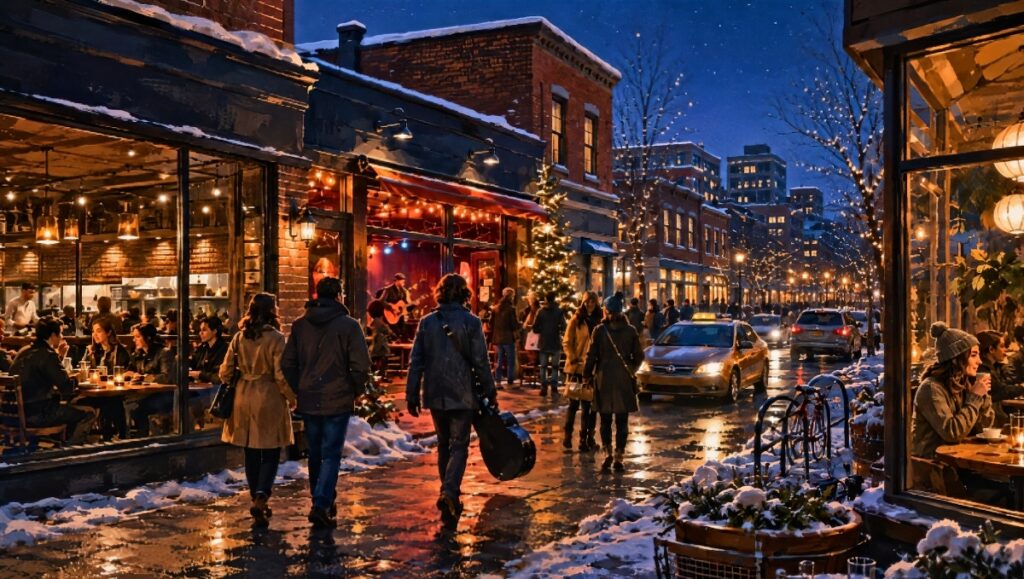
A quiet block can change fast when a guitar case appears near the door. By 6 p.m., tables fill earlier than usual. Nearby cafés sell more warm drinks, and taxis start circling the area. One small concert can shift the whole evening pattern.
This effect is easy to see in Canadian communities. During colder months, location and timing shape the whole night. Guests often choose dinner within a short walk of the venue. After the show, nearby cafés and rides become more appealing.
Why Live Music Nights Bring More Foot Traffic After 6 P.M.
Even a modest music night can move spending into slower hours. A 90-minute set at 7:30 p.m. usually starts much earlier. Guests often arrive between 5:45 p.m. and 6:30 p.m. That gives restaurants a clear pre-show window.
A 100-seat hall does not need to sell out. If 70 people attend, nearby businesses can still gain. Thirty dinners at $28 create $840 before the first song. Another 25 coffees at $5.50 add $137.50 nearby.
This pattern is useful on Thursdays and Sundays. Those nights can be weaker than Fridays or Saturdays. Music gives people a reason to leave home with a plan. As a result, food sales become easier to forecast.
Local posters also help nearby stores prepare. A bakery may bake 40 extra butter tarts for the show night. A diner may keep soup service open 45 minutes longer. These small choices work best when event dates are known early.
Where Online Casino Bonuses Fit Into Adult Entertainment Budgets
Adult leisure budgets can disappear faster than expected. A person may plan one night around music, dinner, transport, and online casinos. A live show makes the cost visible early. Tickets, food, rides, and tips can reach $80 before any extra drinks.
Casino bonuses need the same careful reading before payment. Canadian users should see eligible bonus offers before making any deposit. CasinosAnalyzer helps compare wagering rules, expiry dates, and withdrawal caps. That matters because the largest number rarely shows the real cost.
A useful review starts with these basic checks:
- Minimum deposit needed before the bonus applies.
- Wagering rules connected to bonus funds.
- Expiry time after claiming the bonus.
- Maximum withdrawal allowed from bonus play.
- Payment restrictions for Canadian users.
The same habit applies before a night out. People check start time, ticket fees, seating, refunds, and transport. Bonus terms deserve the same calm review. Clear limits make adult spending easier to manage.
How Restaurants and Cafés Turn Event Nights Into Higher Receipts
Restaurants gain the most when menus match the show schedule. A large menu can slow service during a short rush. A fixed $24 pre-show plate can move faster. Soup, pasta, chicken, or rice bowls work well in batches.
Cafés can focus on smaller sales with strong margins. Coffee, tea, cookies, cake slices, and sandwiches suit short visits. If 35 guests spend $9 each, that adds $315. For a small café that can change the night.
Useful event-night ideas include:
- Fixed pre-show dinner plate.
- Late coffee and dessert counter.
- Ticket-holder receipt discount.
- Quick snack box for intermission.
- Alcohol-free drink menu.
Guests usually want fast choices before the music starts. Simple pricing and quick ordering make that easier. Staff also benefit from fewer menu questions. Therefore, simple offers can lift sales without slowing service.
Local suppliers can benefit too. Extra bread, produce, cheese, and roasted coffee often come from nearby vendors. When shows repeat monthly, orders become easier to plan. That steadier demand can support better margins for several small businesses.
Staff Planning and Menu Timing
Staff planning should follow the event clock, not their usual habits. If doors open at 7 p.m., the rush may start at 5:45 p.m. If music ends at 10 p.m., cafés may need staff until 11 p.m. A normal weekday schedule may miss both peaks.
Music halls can share calendars with nearby businesses two weeks ahead. That gives kitchens time to order food. It also helps managers set shift times. Better planning reduces waits and protects repeat visits.
Clear signs also help. A note saying “pre-show menu until 7:10 p.m.” sets expectations. Guests know when to order and when to leave. Servers can turn tables without awkward reminders.
Payment speed is another detail worth planning. Contactless terminals can reduce lineups during the last 20 minutes before doors open. Pre-set bills also help groups leave on time. Those small steps can protect both service quality and sales.
Why Transit, Rideshare, and Parking Shape the Night Economy
A music night does not begin at the stage door. It begins when guests decide how they will arrive. Unclear parking can cut pre-show dinner plans short. Uncertain rides can send people home right after the encore.
A 100-person event can bring 40 to 70 extra vehicle trips. That estimate shifts with carpooling, bus routes, rideshare use, and weather. In colder months, guests often value nearby parking more highly. Clear pickup areas also keep exiting calmer after the show.
Travel information works best when it appears before the show night. Venues should group parking notes, transit options, taxi points, and accessible entrances clearly. Canadians can use winter driving guidance before heading out in rough weather. This helps when late shows meet snow, ice, or freezing rain.
Strong travel planning helps the surrounding economy. When people know the trip home, they feel less rushed. They may stay for a snack, dessert, or warm drink. That extra spending often happens within one or two nearby blocks.
Older guests may weigh distance more carefully. A two-block walk can feel difficult during ice or heavy rain. Good lighting and clear entrance notes can reduce that concern. As a result, more visitors can take part without feeling rushed.
How Local Music Builds Repeat Spending Across the Year
One strong night helps, but repeat programming matters more. Twelve monthly shows with 80 guests create 960 annual visits. That volume gives restaurants and cafés better planning data. It also helps performers build returning audiences.
Businesses can track receipts by event date. If pasta sells before folk nights, that dish can return. If tea sells after acoustic sets, cafés can extend that counter. These small records make future decisions sharper.
Seasonal planning can add another layer. A winter series may support soups, baked goods, and hot drinks. Summer events may shift demand toward patios, salads, and later reservations. This lets businesses adjust stock without guessing each week.
Repeat shows can also support better local promotion. A poster for one event gives short notice. A three-month music calendar gives people time to plan. It also helps nearby businesses prepare offers that match each date.
Online casinos may sit in the same adult budget as concerts. Still, limits should come before any paid choice. A music night is easier to price when tickets and transport are counted first. Casino bonuses also need review before money moves.
Local music supports more than the stage. It fills early tables, lengthens café hours, and raises transport demand. With clear timing and practical budgets, one show can support a whole evening economy. Over time, that rhythm can make a district feel active without large events.