
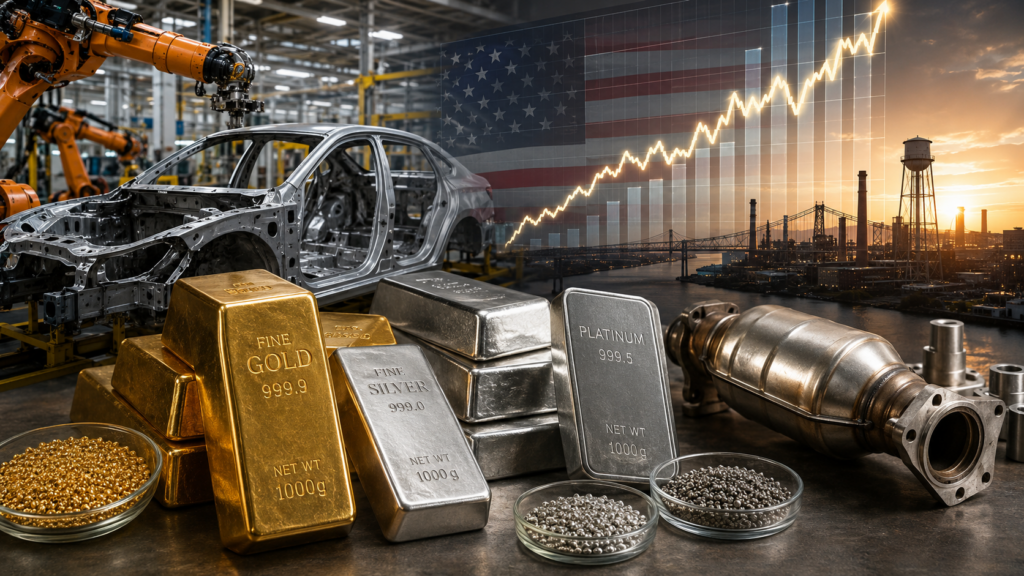
The United States economy has experienced significant shifts recently, creating a complex environment for consumers and corporations. From fluctuating inflation rates to unpredictable supply chains, the ripple effects of monetary policies are being felt across households and industrial sectors. In regions like the Midwest, and specifically in Ohio, manufacturing remains a vital cornerstone of the local economy. Here, macroeconomic changes have a direct impact on operational costs, regional employment, and corporate profitability. Amidst this volatility, precious metals have emerged as a focal point for private investors seeking financial stability and industrial giants attempting to secure essential raw materials. Understanding how these economic forces interact provides a clearer picture of the broader financial landscape.
Navigating Financial Pressures and Asset Protection
As inflation continues to influence everyday expenses, individuals and businesses are forced to adapt rapidly. Rising operational costs and shifting interest rates mean traditional financial planning often falls short. Local municipalities are taking proactive steps to counter these headwinds. For example, recent news highlighted how Portsmouth moves to fast-track development with a new economic group in an effort to revitalize the regional economy and attract commercial investment. Concurrently, many everyday Americans and local enterprises are rethinking their financial strategies. They are increasingly looking toward tangible assets to protect purchasing power and create a reliable hedge against unexpected economic downturns.
This noticeable shift in financial strategy is particularly evident in the commercial metals market. While gold and silver frequently capture the most public attention during times of financial stress, industrial metals play an equally vital, if sometimes overlooked, role in the global economy. Manufacturers, supply chain managers, and financial analysts alike monitor these markets meticulously. For instance, tracking the cost of platinum today allows major automakers and private investors to accurately forecast future supply chain expenses and gauge potential investment opportunities before market conditions shift any further.
The Automotive Industry and Industrial Metal Demand
The intersection of high finance and heavy manufacturing is nowhere more visible than within the US automotive sector. The Midwestern states have long been recognized as the central hub for American vehicle production, and the raw materials required for this massive industry often dictate global commodity prices. Precious metals are not merely safe-haven financial assets stored away in secure vaults. They are critical, irreplaceable components in modern engineering, emissions control, and environmental compliance.
This industrial necessity provides a solid floor for market demand, regardless of broader consumer trends. Data published by the U.S. Geological Survey on platinum-group metals statistics and information shows that the automotive industry remains the principal consumer of these elements, relying heavily on them as oxidation catalysts in catalytic converters to treat automobile exhaust emissions. As federal environmental regulations become stricter each year, the requirement for these specific materials only increases. This naturally puts further pressure on global supply chains and directly influences the baseline cost of manufacturing throughout the United States.
Key Drivers of the Precious Metals Market
Several overlapping macroeconomic factors determine exactly how precious metal prices react to US economic trends. Both local retail investors and large-scale commercial manufacturers must keep a close eye on these variables to navigate the current financial climate successfully and avoid unexpected losses.
Here are the primary forces currently shaping this complex market:
- Inflation and Monetary Policy: When central banks adjust interest rates to combat rising inflation, the traditional appeal of non-yielding physical assets often changes. Higher, sustained inflation generally drives capital into physical metals as a wealth preservation measure.
- Supply Chain Bottlenecks: Geopolitical tensions and logistical delays can severely restrict the steady flow of raw materials. When automotive factories cannot source enough metals for assembly lines, the resulting scarcity rapidly drives the market value upward.
- The Transition to Green Technology: The national push for cleaner energy requires massive amounts of industrial metals. From standard catalytic converters to advanced fuel cells, manufacturing demand remains robust.
- Shifts in Consumer Confidence: When borrowing becomes more expensive and consumer confidence wavers, there is a natural pivot toward asset classes that historically withstand severe economic downturns.
The relationship between US manufacturing output and the precious metals market is deeply interconnected. While inflation prompts everyday citizens to seek financial shelter, industrial powerhouses require these exact same materials to keep their assembly lines moving. As the American economy continues to evolve, the reliance on tangible, multi-purpose assets will remain a defining feature of personal wealth management and large-scale industrial production for years to come.