
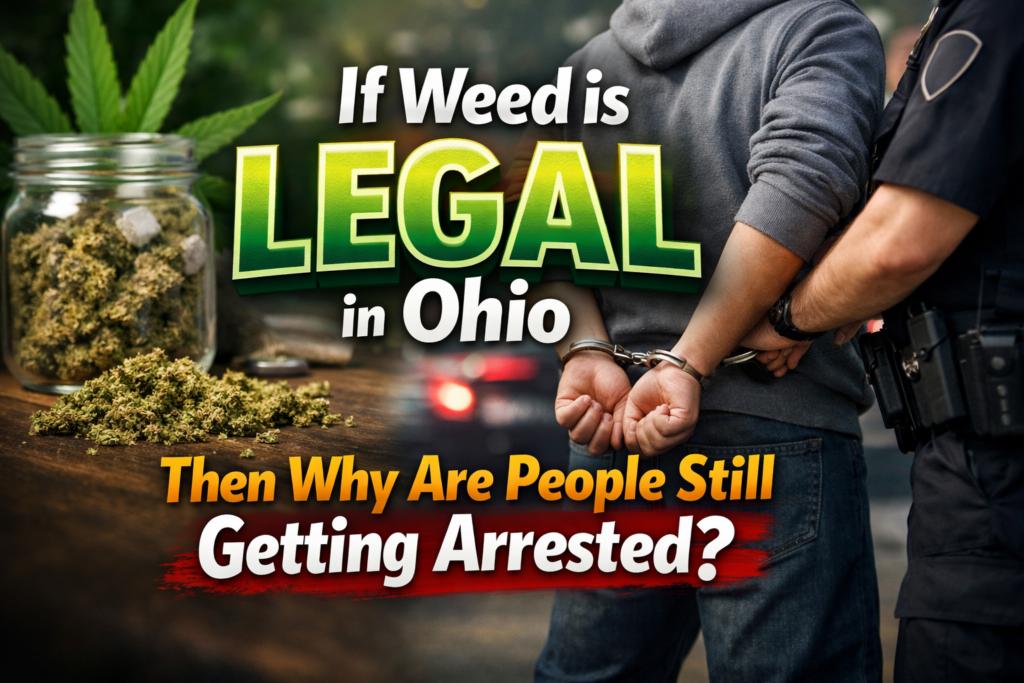
When Ohio voters approved recreational marijuana, a lot of people heard one word: legal. To many, that meant the days of marijuana arrests were over.
But that’s not what the law actually says.
Yes, marijuana is legal in Ohio for adults 21 and older. But it is legal within very specific limits — and outside those limits, arrests are still very much happening.
Under Ohio law, adults 21 and over can legally possess up to 2.5 ounces of cannabis and up to 15 grams of marijuana extract. They can also grow up to six plants per person, with a maximum of 12 per household. Go over those limits, however, and you can face criminal charges.
One of the biggest misunderstandings involves selling marijuana. Legal possession does not mean legal distribution. Only state-licensed dispensaries are allowed to sell cannabis in Ohio. Bringing in bulk amounts from another state — even from a state where marijuana is also legal — and selling it here remains illegal. In fact, trafficking in bulk quantities is still treated as a felony offense. Crossing state lines with marijuana is also illegal under federal law.
There is a clear legal difference between possession and trafficking. Possession within limits for personal use is permitted. Selling, offering to sell, or possessing large quantities with the intent to distribute is not.
Where marijuana is possessed and used also matters. Ohio law allows adults to use cannabis on private property, but public use is prohibited. That means no smoking in parks, sidewalks, vehicles, or other public spaces. Local governments can also impose additional restrictions.
The vehicle issue is where many people run into trouble. Marijuana cannot be consumed while driving or riding in a motor vehicle. Similar to alcohol laws, cannabis must not be readily accessible to the driver. If you are pulled over and there is a half-smoked blunt sitting in the ashtray, that could be interpreted as evidence of recent use or illegal consumption inside a vehicle. It may also raise suspicion of impaired driving.
Driving under the influence of marijuana remains illegal. Legalization does not protect someone from an OVI charge if an officer determines impairment.
Arrests today are typically tied to one of several factors: exceeding legal possession limits, unlicensed sales, transporting bulk quantities, public use, possession by someone under 21, or driving under the influence. In other words, legalization created boundaries — and crossing them still carries consequences.
Ohio’s marijuana law functions more like alcohol regulation than open freedom. There are age limits, quantity caps, location restrictions, and strict licensing requirements. The law changed, but it did not eliminate enforcement.
So, if weed is legal in Ohio, why are people still getting arrested? Because legal does not mean unlimited. Understanding the difference between personal possession and illegal sale, private use and public use, and safe storage versus open access in a vehicle can make all the difference.