
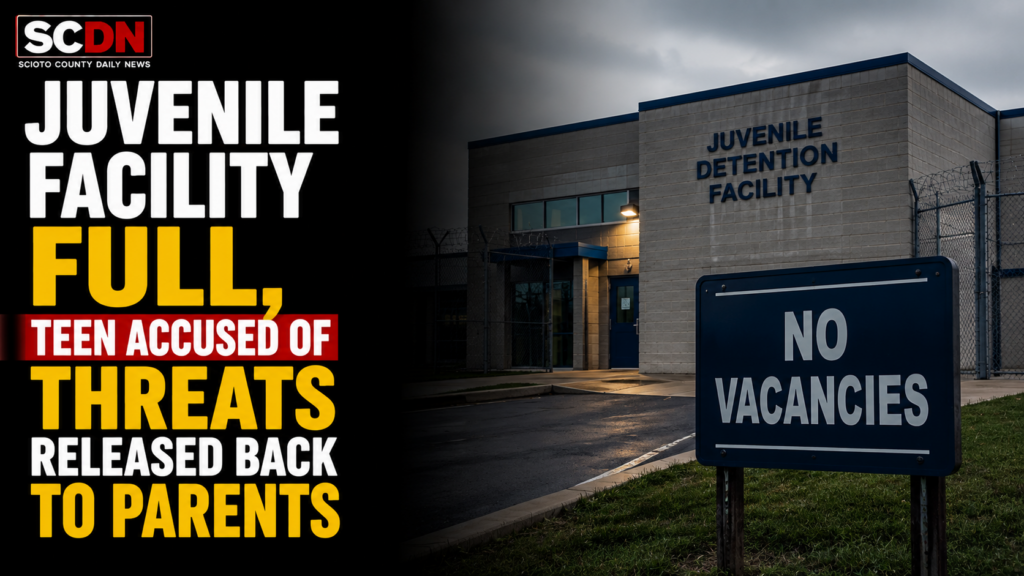
SCIOTO COUNTY, OH — A disturbing incident involving an allegedly out-of-control teen ended with the juvenile being released back to his parents — not because authorities wanted to let him go, but because the regional juvenile detention system had no room left.
The situation began when a caller contacted 911 reporting a 16-year-old boy was on his property allegedly making threats toward both the caller and the caller’s grandson.
According to dispatch notes, the teen was also reportedly under a protection order involving the family.
🌉 Teen Found Hiding Beneath Bridge
After officers responded and spoke with both the caller and the teen’s parents, police launched a search for the juvenile.
Authorities eventually located him beneath the Route 522 bridge near mile marker 5.
Officers detained the teen, advised him of his rights, and contacted juvenile court officials for guidance on what to do next.
🚫 No Room at Juvenile Facility
That’s when officers hit a major obstacle.
According to the report, juvenile court advised police to release the teen back to his parents because the South Central Ohio Regional Juvenile Detention Center in Chillicothe was full.
Scioto County does not operate its own juvenile detention center, meaning juveniles typically must be transported to facilities in:
- Ross County
- Or Lawrence County
When those facilities reach capacity, officers are often left with few options.
Police ultimately released the teen back to his parents and took information for a report.
⚠️ Growing Strain on Juvenile Systems
The case highlights a growing issue facing rural law enforcement and juvenile courts across Ohio:
There are often more troubled juveniles needing intervention than there are available detention beds.
That can leave authorities balancing:
- Public safety concerns
- Juvenile rights
- Court orders
- Mental health issues
- And limited detention space
❗ A Frustrating Reality for Victims and Police
For families reporting threats or ongoing problems, hearing that a juvenile must be released because a facility is full can be deeply frustrating.
But officers do not control detention capacity.
In many cases, if a juvenile facility refuses intake due to overcrowding, police and juvenile court officials are forced to find alternative placements — often sending teens back home under parental supervision.
In this case, what began as a threatening-person call ended with officers locating the teen under a bridge…
only to discover there was nowhere to put him.