
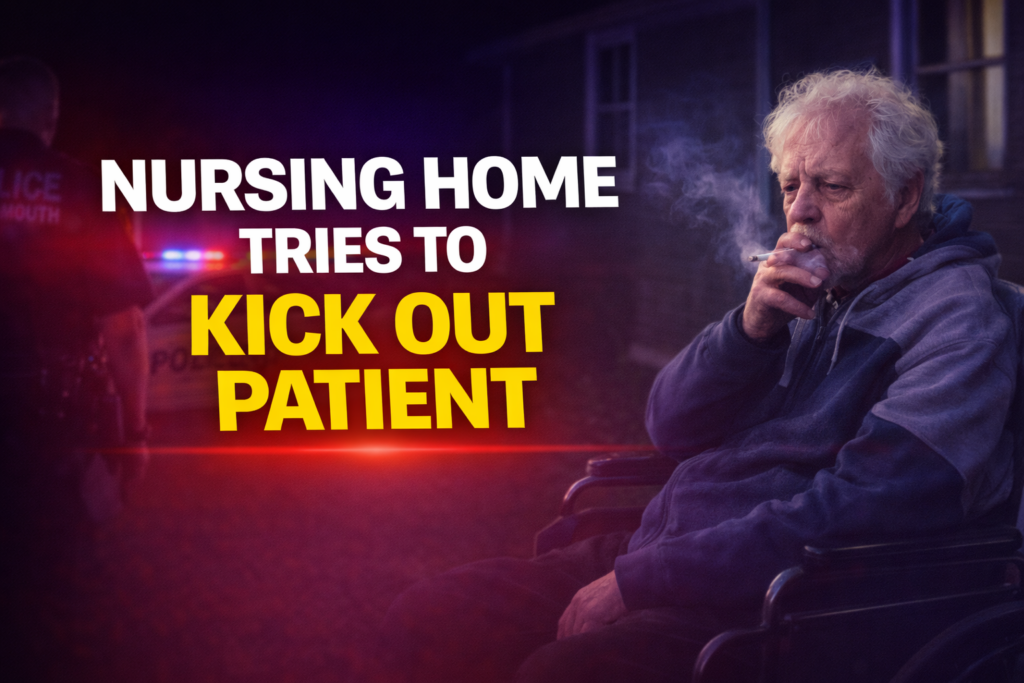
Things got heated at a local nursing home when staff called police, saying a resident was making threats and they wanted him out.
Workers told officers the man had been threatening to damage vehicles and break windows, and they were trying to discharge him because of his behavior.
When police arrived, they found the man outside, sitting in his wheelchair and smoking.
But what staff wanted to do—and what they’re allowed to do—aren’t always the same.
Officers quickly learned the facility couldn’t just make him leave on the spot.
Police contacted the Area Agency on Aging, and after speaking with an ombudsman, both sides were advised that the resident cannot be forced out without proper notice and a safe transfer plan in place.
In other words—no one was getting kicked out that night.
The situation was determined not to be a criminal matter, and a follow-up meeting was scheduled for 1 p.m. to work things out.
💡 SO… WHAT’S AN OMBUDSMAN?
Not a word you hear every day—but in situations like this, they matter.
An ombudsman is basically:
👉 Someone who stands up for people living in places like nursing homes
👉 A problem-solver when there’s a dispute between a resident and staff
👉 A person who makes sure the rules are being followed
Think of them as a neutral go-between.
They don’t work for the nursing home, and they’re not there to punish anyone. Their job is to make sure:
- Residents are treated fairly
- Facilities follow the law
- Problems get worked out before things spiral
Because even if someone is being difficult, there’s still a process that has to be followed.