
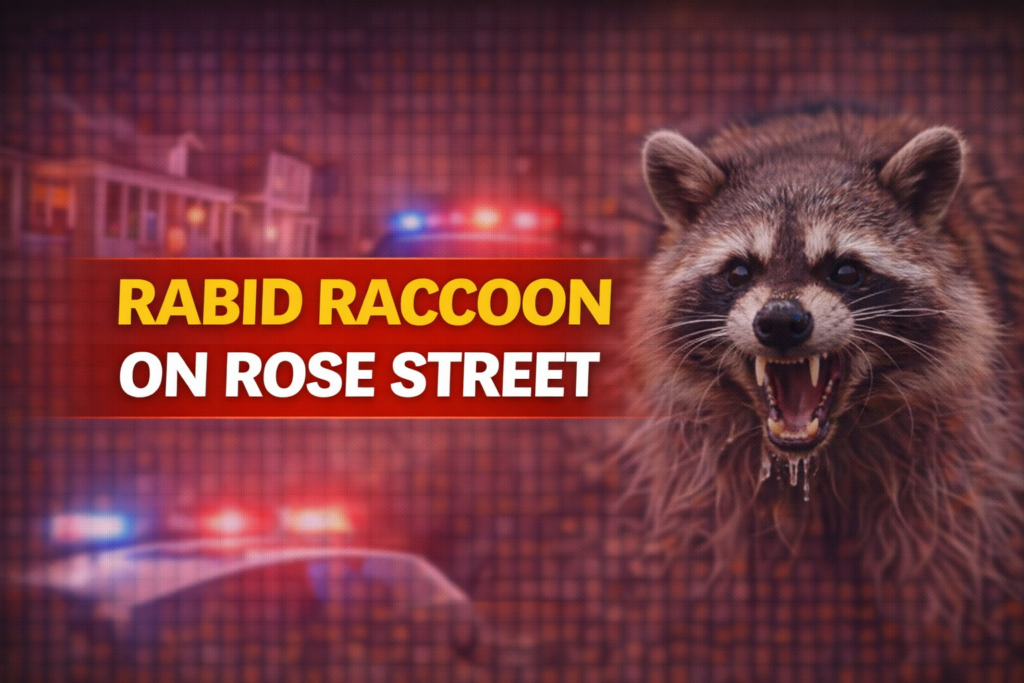
A Rose Street resident called 911 around 7:30 a.m. reporting a raccoon on her back porch that she believed could be rabid.
Dispatch forwarded the call to Animal Control to handle the situation.
While cases like this can sound alarming, experts say it’s important to understand what rabies actually looks like—and how common it is.
🦝 What Rabies Can Look Like
Rabies affects the brain and nervous system, and infected animals often show unusual behavior. Signs can include:
- Aggression or unusually bold behavior (approaching people)
- Disorientation, stumbling, or walking in circles
- Excessive drooling or foaming at the mouth
- Strange vocalizations
- Being active during unusual hours (like daytime for raccoons)
That said—not every “weird” animal is rabid.
📊 How Common Is Rabies in Raccoons?
Rabies does exist in raccoon populations, especially in parts of Ohio and surrounding states—but the overall percentage of raccoons infected is still relatively low.
Many animals reported as “rabid” turn out to be:
- Injured
- Sick from something else
- Or simply acting defensive when cornered
⚠️ What You Should Do
If you think an animal may be rabid:
- Do NOT approach it
- Keep pets and children away
- Call local law enforcement or Animal Control
- Avoid trying to trap or handle the animal yourself
If there’s been any contact or bite, seek medical attention immediately. Rabies is rare—but it is almost always fatal once symptoms appear.