
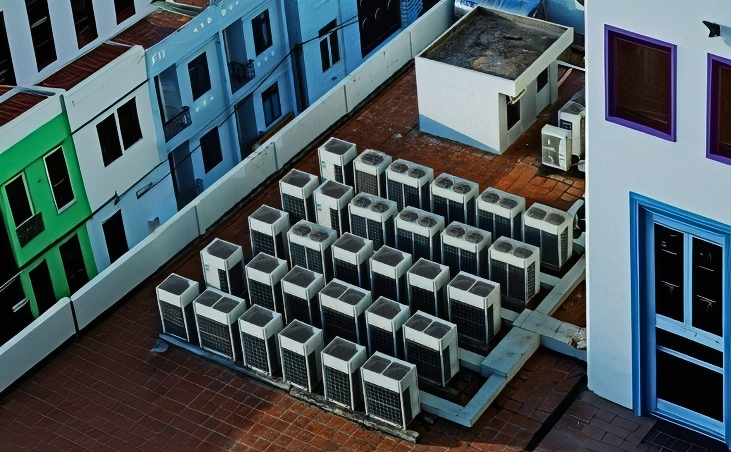
Commercial buildings rarely develop expensive problems overnight. More often, small issues accumulate quietly: an aging rooftop unit works harder every month, a minor roof leak spreads behind a wall, lighting wastes electricity, or neglected seals allow conditioned air to escape. For property owners and facility managers, effective maintenance is therefore less about reacting to breakdowns and more about controlling risk. A planned combination of inspections, preventive servicing, strategic upgrades, and careful recordkeeping can improve comfort, protect valuable equipment, reduce disruptions, and keep operating expenses under control while helping the building remain attractive to employees, tenants, customers, and visitors.
Know When HVAC Maintenance Should Become an Upgrade
Heating and cooling equipment represents one of the most important systems in many commercial properties. Regular servicing can keep existing equipment operating reliably, but maintenance eventually reaches a point where repeatedly repairing an inefficient or undersized system stops making financial sense.
When older equipment struggles to maintain temperatures, requires increasingly frequent repairs, or no longer suits a building’s occupancy patterns, commercial HVAC installation may become the more practical long-term solution.
Sizing deserves particular attention during an upgrade. Building area alone does not determine HVAC requirements; ceiling height, insulation, windows, occupancy, and heat-producing equipment can influence demand.
Create a Preventive Maintenance Calendar
Commercial maintenance becomes much easier when responsibilities are scheduled instead of relying on someone noticing a problem.
Build a calendar covering HVAC servicing, roofing inspections, plumbing checks, electrical systems, fire-safety equipment, elevators where applicable, exterior maintenance, and other important building components. Manufacturer recommendations and applicable regulations should guide servicing intervals for specialized equipment.
Keep records of inspections, repairs, replacements, and recurring issues. If the same air-conditioning component fails repeatedly or a particular section of roofing requires constant attention, maintenance records can reveal patterns that individual work orders might hide.
A calendar also helps distribute expenses throughout the year.
Instead of suddenly discovering that several major systems need attention simultaneously, managers can anticipate upcoming work and incorporate it into operating and capital budgets.
Preventive maintenance will not eliminate every surprise, but it makes expensive ones considerably less frequent.
Stop Water Problems Before They Spread
Water has an impressive ability to turn a minor building defect into a multi-department problem.
A leaking pipe can damage ceilings, flooring, electrical components, inventory, and office equipment. Roof leaks may remain hidden long enough to affect insulation and interior finishes before visible staining appears.
Inspect roofing, flashing, drains, gutters, plumbing fixtures, mechanical rooms, and other moisture-prone locations routinely. Staff should also have a straightforward process for reporting stains, damp odors, dripping fixtures, or unexplained increases in water consumption.
Drainage around the exterior deserves equal attention. Rainwater should move away from the structure rather than collect near entrances or foundations.
When a leak appears, address the source before repairing cosmetic damage. Repainting a stained ceiling while water continues entering above it merely gives the leak a nicer canvas for its next performance.
Upgrade Lighting With Efficiency in Mind
Lighting influences energy consumption, employee comfort, safety, and how customers perceive a commercial space.
Older lighting systems may consume unnecessary electricity while providing uneven illumination. Upgrading equipment can create an opportunity to improve both efficiency and usability.
Consider how individual areas are actually occupied. Storage rooms, corridors, restrooms, conference rooms, and other intermittently used spaces may benefit from occupancy controls rather than remaining fully illuminated all day.
Daylight can also play a role where the building design permits it. Controls that respond appropriately to natural light may reduce unnecessary artificial lighting.
Do not focus exclusively on electricity savings, however. Color quality, glare, brightness, maintenance requirements, and the tasks performed in each area should influence specifications.
An efficient lighting system that makes employees uncomfortable is not an especially intelligent upgrade. Performance and efficiency need to work together.
Protect the Building Envelope
Walls, windows, doors, roofing, and insulation form the barrier between conditioned indoor spaces and outdoor weather.
Small failures in that envelope can create surprisingly large maintenance consequences.
Inspect exterior sealants, weatherstripping, door sweeps, window assemblies, penetrations, and visible wall damage. Deteriorated seals can allow water infiltration and uncontrolled air leakage, placing additional demand on heating and cooling systems.
Doors that no longer close properly deserve attention as well, particularly at frequently used entrances.
Roof inspections are especially valuable because roof damage can remain unnoticed from ground level. Look for deterioration after severe weather and keep roof drainage paths unobstructed.
Envelope improvements do not always produce the visual excitement of a renovated lobby, but they protect many other investments inside the property.
Sometimes the smartest building upgrade is simply preventing outdoor conditions from becoming indoor problems.
Pay Attention to Indoor Air Quality
Comfort involves more than the number displayed on a thermostat.
Ventilation, filtration, humidity, contaminants, and airflow can all influence how occupants experience an indoor environment. Poorly maintained equipment or obstructed ventilation can undermine otherwise effective climate control.
Replace HVAC filters at appropriate intervals and inspect ventilation components as part of routine mechanical maintenance. Changes in occupancy or building use may also justify reassessing how spaces are ventilated.
Facility teams should also respond to persistent odors, excessive humidity, condensation, or repeated occupant complaints rather than dismissing them as minor annoyances.
The objective should be an indoor environment that supports the actual activities occurring within the building while allowing mechanical systems to operate as intended.
Modernize Controls and Building Technology
Equipment cannot operate efficiently if controls constantly tell it to condition empty rooms.
Modern building controls can help align heating, cooling, and lighting operation with occupancy and scheduling. Even relatively straightforward programmable controls can reduce unnecessary operation outside business hours.
More sophisticated systems can provide managers with centralized information about temperatures, schedules, equipment status, and energy use. Smart controls are one way commercial HVAC operation can respond to occupancy, outdoor conditions, and comfort requirements.
Technology should still solve a clearly defined problem. Buying a complicated control platform simply because it looks impressive on a dashboard can create another system employees have to understand and maintain.
Start by identifying wasted energy, operational blind spots, or recurring comfort complaints. Then choose technology that addresses those specific problems.
Smart buildings should reduce work, not manufacture additional chores.
Prioritize Upgrades by Risk and Return
Most commercial properties have more potential projects than available budget.
The solution is prioritization.
Begin with safety, regulatory requirements, water intrusion, and systems whose failure could interrupt operations. A failing HVAC system serving a critical workspace deserves more immediate attention than a purely cosmetic improvement.
Next, consider projects that reduce recurring operating or maintenance costs. Efficient equipment, better controls, improved sealing, and reliable lighting can provide benefits repeatedly rather than producing only a one-time visual improvement.
Finally, evaluate upgrades affecting tenant satisfaction, customer experience, accessibility, and the property’s competitive position.
Commercial building maintenance works best when viewed as an investment strategy rather than an endless list of repairs. Every inspection provides information, and every replacement creates an opportunity to improve performance instead of simply restoring the status quo.
A well-maintained building is safer, more predictable, and easier to budget for. Combine preventive care with carefully timed upgrades, and maintenance stops being purely reactive. It becomes a practical way to protect the property, support its occupants, and keep the building performing effectively for years to come.