
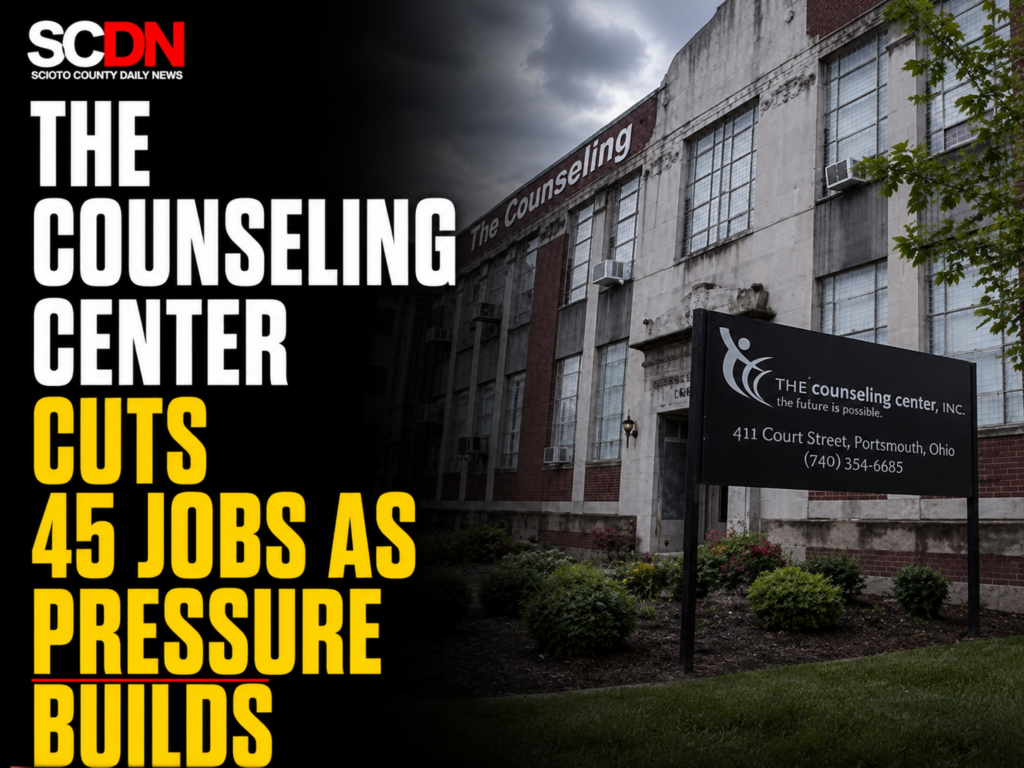
The Counseling Center has laid off 45 employees as the organization faces falling client numbers, insurance problems, a major local rent increase, and new state scrutiny of recovery housing.
In a statement issued on behalf of the TCC Executive Team and TCC Committee Board of Directors, the organization said it implemented a “reduction in force” this week.
In plain language, that means layoffs.
TCC said the decision was caused by “continued census declines” and “ongoing challenges with insurance processes.”
Those phrases are vague, but they matter.
A “census decline” generally means fewer people are in treatment beds, programs, or services than expected. For a treatment provider, fewer clients can mean less revenue coming in.
“Insurance challenges” can mean a range of problems, including denied claims, delayed payments, lower reimbursements, authorization issues, or trouble getting insurers to approve ongoing treatment.
TCC did not provide more specific details in the statement about how much its census has dropped, which programs were affected, what insurance problems it is facing, or whether the layoffs are tied to any specific facility.
The organization said it reviewed other options before moving forward with layoffs, but said none were enough to solve the operational and financial challenges it faces.
The cuts affected 45 employees across several areas of the organization.
TCC said severance benefits were offered to those impacted.
“TCC leadership, the Executive Board, and legal counsel continue to actively evaluate organizational costs and operations to help ensure the long-term sustainability of TCC while maintaining the high-quality care on which our clients and patients depend,” the statement said.
The organization said it does not expect additional layoffs in the immediate future, but warned that insurance industry changes and census trends remain difficult to predict.
Local Rent Increase Adds Pressure
The layoffs come as TCC is also facing a major rent increase from Scioto County Commissioners.
Commissioners recently approved a new lease for the Hughes Center in Franklin Furnace that will take TCC from paying $1 a year to $5,000 a month.
That money will go to Green Township Trustees, with $3,000 per month directed to EMS and $2,000 per month directed to the fire department.
The new lease turns a symbolic $1-a-year arrangement into a $60,000-a-year payment.
Commissioner Merit Smith said the change was needed because Green Township fire and EMS crews have made frequent runs to the facility while receiving no property tax support from the publicly owned site.
Smith said the county originally leased the property to TCC for $1 a year because officials believed there was a serious need for opioid treatment services. But township emergency services later raised concerns that they were responding repeatedly without tax revenue from the property to help cover the cost.
State Crackdown on Recovery Housing
The layoffs also come as Ohio is tightening oversight of recovery housing after rapid growth in the industry, especially in Southern Ohio.
Governor Mike DeWine recently signed an executive order giving the Ohio Department of Behavioral Health authority to create a statewide certification program for recovery housing operators.
State officials said Ohio went from 356 recovery houses in 2022 to more than 1,700 today. They also specifically cited concerns about uncertified recovery homes and poor living conditions in Southern Ohio.
Scioto County officials have repeatedly said the county is carrying more than its share of the recovery housing burden. Local leaders previously said Scioto County had more than 110 recovery houses, roughly the same number as Franklin County, despite Franklin County having a much larger population.
The state’s new rules are aimed at certification, complaints, investigations, enforcement, and possible referrals for fraud, waste, and abuse.
TCC’s statement did not directly connect the layoffs to the county rent increase or the state’s recovery housing crackdown.
Instead, the organization pointed to lower census numbers and insurance issues.
Still, the cuts land in the middle of a much larger shift for addiction treatment and recovery housing in Southern Ohio.
For years, Scioto County has wrestled with how to support legitimate recovery while also dealing with the strain on neighborhoods, law enforcement, EMS, courts, housing, and local services.
Now one of the area’s largest treatment providers says it is cutting staff to remain financially stable.
“TCC remains deeply committed to its clients, patients, employees, families, and the broader community,” the organization said. “We will continue working diligently to maintain stability, navigate these challenges responsibly, and fulfill our mission of providing exceptional care and services.”