
A career in firefighting is more than just a job; it is a calling that demands courage, dedication, and a deep commitment to public service. Firefighters are first responders who protect communities from fires, medical emergencies, and other hazardous situations.
The path to joining their ranks is rigorous, requiring a specific blend of education, physical prowess, and personal skills to meet the challenges of this demanding profession. If you want to become a firefighter, you’ll want to familiarize yourself with the fundamental requirements below.
Why Become a Firefighter?
If you want a fulfilling occupation that puts you on the front lines of safety for your community, becoming a firefighter is an excellent choice. A firefighter’s career offers the opportunity to work in a field that is dynamic, challenging, and deeply rewarding. For those who value teamwork, problem-solving, and the chance to help others in their most vulnerable moments, firefighting provides a unique and fulfilling path to serve society while fostering personal growth and resilience.
Educational Requirements
The first step toward becoming a firefighter is meeting the minimum educational standards. Most fire departments require candidates to have at least a high school diploma or a General Educational Development (GED) certificate. This foundational education guarantees that applicants possess the basic literacy and numeracy skills necessary to understand complex training materials and perform their duties effectively. Post-secondary education in fields like fire science or emergency medical services can provide a competitive edge, but it is not always a mandatory prerequisite.
Additional Certifications
Aspiring firefighters can significantly improve their prospects by obtaining additional certifications. A firefighting brigade or fire rescue team will highly value recruits who already have an Emergency Medical Technician (EMT) or paramedic certification, as a large portion of calls are medical emergencies. Certifications in hazardous materials handling or technical rescue can also make a candidate more attractive to fire departments, demonstrating a proactive approach to skill development.
Physical Fitness Standards
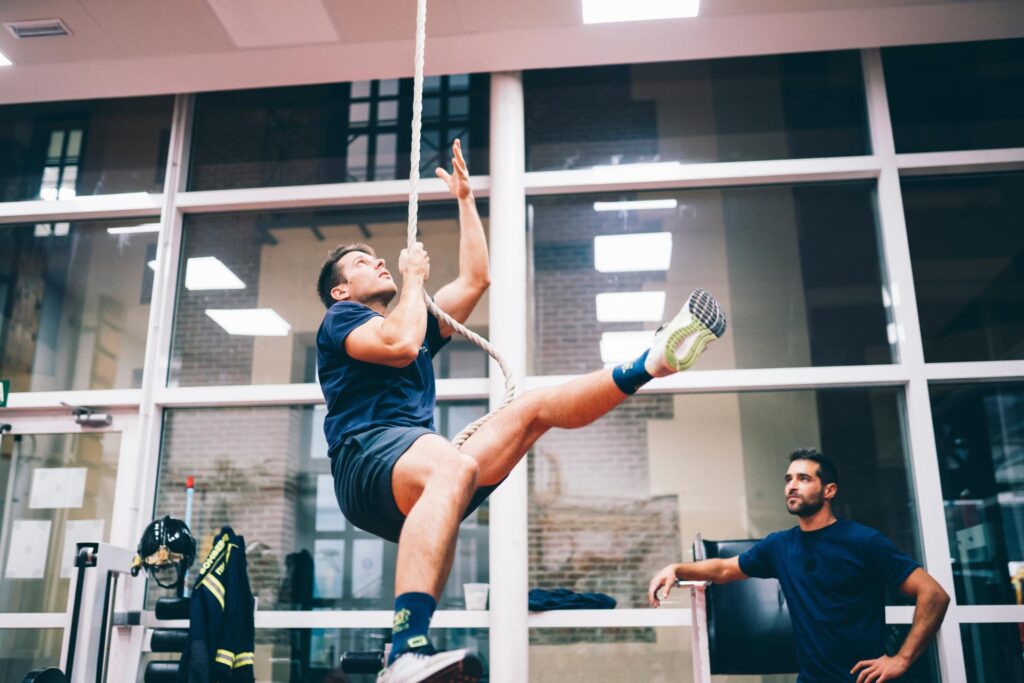
The role of a firefighter is physically strenuous, which makes physical fitness a fundamental requirement for becoming a firefighter. Applicants typically undergo a Candidate Physical Ability Test (CPAT), which simulates the physical tasks required on the job.
To prepare for this test, recruits should focus on developing maximum power for firefighter fitness. This type of physical strength helps firefighters complete demanding tasks and operations while firefighting, like carrying heavy equipment, hauling people to safety, and more.
Skills and Abilities
Beyond formal qualifications and physical strength, successful firefighters possess a unique set of soft skills. Strong teamwork is essential, as firefighters operate as a cohesive unit where every member relies on the others. Excellent communication skills are critical for clearly conveying information under pressure.
Furthermore, the ability to solve problems quickly and think critically during chaotic situations can mean the difference between life and death. A calm demeanor and unwavering integrity are personal attributes that complete the profile of an ideal candidate.
Answering the Call
Becoming a firefighter is a challenging but deeply rewarding journey. It requires a combination of solid education, peak physical condition, and essential personal skills. For those who feel the pull to serve their community and have the determination to meet these high standards, pursuing a career in firefighting can be an incredibly fulfilling endeavor.