
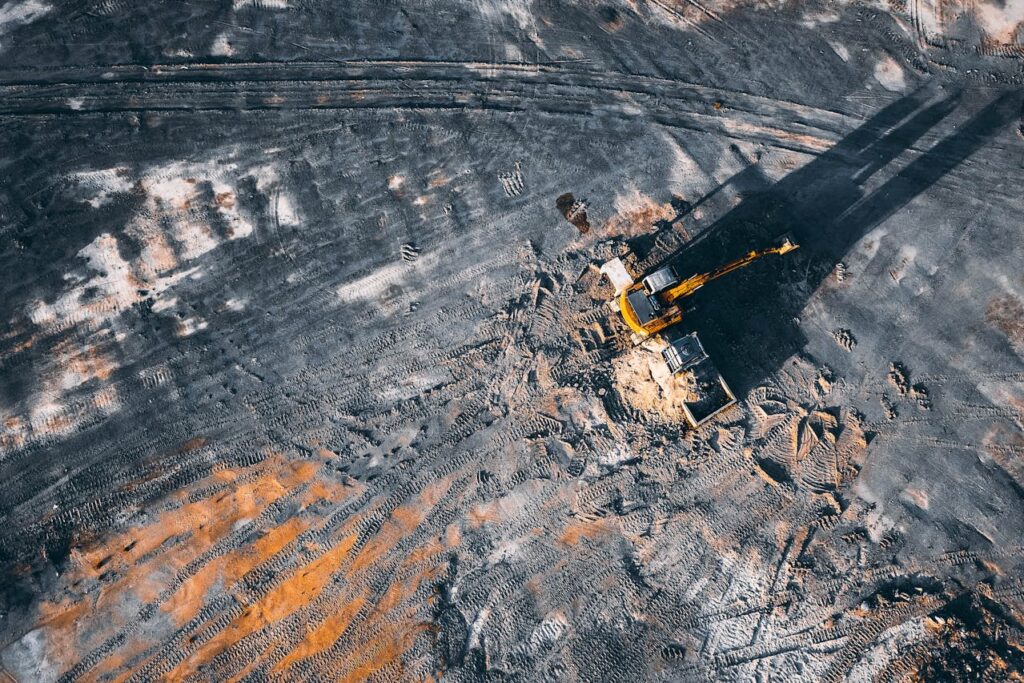
If you’ve driven through Scioto County lately, you’ve probably noticed it: fresh builds going up, lots being cleared, roads getting adjusted, and new projects slowly taking shape. From residential neighborhoods to commercial spaces, things are moving.
What most people don’t think about, though, is what happens before the walls go up, the sidewalks are poured, or the landscaping is added. The real work starts long before any ribbon-cutting. It happens underground, behind fencing, and in the early hours of the morning—powered by heavy machinery, careful planning, and crews who know the land better than most.
This is the hidden side of development: the part you don’t usually see but that determines whether everything above it will last.
Nothing Starts Without the Ground Being Right
In a place like Scioto County, the land isn’t just land. It’s a mix of clay, gravel, rock, uneven slopes, old infrastructure, and sometimes surprises no one expected. Before any structure can safely exist, the ground has to be tested, shaped, stabilized, and prepared.
This is where equipment like excavators, loaders, graders, and compactors come into play. They’re not just digging holes. They’re:
- Removing unstable soil
- Leveling uneven surfaces
- Creating drainage paths
- Trenching for utilities
- Reinforcing foundations
It’s slow, precise work. A few inches too deep or too shallow can affect how a building settles over time.
People often think construction begins when framing starts. In reality, it begins weeks—or months—earlier with earthmoving and site preparation.
The Machines That Make It Possible
When you pass a construction site and see big machines moving dirt around, it’s easy to assume they’re all doing the same thing—just clearing space. In reality, every major piece of equipment has a specific role, and each one handles a different phase of the work.
From shaping the land to preparing foundations and installing infrastructure, these machines are what make modern development even possible.
Excavators
Excavators are often the first machines to arrive on-site—and for good reason. They handle some of the most precise and critical early-stage tasks: digging foundations, carving out trenches for utilities, shaping drainage channels, and removing unstable soil.
They’re not just about power. They’re about control. A skilled operator can dig down to exact depths, maneuver around existing structures, and work in tight or uneven spaces.
For many local contractors, owning every size and type of excavator doesn’t always make sense. Different projects require different capacities and attachments. That’s where rental services come in.
To hire an excavator through Porter hire, you typically need a valid operator’s certification, project details, and a clear idea of the machine size and reach required. This kind of flexibility allows smaller teams to take on larger or more complex projects without massive upfront costs.
Excavators quietly shape the foundation of everything that follows.
Bulldozers
Bulldozers are about raw force and reshaping terrain. They push, spread, and level massive amounts of soil, rock, and debris. When a site needs to be cleared or recontoured, bulldozers do the heavy lifting.
They’re essential for:
- Initial site clearing
- Removing large obstacles
- Rough grading
- Pushing fill into place
Without bulldozers, land preparation would take exponentially longer—and be far less consistent.
Loaders and Wheel Loaders
Loaders are the movers of the site. While excavators dig, loaders transport. They carry soil, gravel, sand, and debris from one part of the site to another, load dump trucks, and keep materials flowing.
They’re crucial for maintaining efficiency. Without loaders, crews would spend more time waiting than working.
Skid Steers and Compact Track Loaders
Skid steers are smaller, but they’re incredibly versatile. They’re often used in tight spaces where larger machines can’t operate—between structures, along curbs, or inside partially enclosed sites.
With different attachments, they can:
- Dig
- Lift
- Grade
- Sweep
- Drill
They’re the Swiss Army knives of construction equipment.
Graders
Graders are precision machines. They’re responsible for creating smooth, level surfaces—especially for roads, driveways, and large slabs.
They fine-tune what bulldozers and excavators start. When pavement or concrete is about to be poured, graders make sure the base is perfectly shaped.
Compactors and Rollers
Compactors and rollers are responsible for something you never see: soil stability.
Loose soil shifts. Settled soil doesn’t.
These machines compress layers of earth so that future structures won’t sink, crack, or tilt over time. This step is absolutely critical and often underestimated.
Without proper compaction, even the best-designed building can fail.
Dump Trucks
Dump trucks keep everything moving. They haul excavated soil away, bring in fill, deliver gravel, and remove debris. They’re the logistical backbone of any job site.
No matter how advanced the machines are, nothing happens if materials can’t move in and out efficiently.
Cranes
While not always present in early earthwork, cranes become essential as vertical construction begins. They lift heavy materials, steel beams, concrete components, and large equipment that can’t be moved by hand or smaller machines.
They represent the shift from groundwork to vertical progress.
Trenchers and Directional Drills
These machines specialize in underground infrastructure. They create narrow, precise channels for utilities like fiber optic cables, water lines, and electrical conduits.
They minimize surface disruption and allow modern infrastructure to be installed quickly and cleanly.
Why All of This Matters
These machines don’t just speed things up—they redefine what’s possible. What once took years can now be done in months. What once required massive labor forces can now be done by small, skilled teams using the right equipment.
And for local contractors, access matters. Not every company needs to own every machine. Being able to rent what’s needed, when it’s needed, allows more projects to happen—and keeps development moving.
You rarely see the names of equipment suppliers on project signs. But their machines are often right there in the dirt, shaping the future long before anyone notices.
Infrastructure: The Invisible Backbone
One of the least glamorous but most important parts of any development is infrastructure. Water lines, sewer systems, storm drains, electrical conduits, and gas lines all have to be installed before anything else.
Once the concrete is poured and landscaping is done, you’ll never see this work again. But if it’s done wrong, everyone will feel it.
Flooding, sinkholes, cracked foundations, and drainage problems usually trace back to mistakes made early on. That’s why underground work is often the most carefully engineered part of any project.
In Scioto County, where weather patterns can be unpredictable and the land varies from one area to the next, this kind of planning isn’t optional—it’s necessary.
Why This Work Matters Locally
Big cities often get the spotlight when it comes to development, but places like Scioto County grow in a different way. It’s steadier, more personal, and closely tied to the community.
A new retail space isn’t just a building—it’s jobs. A new housing development isn’t just homes—it’s families moving in. Improved roads aren’t just pavement—they’re safer commutes.
All of that starts with the hidden work.
Local contractors, operators, and construction crews are the ones making these projects real. They understand the terrain, the weather patterns, and the logistical challenges of working in this region.
And because many projects here are mid-sized rather than massive, flexibility matters. Being able to bring in the right machine at the right time—rather than owning everything outright—can be the difference between staying on schedule and falling behind.
More Than Just Dirt and Steel
There’s a tendency to think of construction as loud, rough, and mechanical. But the early stages are surprisingly thoughtful.
Operators have to read the land. Engineers calculate load tolerances. Surveyors measure everything twice. Project managers coordinate timing down to the day.
A mistake underground is far more expensive to fix than one above ground. This is why the hidden work matters so much. It sets the tone for everything that follows.
Next Time You Pass a Site…
When you see a fenced-off lot with piles of dirt and machines moving slowly back and forth, it might not look like much. But that’s where the future is being built.
That’s where foundations are being shaped, where utilities are being laid, and neighborhoods, businesses, and public spaces quietly begin.
And while most people will only ever notice the finished result, the real story starts below the surface—with skilled crews, powerful equipment, and the kind of planning that never makes headlines but makes everything possible.