
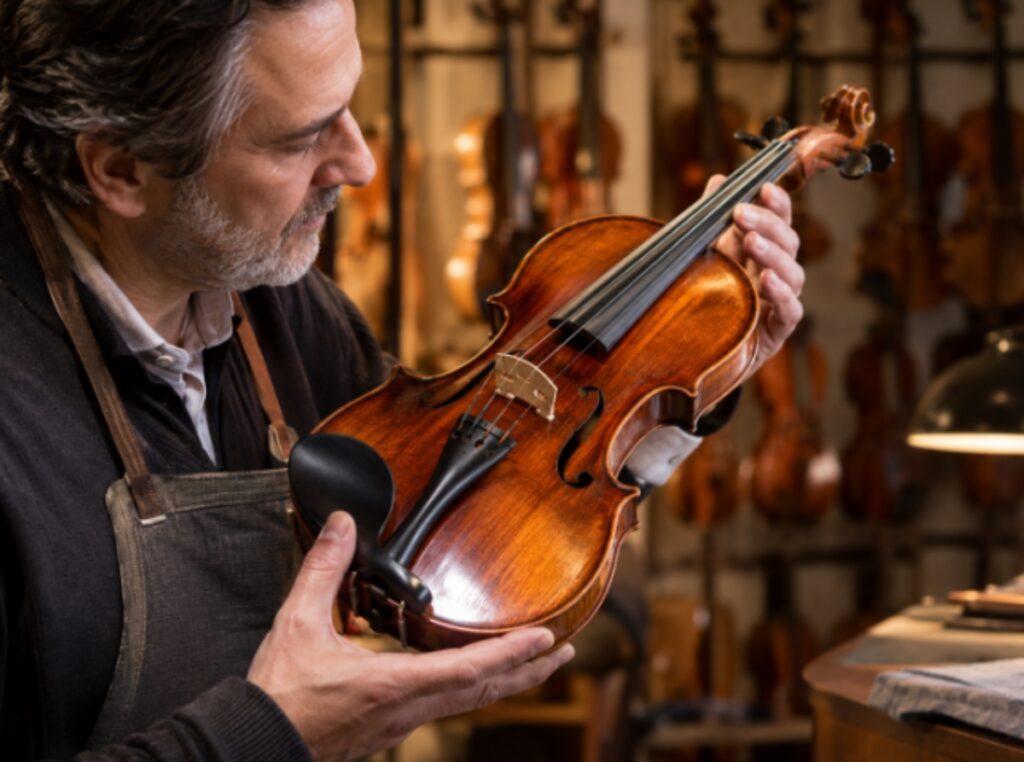
Experienced players have a good eye for violins. They notice the qualities that most beginners and students overlook. For instance, the sound of a violin will quickly tell them whether the materials used are premium or not. That’s just one piece of the puzzle. There are even more qualities you need to keep an eye on that make a good violin.
How Quickly the Violin Responds
One thing most experienced players notice is how responsive the instrument is. They see how easily the violin speaks as the bow touches it. It has to be responsive on both light and strong bow pressure. Why is it a big deal? It’s because a quick response can make technical playing feel easy and more effortless.
The Feel of the Fingerboard
Next is the natural feel of the fingerboard. It should be easy to move your hand between notes. This is all about the neck shape and the string height. Both should be in comfortable dimensions, so you don’t get exhausted while playing.
Evenness Across the Strings
The sound across the strings also matters, and you should know how to spot it. You can play similar passages on each string and listen for sudden changes in volume and character. A good violin should have a cohesive sound across all the strings.
Dynamic Range
Don’t let dynamic range intimidate you. It’s all about the softness and loudness of the violin. Experienced players keep an eye on whether the tone stays focused and consistent as they increase pressure. A good violin should have a wide dynamic range so you can be in control of how expressive you want to be.
Color and Character of the Tone
Color and character of the tone is actually one of the toughest qualities to check. It isn’t just about the loudness of the sound. It’s also about exploring different bowing styles and positions and seeing multiple tonal colors.
Ease of Shifting and Higher Positions
- Test shifts along the fingerboard
- Listen for clarity in higher registers
- Notice whether the instrument remains stable and responsive as you move upward.
How It Performs in the Player’s Hands
Believe it or not, no two violins are the same. This is why it’s important to test every violin you see because you need to see if it feels predictable and controllable in your hands. You need to compare how naturally it responds to your technique. Another thing on what makes a good violin is how it complements you as the master of the piece.
Conclusion
For experienced players, choosing a violin is more than just a simple task. It’s actually a process where you need to look into different qualities and tick them as you go along. Since they’re experienced, they’ve probably seen hundreds of violins and have trained their eyes, ears, and hands to spot a good violin. You can be like them, too, if you know exactly what to look for and what to expect on a good violin.