
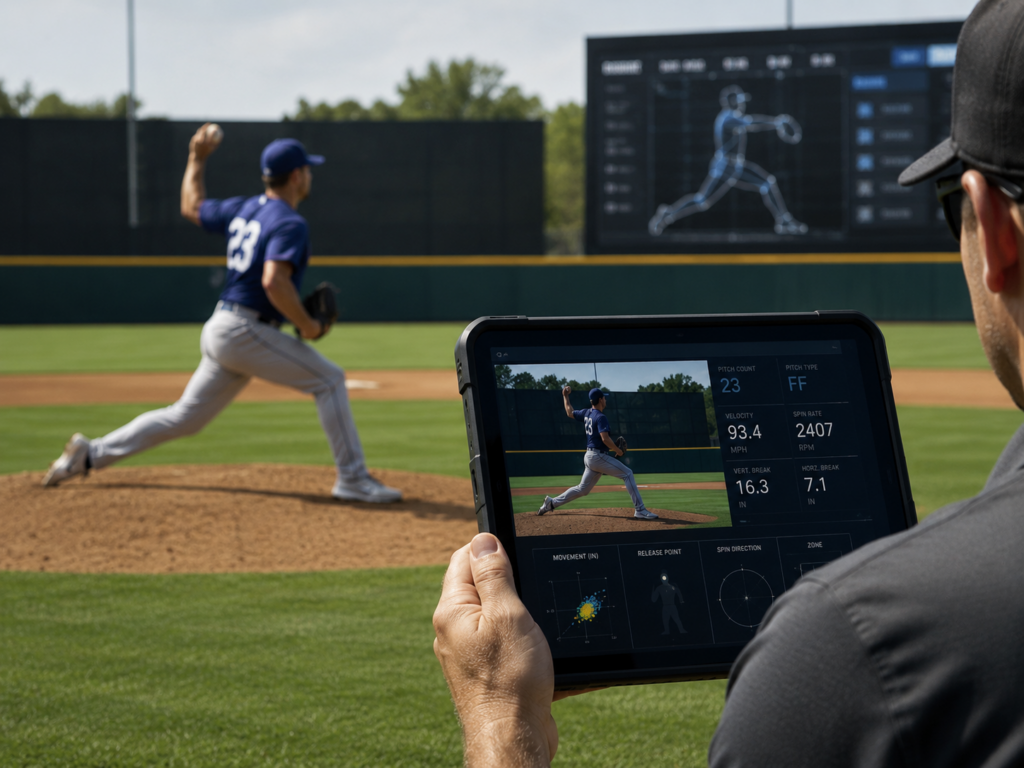
Baseball has always been a data-rich sport, but in the modern era it has become one of the most technologically driven ecosystems in professional athletics. What once relied on scouting reports and intuition is now shaped by biomechanics labs, real-time tracking systems, and machine learning models that influence everything from player development to in-game strategy.
Across Major League Baseball, performance technology is no longer viewed as an optional advantage. It has become a core part of how teams evaluate talent, prevent injuries, and gain competitive edges in a sport where small margins often decide entire seasons.
Even in broader sports analysis conversations, including cross-sport comparisons such as World Cup insight and more, baseball is frequently cited as a leading example of how data is reshaping modern athletic performance systems.
Tracking Systems Have Redefined Player Evaluation
The biggest shift in baseball has been the adoption of league-wide tracking systems such as Statcast. Installed in every MLB stadium, Statcast captures pitch velocity, spin rate, exit velocity, launch angle, sprint speed, and defensive positioning in real time.
This has fundamentally changed how players are evaluated. Pitchers are no longer judged only by ERA or wins but by how efficiently they generate movement and deception. Hitters are analyzed based on launch angle consistency and contact quality rather than just batting average.
Over the past 15 years, average fastball velocity in MLB has increased by more than 2 mph, a change closely linked to improved training methods and biomechanical feedback systems.
Pitch Design and Swing Optimization
One of the most advanced areas of performance technology is pitch design. Teams now use high-speed cameras and motion capture systems to break down every stage of a pitcher’s delivery. Small adjustments to grip, release angle, or arm path can significantly alter pitch movement.
Many organizations now operate “pitch labs” where pitchers test variations of their arsenal while receiving instant feedback on spin axis and movement efficiency.
Hitters undergo similar optimization. Swing-tracking systems analyze bat path in three dimensions, helping players adjust timing and angle to maximize contact quality. The modern emphasis on launch angle has contributed to one of the highest home run rates in MLB history, with league totals rising significantly over the past decade.
Injury Prevention Through Wearable Technology
Beyond performance enhancement, wearable technology has become critical in injury prevention. Devices now track workload, fatigue, muscle strain, and joint stress throughout the season.
Pitchers in particular benefit from these systems, as teams use workload thresholds to prevent overuse injuries. Instead of relying on fixed rest schedules, coaching staff can adjust usage based on real-time physiological data.
Sports science research consistently shows that monitoring workload can reduce injury risk by identifying fatigue patterns before they lead to breakdowns. This has made data-driven recovery planning a standard part of modern baseball operations.
Analytics Departments Have Become Essential Infrastructure
Modern MLB teams now operate large analytics departments staffed with data scientists, engineers, and machine learning specialists. These teams build models that influence scouting, roster construction, and in-game decisions.
It is common for franchises to invest millions of dollars annually into analytics infrastructure. Larger-market teams often lead in this area, but even smaller organizations have significantly expanded their technological capabilities to remain competitive.
These departments work on:
- player valuation models
- injury risk forecasting
- opponent tendency analysis
- lineup optimization
- automated scouting systems
The result is a sport increasingly defined by computational decision-making.
Machine Learning Is Changing Game Strategy
Machine learning has become a core tool for tactical decision-making. Algorithms now analyze pitch sequences, batting tendencies, and defensive alignments to suggest optimal strategies.
Defensive positioning, for example, is heavily influenced by predictive models that map where hitters are most likely to place the ball. While extreme shifts have been reduced by recent rule changes, teams still rely on data-driven positioning to gain incremental advantages.
In-game decision systems also simulate matchups in real time, helping managers evaluate bullpen usage and lineup adjustments based on probability models.
Biomechanics and Player Development
Biomechanics has become one of the most important areas of player development. Using motion capture and force plate technology, teams analyze how athletes generate power and transfer energy through movement.
For pitchers, this might involve refining stride mechanics or arm slot efficiency. For hitters, it can include optimizing hip rotation timing or improving bat path efficiency.
Even small mechanical improvements can translate into measurable gains in velocity, exit speed, or consistency. This has led to highly individualized training programs tailored to each player’s physical profile.
The Rise of Real-Time Decision Systems
One of the newest trends in baseball technology is real-time decision support. Coaching staff now receive live data feeds during games that include fatigue indicators, pitch effectiveness metrics, and opponent tendencies.
This allows for faster, more informed decisions on pitching changes, defensive alignments, and offensive strategy. In many organizations, decision-making is now a blend of human judgment and algorithmic recommendation.
Competitive Pressure and the Technology Arms Race
As more teams adopt advanced systems, baseball has entered a technological arms race. Organizations that fail to invest risk falling behind in scouting accuracy, player development, and in-game optimization.
This has led to rapid innovation across the league, with teams developing proprietary models and custom analytics platforms to gain advantages over competitors.
The gap between data-driven organizations and traditional ones has become increasingly visible in both performance consistency and long-term roster construction.
Where Baseball Technology Is Headed Next
Looking forward, the next wave of innovation is expected to include AI-driven scouting systems, enhanced wearable ecosystems, and more immersive biomechanical feedback tools.
Some teams are already experimenting with augmented reality training systems that provide real-time visual feedback for swing mechanics and pitching delivery.
As these technologies evolve, baseball is likely to become even more dependent on data integration across every level of the organization.
A Game Defined by Precision
Baseball’s evolution into a technology-driven sport reflects a broader shift in professional athletics. Success is increasingly determined not just by talent, but by how effectively organizations measure, interpret, and apply performance data.
Teams that adapt quickly to this new landscape are setting the standard for modern baseball. Those who do not risk being left behind in a sport where precision, preparation, and technology now define competitive advantage.