
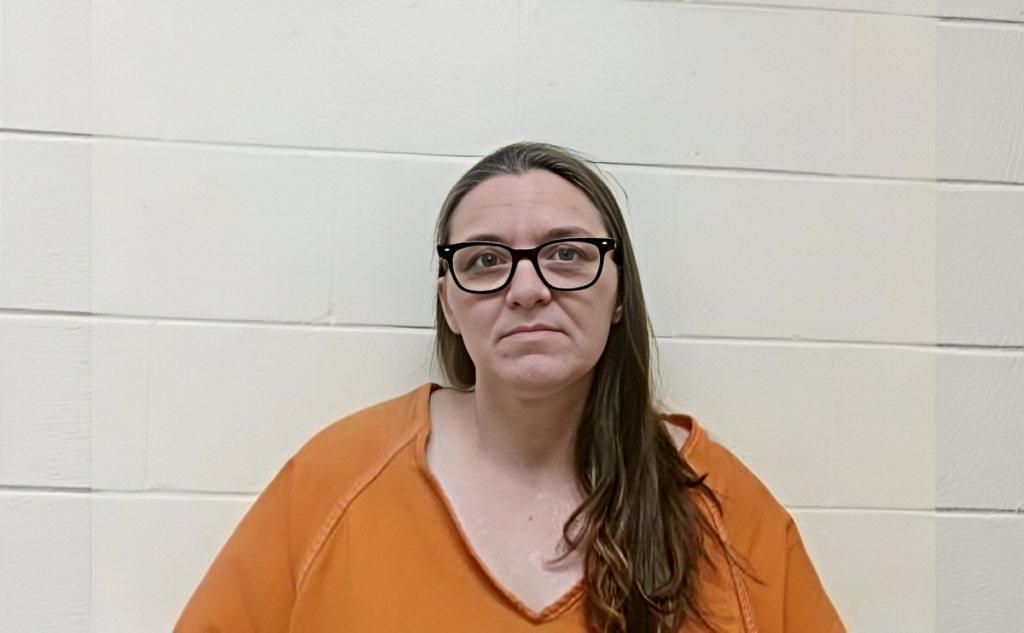
A woman convicted in the overdose death of an 11-month-old baby is back in Scioto County — and headed for a new sentencing hearing.
Amye Knott was booked into the Scioto County Jail Friday afternoon ahead of her February 17 appearance in Scioto County Common Pleas Court, where a judge will resentence her in the tragic case that claimed the life of baby Karrieonna Filius.
Knott and her co-defendant, Justin Sheets, were convicted two years ago following a three-day jury trial. Both were found guilty of:
- Involuntary manslaughter
- Endangering children
- Possession of fentanyl
They were each sentenced to 10–15 years in prison, near the maximum allowed under Ohio law.
That sentence came after jurors heard heartbreaking testimony about what happened inside a Portsmouth home on September 17, 2021.
What happened to Karrieonna
That afternoon, emergency crews were called to 1677 Robinson Avenue after Karrieonna was found unresponsive in her crib.
Despite desperate efforts by Portsmouth Fire Department medics, the baby could not be revived.
An autopsy later revealed something horrifying: Karrieonna had lethal levels of fentanyl and fluoro-fentanyl in her system — powerful synthetic opioids. The forensic pathologist testified those levels were higher than they had ever seen, even in adult overdose victims.
Investigators determined the drugs came from inside the home.
Living there at the time were Karrieonna’s parents, Robert Filius and Michaela Hupp, along with Sheets (the baby’s grandfather) and Knott.
Evidence at trial showed Sheets and Knott were heavily abusing opioids and fentanyl while caring for children in the home. Witnesses testified that Karrieonna had wandered into their bedroom — the same room where drugs were stored and used — shortly before she began acting “dazed” and unusually sleepy.
She was put down for a nap.
She never woke up.
During the frantic 911 call, Sheets could be heard saying things like “I f—ed up” and “I killed her.”
Both parents later pleaded guilty to child endangering and drug charges. Sheets and Knott went to trial.
A jury convicted them of involuntary manslaughter, finding that their reckless drug use and failure to protect the child directly led to Karrieonna’s death.
Why Knott is being resentenced
Knott appealed her conviction.
She argued that:
- There wasn’t enough evidence to prove she caused the baby’s death
- The jury relied on improper assumptions
- The court allowed unfair evidence and autopsy photos
The Fourth District Court of Appeals rejected all of those claims.
The judges ruled the evidence overwhelmingly showed Knott knowingly participated in fentanyl use inside the home, helped obtain drugs, and recklessly allowed a crawling infant to be exposed to deadly substances. They also found she either directly possessed fentanyl or aided Sheets in possessing it — making her legally responsible for what happened.
However, the appeals court did find two technical sentencing errors:
- Knott was not properly credited for time she had already spent in jail before trial
- The judge failed to fully explain her rights under Ohio’s Reagan Tokes Law, which governs indefinite prison sentences
Because of those mistakes, the appellate court ordered the case sent back for resentencing only — not a new trial, and not a reversal of her convictions
In short: Knott remains convicted of killing Karrieonna Filius. The court is simply required to redo the sentencing hearing correctly.
What happens next
Knott will appear in Scioto County Common Pleas Court on February 17, where a judge will impose a new sentence under proper legal guidelines.
She still faces the same potential prison range — and the underlying verdict stands.
No matter what happens next, nothing will bring back Karrieonna.
Prosecutors previously said the original sentence represented the strongest punishment allowed by law for involuntary manslaughter, noting that while the actions were reckless and devastating, Ohio statutes do not permit murder charges without proof of intent or a violent felony.
For many in Scioto County, the case remains a brutal reminder of how fentanyl continues to destroy lives — even the youngest and most innocent.