
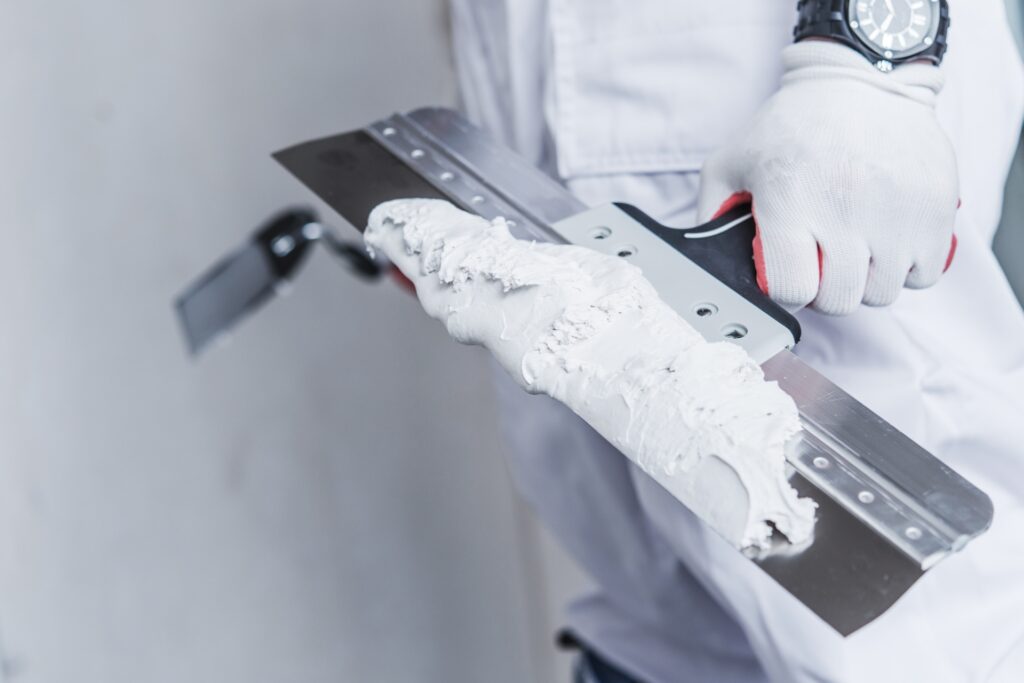
You’re smoothing out a seam, everything looks fine, and then little bumps or pinholes start showing up in the mud. What’s going on? Drywall air bubbles can show up during taping or coating, and they raise a pretty fair question: is something wrong with the mud, the tape, or the surface underneath? Before you can fix the issue, it helps to know exactly what you’re seeing and why it shows up in the first place.
What Are Drywall Air Bubbles?
Drywall air bubbles are trapped pockets of air in joint compound. They appear as raised bumps, blisters, or pinholes on the surface of a seam, patch, or coated area. When the air escapes, the bubble can break and leave a small crater in the dried finish.
Are Drywall Air Bubbles Harmful?
Air bubbles are something that can appear in drywall mud. But do they actually matter? Or are they harmless? Air bubbles are, in fact, harmful, in that they can ruin the quality of your drywall work. When they break, they leave behind small craters or pinholes in the dried compound. These gaps can reduce bond strength, create visible surface flaws, require extra patching and sanding, and affect the final finish. This is why it’s so important to understand what causes them, and take steps to prevent them from happening.
What Causes Drywall Air Bubbles?
Several application and surface issues can trap air in the mud or beneath the tape. Here are the most common causes:
- Dry drywall surface: Drywall paper can pull moisture out of joint compound too fast, which makes it harder for the mud to bond evenly.
- Too little mud under the tape: A thin layer of compound leaves gaps beneath the tape where air can stay trapped.
- Overworked joint compound: Repeated mixing or aggressive application can introduce extra air into the mud before it even goes on the wall.
- Improper taping pressure: If the tape isn’t pressed down evenly, some sections can hold trapped air instead of laying flat.
- Poor mud consistency: Joint compound that’s too thick or too thin doesn’t spread and bond the way it should, which can leave air pockets behind.
Understanding what causes drywall air bubbles is the first step in preventing them and getting a smoother finish.
A Smoother Finish Starts Here
Small details in drywall work tend to show up in the final result, especially once paint and light hit the wall. That’s why it helps to know what these bubbles are, whether they’re harmful, and what causes them in the first place. Once you understand drywall air bubbles, it gets much easier to spot the problem early and keep the finish looking smooth, solid, and ready for the next step.