
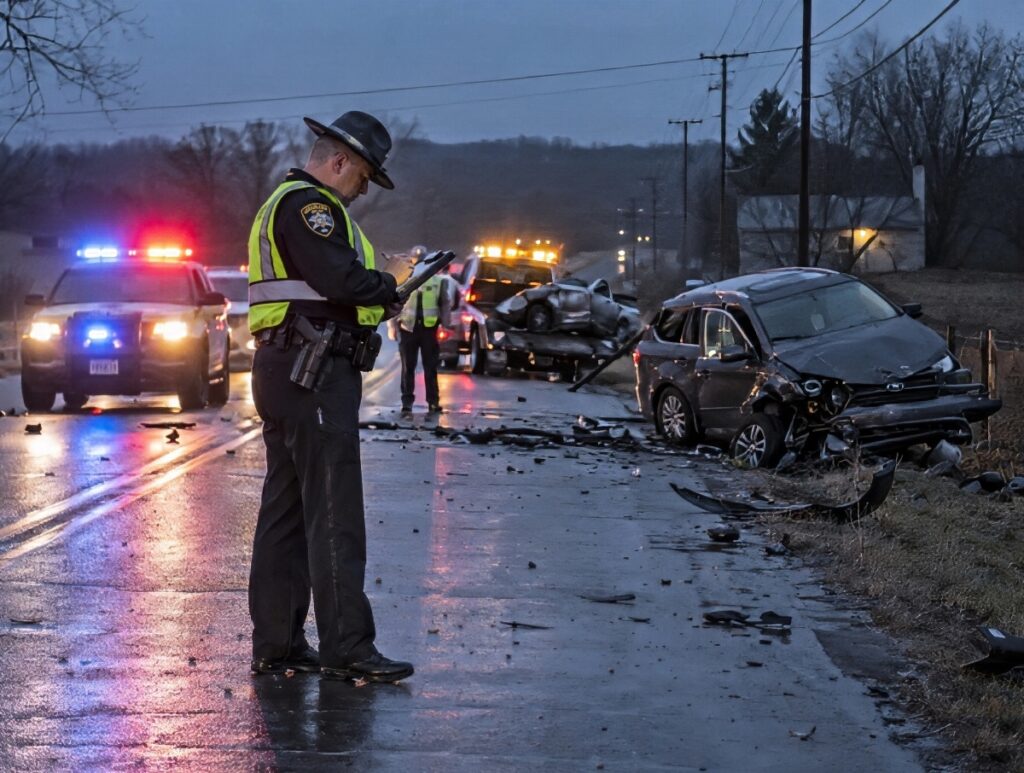
When a severe collision occurs on Southern Ohio roadways, the immediate focus is naturally on emergency response and public safety. Sirens fade, wreckage is cleared, and communities are often left reeling from the sudden loss of life. The nationwide scale of these traffic tragedies is undeniably staggering. According to the Centers for Disease Control and Prevention, over 44,000 people died in motor vehicle crashes in the United States in 2023, which equates to more than 120 lives lost every single day across the country. Locally, the aftermath of these catastrophic events triggers a highly complex investigative process that is heavily documented in daily sheriff logs, emergency medical services dispatch records, and official state crash reports. These initial documents do much more than simply record the tragic facts of a bad day. They lay the essential, factual groundwork for everything that follows in the civil and criminal legal system.
The Critical Role of Initial Crash Documentation
In Ohio, the standard administrative document completed by responding law enforcement officers is the OH-1 Traffic Crash Report. Under strict state administrative rules, investigating agencies, such as local police departments and county sheriff offices, must forward these comprehensive forms to the Ohio Department of Public Safety within five days of a collision. These early, detailed reports are vital because they lock in fresh witness statements, weather conditions, and vehicle seating positions before crucial scene evidence degrades or memories begin to naturally fade over time.
While the state offers a free online database for citizens to access these reports, public versions are often heavily redacted and uncertified. This lack of transparency presents a frustrating hurdle for grieving families desperately seeking answers about their loved ones. Often, surviving relatives must consult a wrongful death law firm to formally request unredacted, certified copies directly from the investigating agency, as only certified documents are admissible in subsequent court proceedings and insurance negotiations.
Establishing Liability and Shared Blame
Initial observations made by deputies and highway patrol troopers at the crash scene carry significant weight throughout the investigative lifespan. When officers issue traffic citations for moving violations, reckless driving, or suspected impairment, it firmly sets the stage for how civil liability is eventually handled by insurance adjusters and attorneys. For example, if you want to understand how comparative fault can affect the outcome of a DUI accident case, you must carefully look at how initial police findings of driver impairment heavily influence the legal assignment of shared financial blame.
Local public safety statistics highlight exactly why these initial determinations are so important. Preliminary data shows that five out of Scioto County’s seven fatal crashes in early 2025 were directly related to operating a vehicle while impaired. The specific details recorded by first responders in these devastating incidents are absolutely vital for any future civil justice process, as they clearly define who was legally responsible and to what exact degree.
What Investigators Extract from the Scene
The transition from a chaotic, fast-moving accident scene to a clear, objective legal conclusion requires meticulous data collection on the part of law enforcement. The Ohio State Highway Patrol frequently deploys its specialized Crash Reconstruction Unit to provide expert technical assistance and precise forensic mapping for severe and fatal incidents. When trained investigators thoroughly evaluate a fatal collision, they focus intensely on several key evidentiary areas to build a definitive timeline of the crash:
- Electronic Data: In complex head-on or crossover collisions, accident reconstruction experts extract digital data from vehicle Event Data Recorders. These modern black boxes reveal the automobile’s exact speed, braking pressure, and steering inputs in the fractions of a second prior to impact.
- Commercial Logs: If a large semi-truck or commercial delivery vehicle is involved, investigators look far beyond the standard OH-1 report. They rigorously analyze federal Hours of Service logs and commercial electronic data recorders to check for dangerous driver fatigue, lack of training, or broad corporate negligence.
- Toxicology Results: Processed by certified state crime laboratories, strict biological testing establishes undeniable scientific proof of impairment from alcohol or illicit drugs. This step can easily take months to finalize but is legally required by prosecutors for pursuing severe charges like aggravated vehicular homicide.
- Witness Addendums: The Occupant and Witness Addendum attached to the official crash report formally secures critical bystander accounts immediately following the accident, capturing statements before outside influences can alter a witness’s perspective.
Bridging the Gap Between Tragedy and Justice
Preliminary 2025 highway data from the Ohio State Highway Patrol indicates that vehicles leaving the established roadway caused roughly 23 percent of all fatal crashes statewide. This distinct metric makes it the leading single contributor to traffic deaths across Ohio. When these life-altering and devastating tragedies occur, the urgent notes jotted down in a daily sheriff’s log or an official state crash report quickly become the most important legal documents a family will ever rely on. By carefully preserving electronic vehicle data, securing unvarnished witness statements, and accurately documenting the physical evidence on the asphalt, dedicated law enforcement officers ensure that the honest truth of the accident survives long after the roadway is cleared and reopened to the public.