











































































Southeast Ohio has a shortage of lawyers, and Shawnee State University may be in a position to help change that by encouraging local students to consider careers in the legal profession.
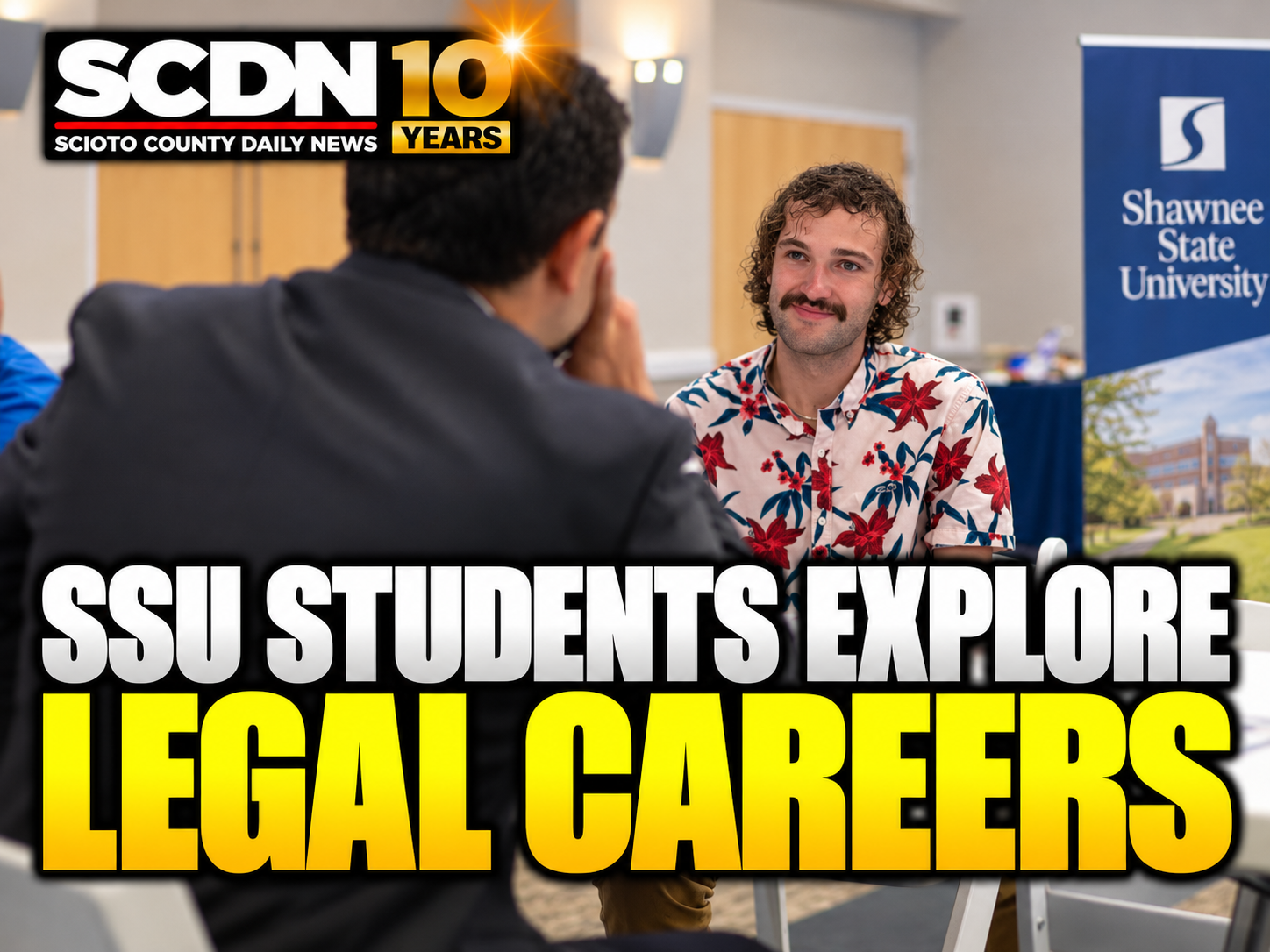
The university recently welcomed attorneys representing seven areas of law to campus for an event organized by Shawnee State’s Pre-Law Club and the Ohio State Bar Association.
The goal was to give students a chance to talk directly with working attorneys, learn what different legal careers actually involve, and discover opportunities they might never have considered.
The event also addressed a problem facing much of rural Ohio: finding enough attorneys to serve local communities.
According to the Ohio State Bar Association, counties with fewer than one attorney for every 1,500 residents are considered underserved. Ohio currently has 58 counties that fall into that category, including much of southeastern Ohio.
That shortage can make it harder for residents to find legal help with everything from divorces and custody disputes to criminal cases, property matters, and estate planning.
Amy Milam of the Ohio State Bar Association said encouraging students with local connections to pursue legal careers could eventually help fill that gap.
“These events can help the region in the long term by supporting students with ties to the region who have an interest in law, as they may be more likely to return to the region to practice after law school,” Milam said.
She added that the organization wants to help students understand the many opportunities available within the legal profession.
Students Discover There Is More Than One Way to Practice Law
For Shawnee State senior Walker Pannell, who already plans to attend law school, the event offered a chance to learn how attorneys found their way into different specialties.

“I think it was great to get different perspectives, not just on different types of law, but hearing about the different paths to law school and their chosen careers,” Pannell said.
Junior Allison Causey hadn’t even considered becoming an attorney until a professor encouraged her to explore the possibility.
She arrived at the event with one particular type of law in mind but left thinking about other possibilities.
“I went into the event thinking I wanted to go into a certain type of law, but this opportunity showed potentially more interesting paths,” Causey said.
Her advice to other students was simple: Don’t be afraid to try something unfamiliar.
“You don’t know what you don’t know, so don’t be afraid to find out.”
The visiting attorneys discussed careers in criminal defense, family law, child welfare, juvenile law, corporate litigation, real estate, estate planning, probate, and appeals.
Participating attorneys included Robert Trujillo, Alicia Walters, Anna Mason, Lauren Weller, Anna Davis, David Schutte, and Richard Nash.
Another Sign of Changes at Shawnee State
The legal career event is part of a broader period of activity at Shawnee State, where university leaders are working to expand opportunities for students both inside and outside the classroom.
Among the most talked-about developments are plans to introduce a football program and restore Spartan Stadium, projects that could bring new student-athletes, visitors, and activity to the Portsmouth campus.
The university has also made important leadership appointments, including Dr. Ashley Carlson as Dean of the College of Arts and Sciences and Aimee Welch as Executive Director of the Shawnee State University Foundation.
Carlson’s responsibilities include strengthening academic programs and helping connect students with careers after graduation, while Welch oversees foundation efforts that support scholarships and other educational opportunities.
Events like the Pre-Law Club’s meeting with practicing attorneys offer a practical example of how those goals can translate into opportunities for students.
While football and stadium improvements may draw plenty of public attention, connecting students with careers that are badly needed in southern Ohio could have an equally important long-term impact.
For communities struggling to find attorneys, the hope is that some of the students exploring their options today will eventually return home with law degrees and establish practices of their own.