
































































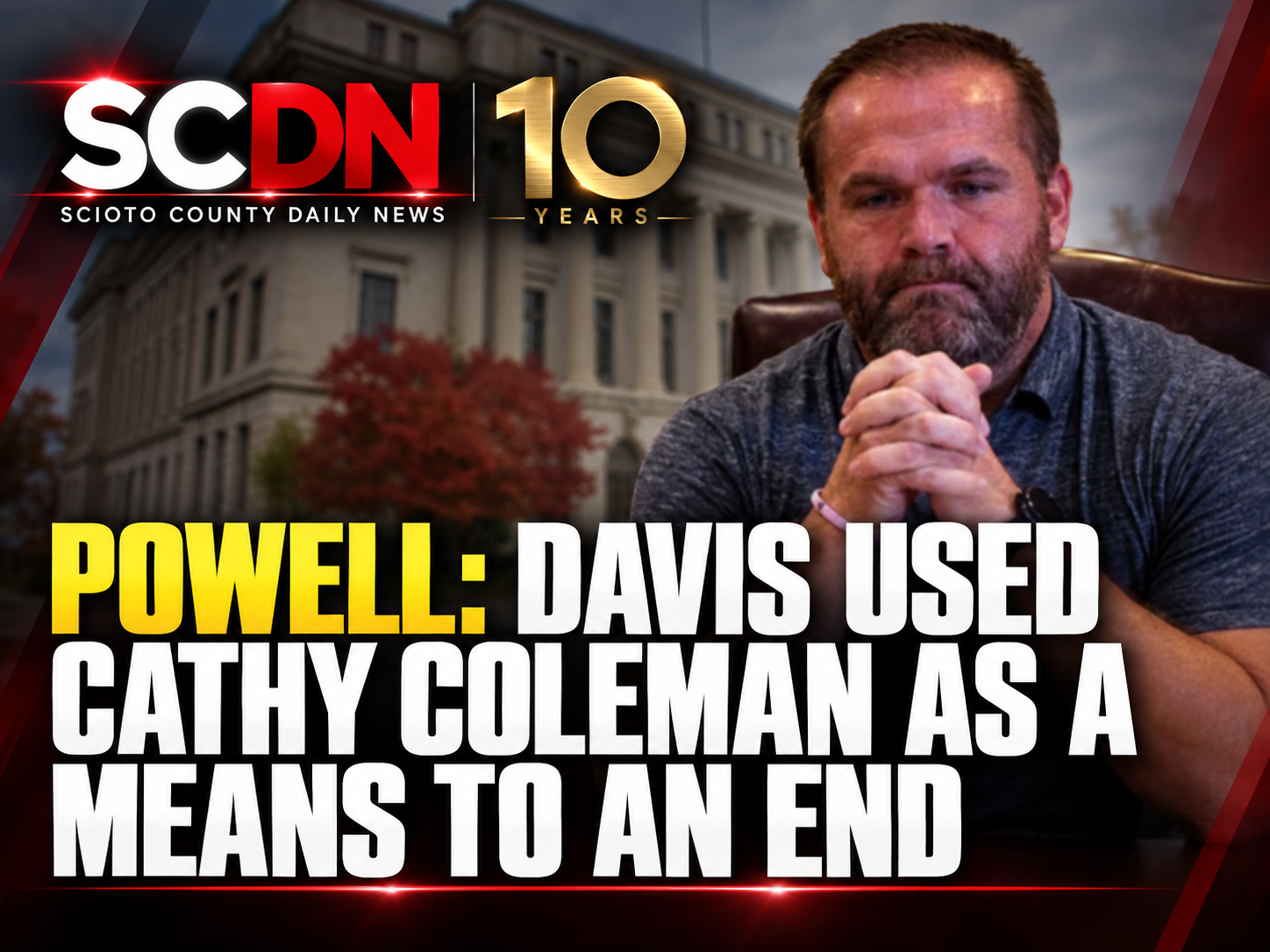
Scioto County Commissioner Scottie Powell broke down in tears Thursday as he described how he believes disgraced former Commissioner Bryan Davis misled and manipulated the late Commissioner Cathy Coleman, using her fears about the county’s finances and her trust in a friend to influence important decisions.
“The reality is Bryan is not a friend to Cathy Coleman,” Powell said. “She was a means to an end.”
Powell said Coleman eventually realized she had been misled — and that realization devastated her.
“I came in and she was sobbing,” Powell recalled. “I’ve never seen her cry like that.”
According to Powell, Coleman repeatedly apologized to him.
“All she could say is, ‘I’m so sorry. I am so, so sorry. I believed horrible things about you. I believed things I know are not true. I believed the worst things about you.’”
Powell struggled to maintain his composure as he recounted the conversation, which he said happened just two weeks before the automobile accident that ultimately claimed Coleman’s life.
It was an intensely personal answer to a much broader question SCDN asked Powell during Thursday’s commissioners meeting:
How in the world did Scioto County end up with two people — Davis and former Economic Development Director Robert Horton — exercising so much control without sufficient oversight?
For Powell, part of the answer is painful.
Davis didn’t have enough votes to act alone.
Someone else had to believe him.
And Powell believes that person was often Cathy Coleman.
‘You Had to Convince Somebody to Go Along With It’
“How could two guys run the operation?” Powell said. “I wasn’t going to talk about Cathy, but you had to convince somebody to go along with it.”
Powell made clear that he doesn’t view Coleman as another participant in the wrongdoing. He views her as someone who was betrayed by a person she trusted.
“I think the world of Cathy and her family,” Powell said.
He said Coleman’s good nature, her friendship with Davis and her belief in what she was being told influenced some of the votes she cast.
That became especially important during the investigation of Horton.
Horton had been placed on administrative leave after the Auditor of State’s investigation reached the county’s economic development operation. Powell wanted him to remain off the job.
Davis and Coleman voted to bring him back.
Coleman later explained publicly why.
“My decision to call him back was because of this discussion and prompting that we would be in certain dire straits, financially,” Coleman said at the time.
After speaking directly with the Port Authority’s attorney, however, Coleman learned there apparently wasn’t the financial threat she had believed existed.
“It was quite disheartening to be told that there was no potential threat like that,” Coleman said publicly. “It’s very upsetting to me that the information I was receiving was a doom-and-gloom dire need to have him in there.”
At the time, Davis publicly portrayed himself as having received the same alarming information, saying commissioners had been led to believe there could be a “major financial catastrophe.”
Powell now says there was much more happening behind the scenes.
‘They Were Lying to Your Face’
Powell said that after Horton was indicted, Coleman finally had the opportunity to sit down with an attorney for the Southern Ohio Port Authority and ask questions herself.
Powell said he watched the realization hit her.
“I saw the light bulb go off,” he said.
According to Powell, Coleman asked whether she had made important decisions based on a false premise that failing to return Horton to work would leave the county in complete financial disarray.
Powell recalled Coleman asking essentially, “So you’re telling me nothing would have happened?”
According to Powell, the attorney responded:
“Ma’am, I don’t know who told you that, but they were lying to your face.”
Powell said Davis was sitting in the room.
“Bryan was in the room and he had his head down.”
Powell’s account Thursday is his recollection of that private meeting. But the central point — that Coleman subsequently believed she had made her decision based upon a financial danger that wasn’t actually there — is supported by Coleman’s own public comments at the time.
Why That Fear Hit Coleman So Hard
Powell believes Davis knew exactly what would frighten Coleman.
It wasn’t simply a fear of bad publicity or making the wrong vote.
It was fiscal watch.
Coleman’s late husband, Doug Coleman, had served as county commissioner during the years when Scioto County struggled financially. Powell said Cathy Coleman was immensely proud of her husband’s role in helping the county recover and deeply protective of his legacy.
“All she ever wanted was to maintain her husband’s reputation for getting the county off fiscal watch,” Powell said.
And, he said, “she was scared to death that we would go into it again.”
Powell believes that fear made Coleman particularly vulnerable to warnings that the county could face financial disaster if Horton wasn’t returned to work.
In Powell’s view, that wasn’t accidental.
“It’s taking advantage of friendships and a belief structure,” Powell said. “It’s hiding behind fear.”
He called it “strictly manipulation.”
Then Powell Found Coleman Sobbing
What happened afterward is the part of the story Powell had not publicly discussed.
Once Coleman understood that the financial catastrophe she feared apparently wasn’t going to happen, Powell said she came to him.
She was crying.
“I’ve never seen her cry like that,” he said.
Coleman told Powell she was sorry.
Not merely for a vote.
According to Powell, she apologized for believing things about him that she had apparently been told during the turmoil surrounding the investigation.
“I believed horrible things about you,” Powell recalled Coleman telling him. “I believed things I know are not true. I believed the worst things about you.”
Powell said Coleman made similar apologies to members of the county staff.
Then she told him something even more personal.

According to Powell, Coleman said she had gone home, lain face down outside on her patio in the rain and prayed.
“I cried out to God for forgiveness,” Powell recalled her saying. “And I am so sorry.”
Powell’s voice began to break as he told the story Thursday.
“So I know what she was being worked over,” he said. “I know that Bryan was consistently in her ear and those lies continued.”
She Wanted the Chance to Clear Her Name
Coleman was also deeply worried about what the unfolding scandal would do to her own reputation, Powell said.
So worried, in fact, that she almost didn’t seek another term.
But ultimately that became the reason she decided she needed to run.
“Scottie, I have to run again because if something happens, I want to be there to clear my name,” Powell recalled Coleman telling him.
Powell hopes people looking back at Coleman’s role in the controversy understand what he believes happened.
“If Cathy did anything, she was way too trusting and she had such a good heart,” Powell said.
“But unfortunately, when you have such a big heart, it’s easy to manipulate if you think someone is your friend.”
Then came the line that perhaps best summed up Powell’s feelings:
“The reality is Bryan is not a friend to Cathy Coleman. She was a means to an end.”
Two Weeks Later, the Accident
Powell said that painful conversation with Coleman happened only about two weeks before the automobile accident that eventually claimed her life.
That timing is what made Thursday’s discussion so emotional.
There wasn’t another year for Coleman to publicly explain everything she had come to believe.
There wasn’t time for the county to completely unravel what had happened while she was still there.
There wasn’t even much time for Powell and Coleman to repair a relationship that he says had been damaged by things she had been led to believe about him.
But they had that conversation.
And Powell is grateful for it.
“I’m glad that we were able to have that conversation before the wreck that ultimately took her life,” he said.
A Very Different View of Bryan Davis
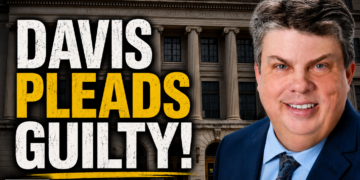
The discussion came one day after Davis was sentenced to 30 months in prison following his guilty pleas to Theft in Office, Receiving Stolen Property and Filing an Incomplete, False or Fraudulent Tax Return.
It also followed Davis’s unsuccessful request for probation, which emphasized his lack of a criminal record, his years as a pastor and public servant and numerous letters of support from people in the community. Davis’s defense also placed substantial responsibility for the scheme on Horton.
Powell said he understands why some people have difficulty reconciling the Davis they knew with the conduct that resulted in three felony convictions.
He called it the “duality of people.”
“We go to work, we wear a hat. We go home, we wear a hat. We go to church, we wear a hat,” Powell said. “And sometimes those hats are different.”
If someone only encounters a person in one of those settings, he said, that’s the person they know.
“Unfortunately for us and our staff, we saw a drastically different version of an individual that most people did not see.”
How Do You Keep It From Happening Again?
Powell can’t change what happened to Coleman or undo the decisions made during the years the corruption investigation was unfolding.
What he says he can do is focus on preventing the same situation from happening again.
“What I can focus on now is how do we set up guardrails,” Powell said.
That’s particularly important with economic development, where authority can be divided among elected commissioners, employees, the Southern Ohio Port Authority and other boards and organizations.
The criminal investigation exposed what can happen when oversight breaks down. Davis’s own sentencing memorandum acknowledged his criminal conduct while arguing that Horton exercised substantial control over the Port Authority’s bidding and construction processes.
For Powell, though, Thursday’s discussion brought the scandal back to something much more human.
It was about a woman he believes trusted the wrong person.
A commissioner who, in Powell’s telling, thought she was protecting the county and her late husband’s legacy, only to discover that some of the information behind her decisions couldn’t be trusted.
A friend who came into his office crying and asked for forgiveness.
And a conversation that, because of what happened just weeks later, Powell would never get another chance to have.
“The reality is Bryan is not a friend to Cathy Coleman,” Powell said. “She was a means to an end.”