



















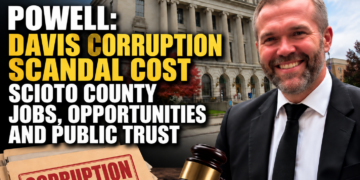
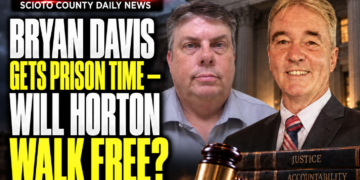
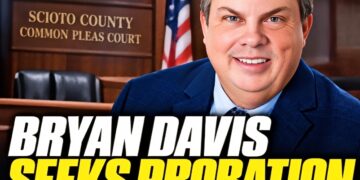




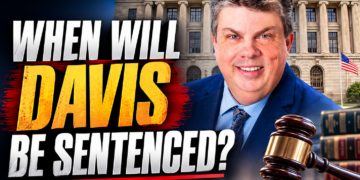

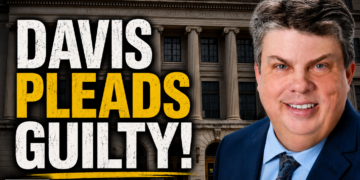






































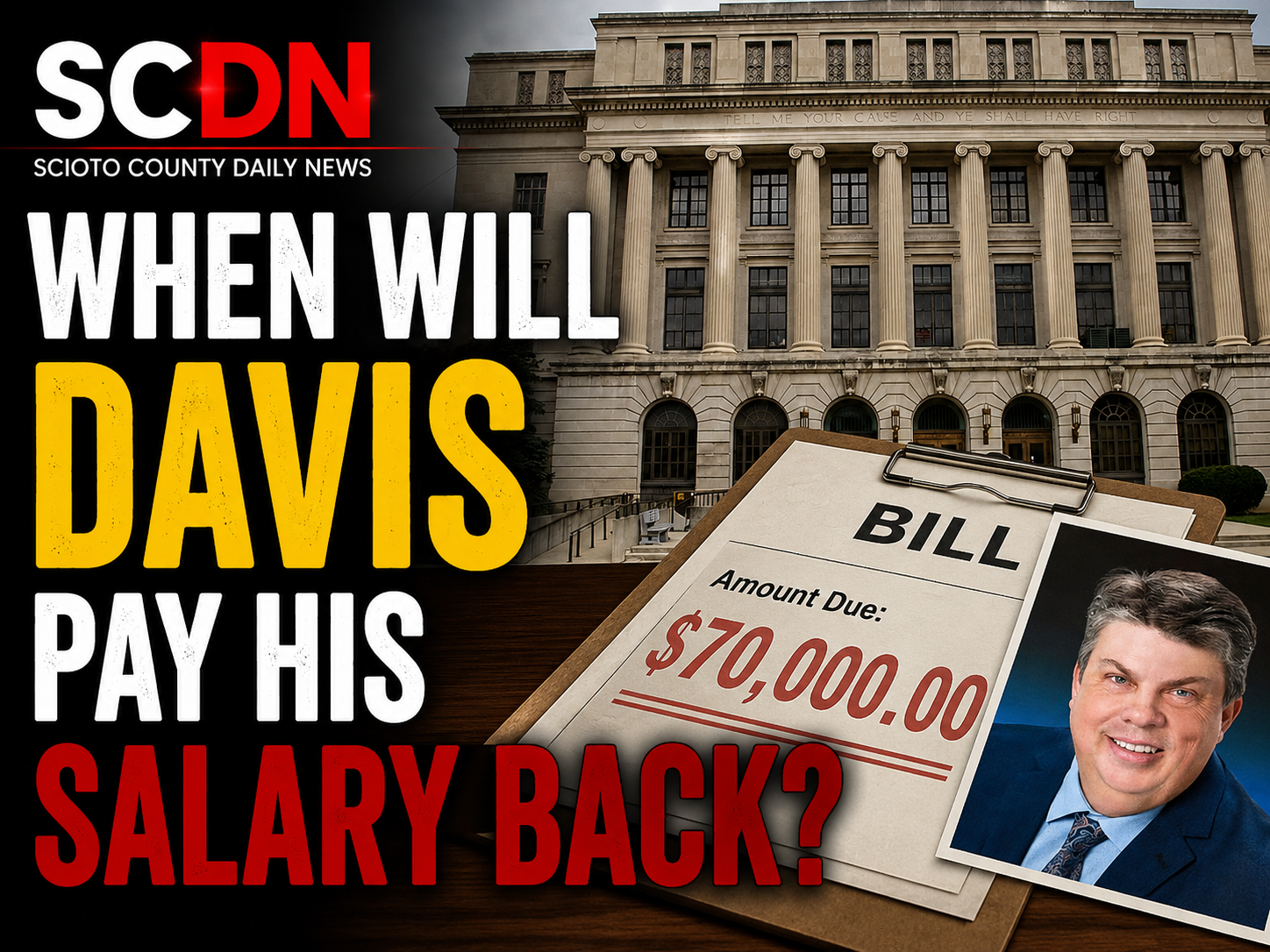
Former Scioto County Commissioner Bryan Davis has officially resigned from office following his guilty plea in the county corruption case.
The Scioto County Commissioners unanimously accepted Davis’ resignation during Thursday’s meeting, formally ending his tenure after nearly a year on paid administrative leave.
But one big question remains:

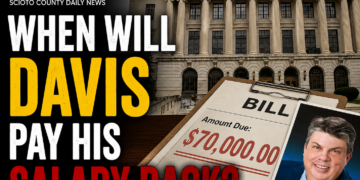
When will taxpayers get their money back?
Under the agreement that allowed Davis to remain on paid leave after his indictment, and under Ohio law governing public officials convicted of certain offenses, Davis is required to repay the salary he received while suspended from office.
County officials estimate that amount is nearly $70,000.
Resignation Accepted
Commissioner Merit Smith said Davis submitted his resignation shortly after changing his plea to guilty earlier this week in Scioto County Common Pleas Court.
“Commissioner Davis resigned at his hearing where he changed his plea,” Smith said. “Apparently, he was advised by his attorney that he should send a notice to us. We received that just right before this meeting.”
Smith said the county prosecutor advised commissioners to formally accept the resignation and place it on the public record.
“When the resignation took place, his salary from here ceased, and there was a final payment issued for his final pay through yesterday,” Smith said. “That has been done. That should put the end to that.”
Interim Commissioner Will Mault, who was appointed by the Scioto County Republican Central Committee after Davis was placed on leave, will continue serving in the position. He is also the Republican nominee for the seat in November’s election.
So Who Collects the Money?
Although Davis is legally required to repay his salary, commissioners acknowledged there are still questions about exactly how that process will work.
Smith said he spoke with Scioto County Prosecutor Shane Tieman before Thursday’s meeting.
“I talked to the prosecutor and asked a couple of questions,” Smith said. “The Revised Code says he has to pay it back. The question is who’s going to go after him? How will that work?”
According to Smith, the prosecutor plans to ask the special prosecutor handling the criminal case to include repayment in Davis’ sentencing order.
“He said he would request to the special prosecutor that they would try to get an order in the sentencing to deal with that,” Smith explained.
If that doesn’t happen—or if Davis fails to repay the money voluntarily—the responsibility could ultimately fall on the county.
“Ultimately it will fall on the county to try to collect that money,” Smith said. “I’m assuming we have to give a reasonable amount of time to make arrangements and if that doesn’t happen, it will be on the county to file suit.”
Taxpayers Still Waiting
For now, the county has officially closed the chapter on Davis’ service as commissioner.
But taxpayers are still waiting to see when—or how—the nearly $70,000 paid during his administrative leave will be returned to county coffers.
That question may not be answered until Davis is formally sentenced in the coming weeks.