
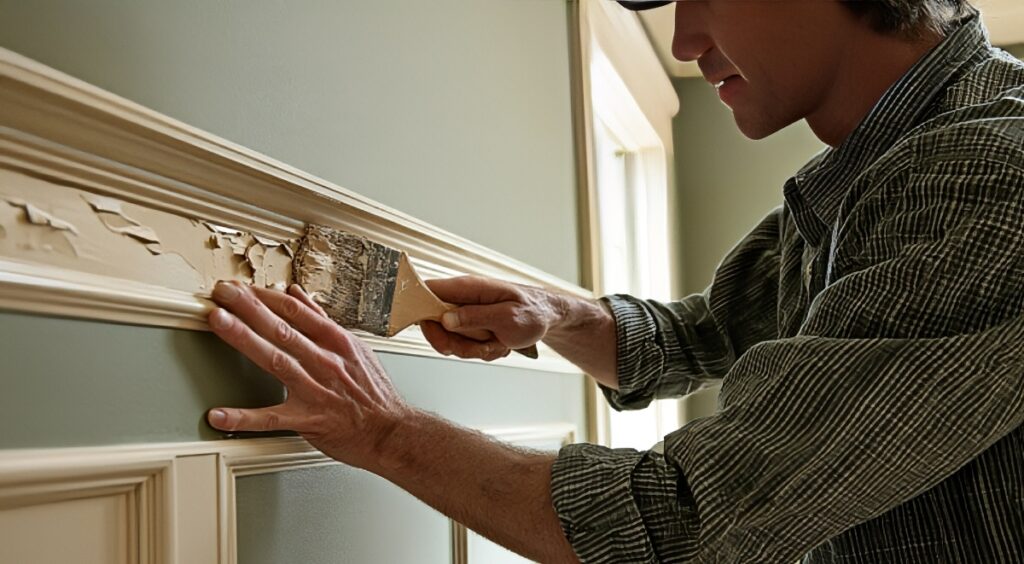
The short answer to how to fix peeling paint: deal with the cause first, which is almost always moisture or poor surface preparation. Then scrape off every loose flake until the scraper stops sliding under the adjacent layer, feather the edges, clean and dry the surface, patch the damage, prime for the problem you found, and finish with two even coats.
Flaking paint is a common issue in bathrooms, older homes, and on weathered siding. Before you start, work out whether the coating simply let go of what is under it or the drywall, plaster, or wood itself is wet, soft, and crumbling. Painting over the problem buys a few months at best.
Common Causes of Paint Peeling: Moisture, Low Quality Paint, and Poor Surface Preparation
Paint peels when it loses its bond with the surface or with the coat beneath it. The common reasons include water leaks, high humidity, dirty or greasy walls, glossy old coatings, skipped primer, low quality paint, and incompatible layers. Painting over a damp surface reliably produces blisters within a season.
| What you see | Likely cause | Fix first |
| Bubbling near a ceiling, window, or plumbing fixture | Leak or condensation | Repair the water source, then dry the material |
| Paint lifting in sheets off a shiny older layer | No cleaning or deglossing | Wash, dull the surface, use a bonding primer |
| Peeling only over a patched area | Unsealed joint compound or dust | Sand, vacuum, prime the patch |
| Exterior wood soft, swollen, or darkened | Moisture entry or rot | Correct flashing and drainage, replace decayed wood |
The EPA recommends keeping indoor relative humidity between 30% and 50%. Above 60%, coatings on cool surfaces stay damp more often than they dry.
Before You Scrape: Check for Lead, Asbestos, or Mold
Homes built before 1978 may contain lead-based paint, and the EPA estimates roughly three-quarters of pre-1978 U.S. homes still have some. Scraping and sanding turn that into hazardous dust, so assume lead is present or hire a certified renovator. No hardware-store swab has met the EPA’s accuracy criteria for both positive and negative results.
Older textured ceilings and patching compounds can contain asbestos, which cannot be identified by sight and should be sampled before it is disturbed. Mold or mildew over about 10 square feet calls for professional remediation, because paint applied over it peels again.
Tools and Materials You’ll Need to Remove Loose Paint
Gathering the right tools and the right materials first keeps you from stopping halfway with a wall half stripped.
- Drop cloths and plastic sheeting
- Paint scraper and putty knife
- Sanding block, 80 to 100 grit for loose paint and 180 to 220 grit for finishing
- Shop vacuum and damp cloths
- Spackling compound for drywall, exterior filler for sound wood, masonry patch for block and stucco
- Primer matched to the problem, plus your finish paint
- Gloves, eye protection, and respiratory protection suited to the hazard
An ordinary dust mask is not adequate protection for lead, asbestos, heavy mold, or soot.
How to Fix Peeling Paint Step by Step
- Fix the cause. Repair water leaks, improve ventilation, and let damp material dry fully. The EPA advises drying wet materials within 24 to 48 hours, though saturated framing may need longer.
- Protect the area. Cover furniture, sheet the floor, and contain dust at the doorway so the mess does not travel through the house.
- Scrape the peeling sections. Work the paint scraper or putty knife until it will no longer slide under the adjacent paint with moderate pressure. Stopping at the visible flakes is the most common mistake.
- Feather the edges. Sanding tapers the ridge where old paint meets bare surface, so the transition disappears under the new coat instead of telegraphing through it.
- Clean and dry. Vacuum the dust, wash off dirt, grease, soap film, and chalk, then let everything dry.
- Fill and patch. Fill nail holes and gouges with the filler that suits the substrate, let it cure, sand to a smooth surface, and vacuum the dust. Never bridge a patch over paint that is still loose.
- Prime, then paint. Apply the right primer, then two even coats, respecting the label’s temperature and recoat windows. Thin coats beat one heavy layer.
Which Primer Should You Use?
Choose the primer for the problem you found, not out of habit. No rule says always reach for oil based paint or primer, and the wrong product costs you adhesion instead of improving it.
| Surface condition | Primer |
| Bare drywall or joint compound | Drywall or PVA primer |
| Sound but glossy old coating | Bonding primer, after cleaning and deglossing |
| Dried water stain | Stain-blocking primer, once the leak is repaired |
| Bathroom or other damp room | Moisture resistant primer |
| Bare exterior wood, brick, or stucco | Exterior or masonry primer rated for the substrate |
Primer seals and bonds. It does not hold down loose paint.
Why Does Paint on Bathroom Ceilings and Interior Walls Keep Peeling?
Repeated condensation paired with a weak or misrouted exhaust fan causes most bathroom failures. The fan has to discharge outdoors, and the 2024 IRC requires exhaust to terminate outside rather than into an attic, soffit, or crawl space. The Home Ventilating Institute suggests roughly 1 CFM per square foot for bathrooms up to 100 square feet. Strip to a sound edge, use a moisture resistant primer under a bathroom specific paint, and run the fan during showers and for about 20 minutes after. In a small room, better ventilation alone can work wonders.
Peeling Paint on Exterior Wood, Plaster, and Masonry
Exterior wood
USDA research shows blistering and peeling are likely when wood moisture exceeds 20% at the time of painting, so aim for roughly 7% to 14%. Check failed caulk, flashing, and gutters before you touch a scraper, and replace rotten trim outright. Filler belongs only in small defects in sound wood.
Plaster and masonry
If the surface is powdery or crumbling under your thumb, the substrate is failing rather than the coating. Remove the unstable material, patch with a compatible plaster or cementitious product, and prime with a product rated for alkaline masonry.
What If the Peeling Followed Fire or Smoke Damage?
Soot, embedded odor, heat-damaged materials, and firefighting water sitting in wall cavities make this a restoration job, not a paint job. Primer does not substitute for removing residue, drying cavities, or replacing charred framing. ANSI/IICRC S700-2025, the first professional standard for fire and smoke damage restoration, covers assessment, residue removal, and odor management. California owners facing this kind of loss can review the reconstruction scope described by Golden Coast Construction & Restoration while comparing licensing, written estimates, and insurer requirements.
Should You Spot Repair or Repaint the Whole Wall?
Spot repair works when the damage is isolated, the surface underneath is sound, and you still have the original paint. Even then the patch can show, because texture, porosity, sheen, and years of fading differ from the paint around it. Painting corner to corner is the reliable way to get a uniform result.
When Should You Call a Professional?
- Peeling that is widespread or keeps returning after repairs
- A leak you cannot locate
- Soft or rotten exterior wood
- Multi-story ladder work
- Possible lead or asbestos, or mold over about 10 square feet
- Wet drywall or insulation, or any fire, soot, or structural damage
Readers in the Seattle-Tacoma region who decide widespread peeling or lead-safe prep is beyond a weekend project can use a regional contractor such as Cover Pro Painting as one point of comparison, while independently checking licensing, insurance, written scope, and the proposed preparation method.
How to Prevent Future Peeling
- Fix water leaks promptly and hold indoor humidity between 30% and 50%
- Vent bathrooms and kitchens to the outdoors
- Clean, dry, and dull every surface before coating it
- Prime bare and problem areas instead of hoping the topcoat covers
- Buy the right paint for the room, choosing products rated for durability in damp spaces
- Maintain exterior caulk, flashing, gutters, and grading
Frequently Asked Questions
Can you paint over paint that is peeling? No. The new paint layer bonds to the loose layer and comes off with it, often within months.
Can peeling paint be repaired? Yes, if the material underneath is sound and dry. Fix the moisture source, scrape to a sound edge, feather, clean, patch, prime for the problem, then apply two thin coats. Water-damaged or decayed drywall, plaster, or wood has to be repaired or replaced first.
How do you fix peeling paint without sanding? Scrape thoroughly, then use a liquid deglosser or a thin skim coat of filler to soften the edges, and follow with a bonding primer. Unsanded ridges often show through the new paint.
Final Thoughts: Making the Paint Job Last
Scraping is only the visible part. Proper preparation delivers long lasting results: remove the cause, build a clean and stable surface, match the primer to the real problem, and work within the label’s conditions. Fixing the moisture that caused the trouble in the first place is what keeps the wall intact.