


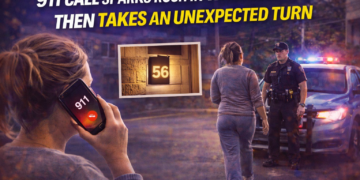














































Officers were called to the Portsmouth Post Office after a customer supervisor reported a troubled homeless woman had been living in the lobby and staff wanted help removing her.
For police, the situation was anything but new.
A Familiar Face, A Familiar Problem
Over the past several years, officers say the same woman has shown up at the post office again and again, generating numerous calls for service. Her history there includes extreme incidents—including one where she tied the doors shut to prevent officers from entering.
Police reports show she has also been involved in dozens of arrests and multiple dangerous episodes where she ran into traffic, creating serious safety concerns for herself and others.
And yet, every time, the outcome is the same:
👉 She’s released back onto the streets.
Why Police Couldn’t Trespass Her
In this case, the post office made a key decision: they did not want her trespassed.
Despite the disruptions, officials said the woman is still a customer who needs access to postal services. Without a request to trespass her—and without an active crime occurring—police had limited options.
So instead of handcuffs or citations, officers took a different route.
Dropped at the Shelter
The woman left the post office without incident, and officers transported her to the homeless shelter in an effort to get her somewhere safer for the time being.
No arrest.
No charges.
No long-term solution.
The Revolving Door Nobody Can Stop
This case highlights a frustrating reality police, businesses, and social service providers all face:
- She’s clearly struggling
- She repeatedly puts herself in danger
- She repeatedly disrupts public spaces
- But no one has the authority—or resources—to keep her off the street
Police can respond.
They can transport.
They can arrest—temporarily.
What they can’t do is force long-term treatment or housing.
The Bigger Question
When someone cycles endlessly through arrest, release, and repeat emergencies, who is actually responsible for breaking that cycle?
Until there’s a system that goes beyond short-term fixes, officers say calls like this will keep coming—and the outcome will keep being the same: back to the street, back to the lobby, back to square one.