
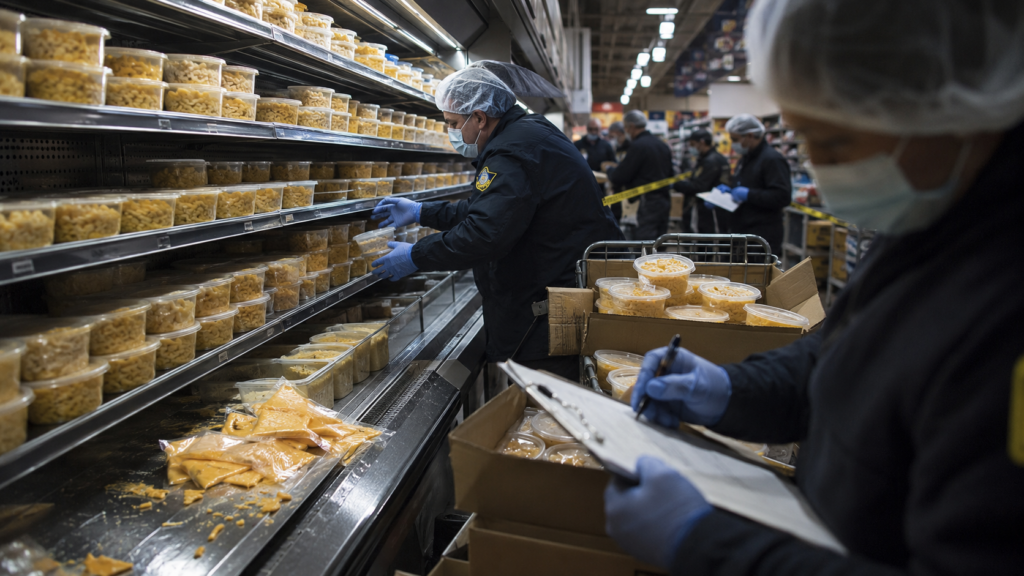
U.S. officials confirmed in 2026 that a nationwide recall of certain macaroni and cheese products had been issued, triggering what experts are already calling one of the most emotionally complex noodle events in recent American history.
At the center of the recall is Aldi’s Park St. Deli Macaroni & Cheese, sold in refrigerated 20-ounce plastic tubs in paperboard sleeves. According to the recall details, the product contained soy lecithin, an ingredient derived from soybeans, that was not listed on the ingredient panel.
The recall involved 58,405 cases, or roughly 525,645 individual packages, meaning hundreds of thousands of Americans were suddenly forced to confront the terrible possibility that their week had been built on pasta-based false pretenses.
Federal regulators classified the recall as Class II, meaning exposure could cause temporary or medically reversible adverse health consequences and that the overall risk was considered moderate. In practical terms, that means the government has not declared total cheese collapse, but it has also not ruled out a long, difficult season of people standing in kitchens whispering, “I thought we knew what was in this.”
Analysts are still working to determine the full human toll, but early estimates suggest the recall may involve millions upon millions of individual macaroni noodles, each one now caught in the gears of bureaucracy, refrigeration, and shattered public trust. Investigators have not released an official noodle count, but sources close to the situation say the number is “disrespectfully high.”
Even more troubling are reports of cheese packets and cheese-related remnants lying abandoned across the nation in discarded piles, forming what some residents have described as “small golden monuments to lost convenience.” One Midwestern observer, staring into a trash can with the hollow expression of a man who has seen too much, said only, “It didn’t have to be this way.”
The issue is especially serious for people with soy allergies, who generally prefer knowing whether soy is in a product before the product begins its quiet campaign against them. Food safety officials, meanwhile, continue urging consumers to check their products and avoid eating recalled items, a message many Americans are hearing while emotionally processing the fact that even macaroni and cheese now apparently requires investigative journalism.
Families across the country are said to be adapting as best they can. Some have turned to emergency freezer foods. Others have chosen silence. A few brave survivors have reportedly attempted to explain the situation to children, only to discover there are no adequate words for a young person asking why the nation let this happen.
At press time, the recalled macaroni and cheese remained a refrigerated symbol of modern fragility: 58,405 cases, 525,645 packages, one undeclared allergen, and a nation once again reminded that peace was always more fragile than melted cheese made it look.