
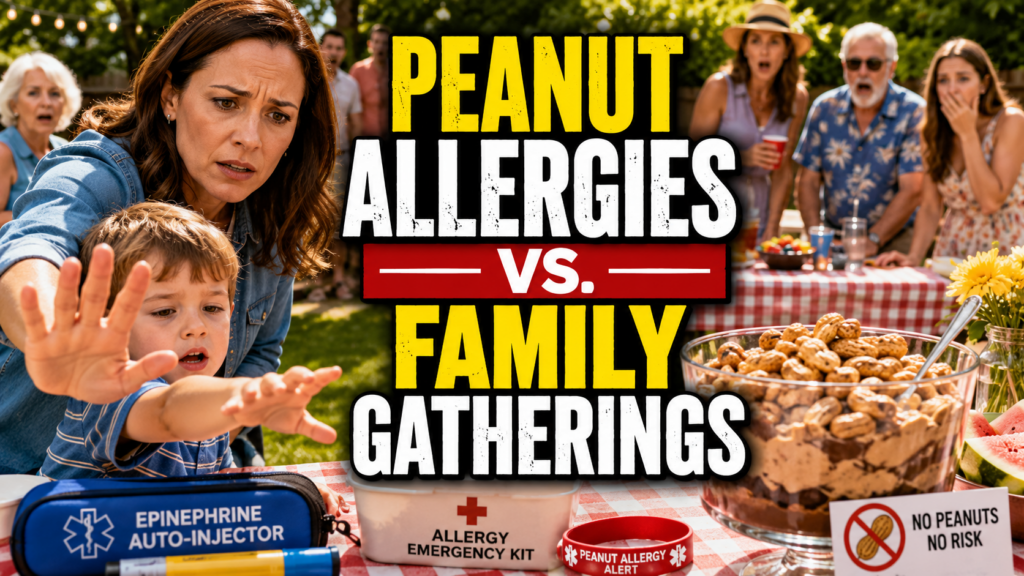
Family gatherings are supposed to be warm, loud, and full of love. For parents of a child with a peanut allergy, they can also feel like a minefield.
One cookie platter. One spoon used twice. One relative saying, “I’m sure it’s fine.” That is all it takes to turn a birthday party or holiday dinner into a medical emergency. Peanut allergy reactions can happen fast, and anaphylaxis is a severe allergic reaction that can cause death. The safest way to think about family events is simple: hope for the best, but plan like mistakes are coming.
The first rule is to warn people early and clearly. Do not drop the allergy into the group chat an hour before dinner. Tell the host ahead of time that your child has a peanut allergy and that this is not a preference, a diet, or a “pick around it” situation. The American Academy of Allergy, Asthma & Immunology says better communication can prevent reactions, and notes that many reactions while dining could have been avoided if the allergy had been made clear.
The second rule is even less glamorous, but just as important: do not trust mystery food. Homemade desserts, buffet dishes, mixed snack bowls, and unlabeled treats are often where trouble starts. The FDA says people with food allergies should read labels and avoid the foods they are allergic to, and that packaged foods must identify major allergens like peanuts on the label. But that protection is strongest when there is actually a label to read. At family events, there often is not.
That is why many parents use the safest strategy of all: bring your child’s food yourself. Bring a safe main dish, a safe snack, and a safe dessert so your child is not stuck watching everyone else eat while you play detective with frosting, casseroles, and candy dishes. It is not dramatic. It is smart.
Parents also need to watch for cross-contact, the sneaky problem that ruins a lot of “but we didn’t put peanuts in it” claims. AAAAI explains that cross-contact happens when an allergen accidentally touches safe food. In real life, that can mean the same knife cutting brownies and peanut butter bars, the same serving spoon moving from one dish to another, or somebody simply picking nuts off a salad and assuming the food is now harmless. AAAAI specifically warns that actions like chopping nuts on the same block, sharing pans or mixers, or just removing nuts from a dish do not make food safe.
Here is one fact many families get wrong: smell is not a safety test. AAAAI says airborne food allergens usually do not cause anaphylaxis, though they may irritate the nose or eyes. The bigger danger is eating even a small amount left on utensils, prep surfaces, or shared food. So the threat is often not “the room smells like peanuts.” The threat is the smear on the serving knife, the crumb in the brownie pan, or the trace ingredient no one thought to mention.
If your child is old enough, create a hard family rule: no eating anything unless Mom, Dad, or the safe adult says yes. No samples. No “just one bite.” No taking food from cousins, tables, or favor bags. Older children should be taught to say, “I have a peanut allergy. I need to check first.” Younger children need close eyes-on supervision, especially at chaotic events where food is everywhere.
And then there is the part parents cannot afford to fake: emergency readiness. AAAAI says people with food allergies should always carry epinephrine. It also says that if symptoms such as trouble breathing, dizziness, or loss of consciousness happen in the context of eating, epinephrine should be used right away and 911 should be called immediately. CDC guidance says the recommended treatment for anaphylaxis is prompt epinephrine, followed by calling emergency medical services. Do not wait to see whether it gets better. Do not start with an antihistamine and hope for the best.
A written anaphylaxis action plan matters too. AAAAI says this plan, developed with your child’s allergist, lists the child’s food allergies, symptoms to watch for, how to treat a reaction, and how to get emergency help. At a family event, that means the adults with your child should know where the medicine is, how to use it, and when not to hesitate.
Parents should also know the signs that can show up before panic takes over: hives, swelling of the lips or tongue, vomiting, trouble swallowing, wheezing, dizziness, fainting, confusion, or a child saying strange things like “my throat feels funny” or “something is stuck.” CDC says those kinds of symptoms can be part of a serious allergic reaction in children.
The bottom line is not that family gatherings are too dangerous to attend. It is that they are too unpredictable to attend unprepared. Peanut allergy safety is not about being rude, dramatic, or overprotective. It is about recognizing that one casual mistake from a well-meaning relative can become your child’s emergency in seconds.
So yes, ask the hard questions. Bring the safe cupcakes. Wipe the table. Read the label again. Keep the epinephrine close. At a family gathering, peace of mind does not come from trusting the crowd. It comes from having a plan that does not break when the crowd gets careless.