















































































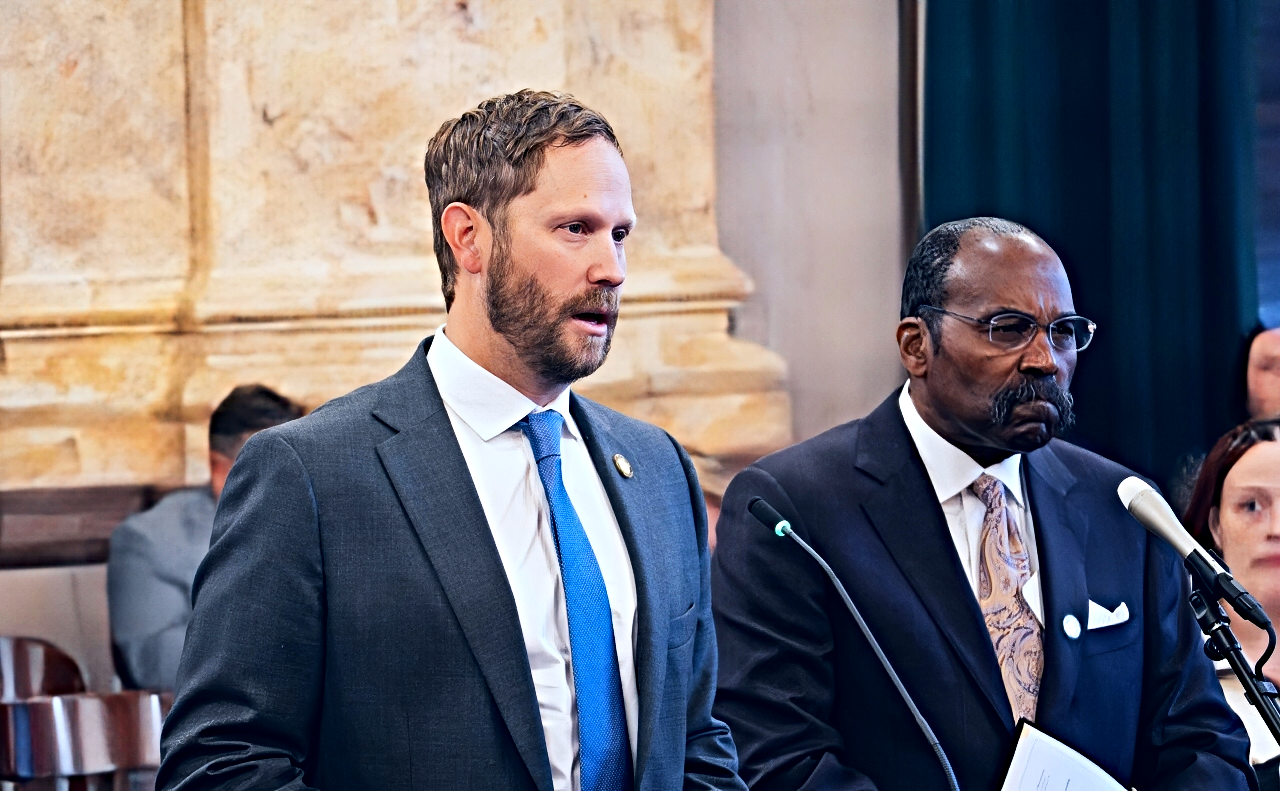
As Scioto County moves forward with plans tied to a proposed Google data center campus, Casey Weinstein, a state lawmaker is trying to pump the brakes on Ohio’s rapidly expanding data center industry.
This week, Casey Weinstein, a Democratic state senator from Hudson, announced a slate of new bills aimed at reining in data center growth — citing concerns over electric reliability, rising utility costs, massive water use, and local control.
Weinstein said he supports economic development, but believes Ohio needs stronger guardrails.
“We want innovation in Ohio,” Weinstein said. “But that growth shouldn’t come at the expense of reliability or affordability, and it shouldn’t shift new costs onto Ohio families and small businesses.”
Important context: none of this is law — yet
Right now, all of this legislation is only being introduced. None of it has passed. None of it is in effect.
And according to county officials and legal experts, these proposals are unlikely to impact Scioto County’s Google project, which is already well underway under existing state law.
Still, the bills could send a broader message to tech companies: Ohio may no longer be rolling out the red carpet without conditions.
What Weinstein is proposing
Casey Weinstein and Senate Democrats outlined multiple bills designed to curb what they see as unchecked data center expansion across the state:
⚡ Ohio Power Reliability and Fairness Act
Would require data centers to undergo grid capacity reviews before connecting to the power system — ensuring their massive energy demand won’t threaten reliability or drive-up rates for everyday customers.
In plain terms: tech companies would have to prove they won’t overload the grid or stick residents with higher electric bills.
💧 Responsible Water Use in Data Centers Act
Would force companies to publicly report water usage, cap average daily consumption at 5 million gallons, and require data centers to pay for any needed infrastructure upgrades.
The goal: protect Ohio rivers, aquifers, and local water systems.
🧾 Data Center Grid Cost Responsibility Act

Would require data centers to pay the full cost of new power generation and transmission needed to serve them — instead of spreading those costs to regular ratepayers.
🏷️ Data Center Tax Break Bill
Would eliminate new sales tax exemptions for data centers, arguing communities see little benefit from these incentives.
🏘️ Powering Ohio Communities Act
Would require companies to invest directly in local communities — through energy projects or residential upgrades — before being allowed to connect to the grid.
🏛️ Local Development Protection Act + Home Rule Resolution
Would reinforce that counties, townships, and cities have the final say on whether data centers locate in their communities — without pressure from state officials.
How this connects to Scioto County
Scioto County commissioners recently approved a tax abatement tied to Google’s proposed Franklin Furnace campus, saying it gave them leverage to demand local labor, infrastructure commitments, and community involvement.
That deal was negotiated under current Ohio law — meaning Weinstein’s proposals, even if passed later, would not retroactively undo it.
Still, the timing is notable.
Residents across Ohio — including many in Scioto County — have raised concerns about:
- Electric rates
- Water usage
- Environmental impact
- Transparency
- Whether communities truly benefit
Weinstein’s legislation is clearly responding to those fears.
Tech companies already making commitments
It’s also worth noting that major tech firms, including Google and Meta, have already publicly committed to working with power providers, investing in grid upgrades, and improving water efficiency.
Both companies have announced sustainability initiatives and partnerships focused on clean energy and responsible water use — a point local officials say factored into their confidence in Google as a partner.
The bigger picture
For now, Ohio remains one of the hottest data center markets in the country.
But Weinstein’s proposals signal growing political pressure to slow things down, add oversight, and shift more responsibility onto billion-dollar tech companies.
None of these bills have passed.
None are guaranteed bipartisan support.
And none are expected to stop Scioto County’s project.
But they do mark a turning point: lawmakers are starting to ask whether Ohio’s data center boom is happening too fast — and who’s really paying the price.
Scioto County Daily News will continue tracking both the legislation and the Google project as they develop.