
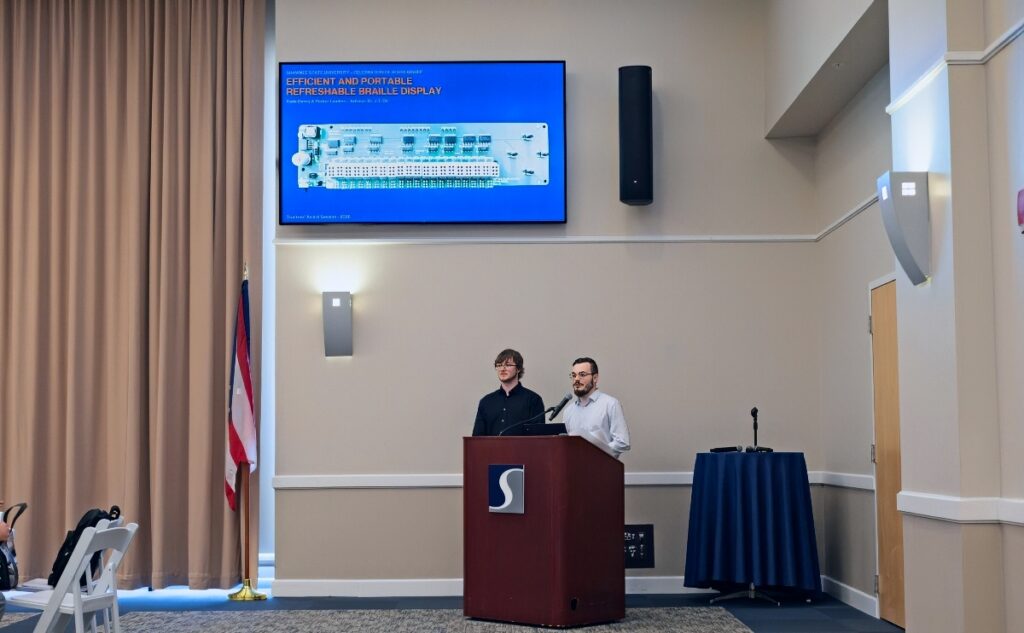
Two Shawnee State University students are turning classroom learning into a real-world solution aimed at improving accessibility for people who are visually impaired.
According to a university press release, computer engineering technology students Parker Lauders and Kade Dancy have developed a prototype electronic braille display as part of their senior capstone project.
The device uses refreshable technology to present information through mechanically raised and lowered dots, allowing users to read changing content without the need for static braille materials. The students designed, built, and programmed the working prototype themselves.
The project focuses on practical, everyday use. The students say the device could be deployed in public settings such as restaurants, museums, and information kiosks, where traditional braille materials often become outdated or require frequent reprinting.
“We wanted to create something that makes information more accessible in everyday environments,” Lauders said in the release, noting that digital updates could replace the need for repeatedly printing new braille menus.
The idea originated early in Lauders’ college career and was developed through hands-on coursework in Shawnee State’s Computer Engineering Technology program. The university says the project reflects its “Imagine, Design, Build” philosophy, which encourages students to develop solutions to real-world problems and bring them to life through engineering and design.
Faculty say the project draws on skills learned across multiple courses and highlights the program’s emphasis on applied learning.
The device is still being refined. Lauders and Dancy are continuing to improve the hardware, reduce manufacturing costs, and enhance functionality. They also plan to pursue a patent and explore opportunities to bring the technology to market.
The project was recently showcased at the Ohio Statehouse, signaling potential broader interest in the innovation.
Following graduation, Lauders is expected to begin a career in firmware engineering, while Dancy will work as a project coordinator in manufacturing. Both say they plan to continue developing new technologies beyond the classroom.
University officials say projects like this demonstrate how students can take ideas from concept to creation while addressing real-world challenges.