























































Portsmouth Police were kept busy with a series of calls that had one thing in common — people in crisis who needed help far beyond ordinary police work. These back-to-back incidents are another reminder that local officers are often the first responders to escalating mental-health emergencies.
Case 1: Gunpoint Robbery Claim at the Royal Inn — But All Wasn’t As It Seemed
Just after 11 a.m., officers headed to the Royal Inn on Kendall Avenue after a woman said she’d been robbed at gunpoint and held against her will.
But once police made contact, it became clear something was very wrong — just not in the way the caller reported.
Officers noted the woman appeared intoxicated, incoherent, and unable to articulate what actually happened. For her safety, the entire interaction was documented on body-worn cameras. Officers determined no crime had occurred, but the woman was clearly in crisis.
Case 2: Man Making Threatening Statements — Actually in Mental Distress
One hour later, officers responded to a Robinson Avenue home, where a caller said his neighbor was making threatening comments.
Police located the man and quickly realized he was experiencing an altered mental state, but was not a danger to himself or others. He asked officers for help finding somewhere else to stay, and dispatch attempted to reach the local homeless shelter — but couldn’t get anyone on the line.
The man reported last using meth three days earlier, so officers contacted the Quick Response Team (QRT). When QRT arrived, the man declined treatment. Police helped him locate his missing wallet and ensured there was no crime involved before clearing the scene.
Case 3: “Someone Is Chasing Me!” — Fear Fueled by Crisis
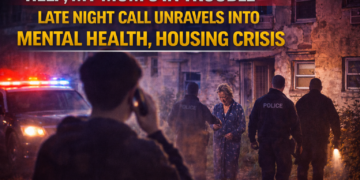
An hour later, police were dispatched to The Loft Apartments after a caller said a man in a black jacket and gray hat was being chased.
Officers located him and learned the issue wasn’t an actual threat — the man was in crisis and afraid. They offered him a ride to rehab and attempted to connect him with services, but he refused treatment.
When Police Become Mental-Health Responders
None of these incidents involved traditional criminal activity.
Every single one involved a person struggling with mental illness, substance influence, or both.
And in each case, officers:
- responded quickly
- tried to de-escalate
- checked for safety
- contacted treatment resources
- documented everything
It’s a difficult role — part law enforcement, part crisis intervention — but one Portsmouth law enforcement faces daily.