















































































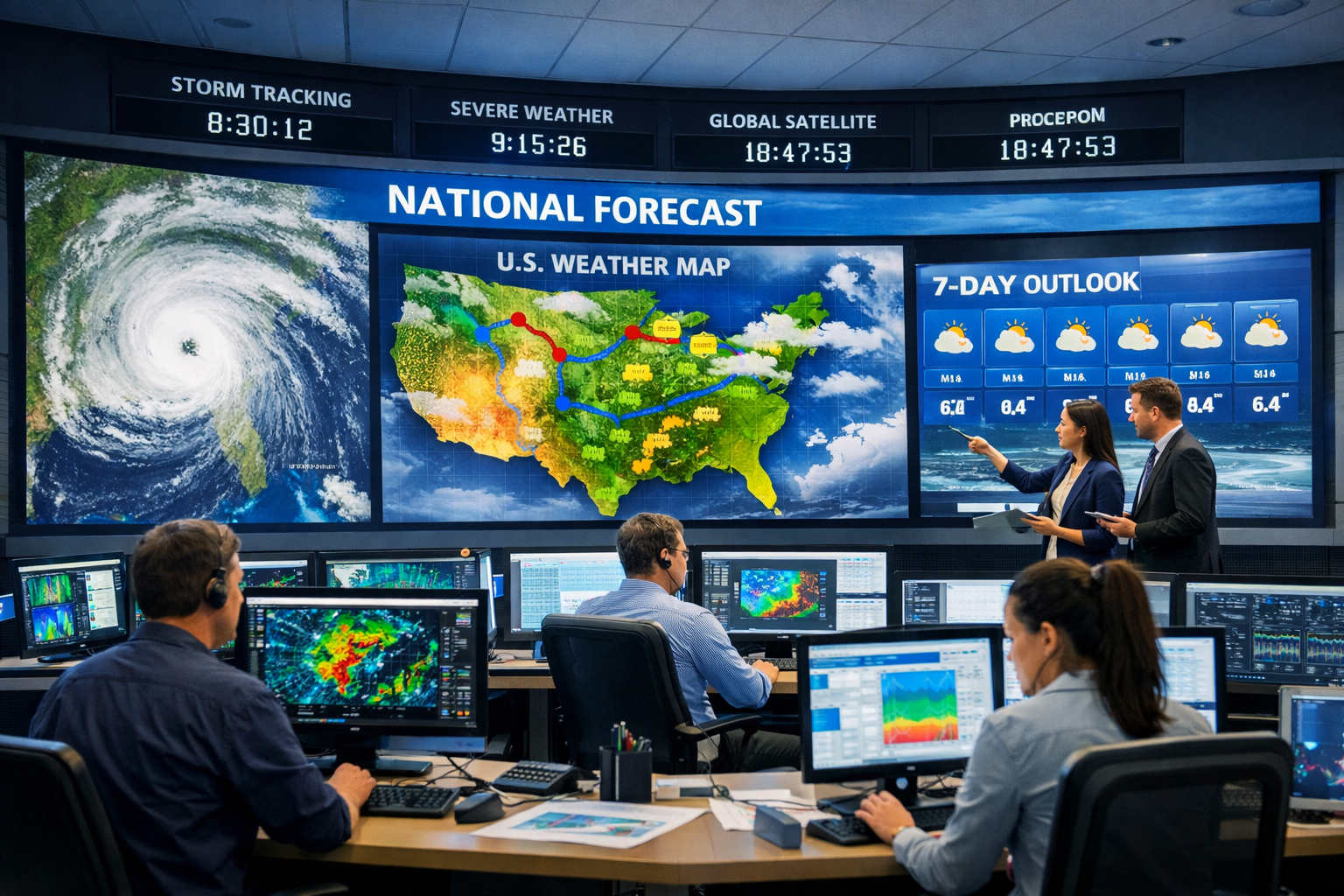
Checking the weather used to mean listening to a radio broadcast or watching the evening news. Forecasts were broad and infrequent, offering little beyond general recommendations such as carrying an umbrella or wearing a coat. Today, a few taps on a device can reveal conditions for a specific hour, tailored to your exact location.
This transformation is powered by technology that collects and delivers data with remarkable speed and accuracy. Forecasts are now integrated with digital tools, making weather information more useful and accessible than ever. Whether for morning routines or large-scale event planning, the ability to instantly retrieve specific forecasts has become part of daily life.
What appears to be a simple tool is backed by a complex system. This article explores how smart weather tools work and how they’ve changed the way people interact with forecasts.
The Evolution of Forecast Access
In the past, weather reports were updated once daily in newspapers and offered limited detail. Television and radio provided more frequent updates, but they still lacked personalization.
As internet access became more common, online platforms enabled people to access forecasts on demand. However, early tools were basic and slow to update. Things changed when developers began building platforms that aggregated real-time data from multiple sources and presented it through interactive interfaces.
Today’s weather platforms deliver hourly updates, radar maps, and real-time alerts. These tools continuously refresh data and adjust for geographic accuracy, turning the forecast into something users can interact with directly rather than passively consume.
How Today’s Weather Tools Work Behind the Scenes
Behind the convenience of a mobile weather app lies a network of systems that work in sync to collect, process, and deliver accurate information. These include satellite feeds, ground-based sensors, cloud servers, and APIs.
A weather lookup tool serves as the user’s gateway to this data. It allows someone to enter a location and retrieve a current forecast within seconds. Instead of searching across various websites or apps, users receive an instant summary of temperature, humidity, wind speed, and more—all tailored to a specific location and time.
The process begins with data collection. Data from radar stations, weather balloons, airports, and satellites are aggregated and disseminated by meteorological agencies. Weather tools then request and format this data, often using address or coordinate inputs, before displaying it through easy-to-navigate interfaces such as dashboards or apps.
These systems refresh regularly, sometimes multiple times per hour. In settings where conditions can change rapidly or public safety is at risk, frequent updates are critical. Although users don’t see the back end, every accurate forecast is the result of a well-orchestrated technical process.
Everyday Uses You Didn’t Know Were Powered by Weather Data
Weather data underpins many aspects of daily life. In agriculture, it helps guide planting schedules, irrigation, and crop protection. A frost warning or drought alert can influence how and when fields are managed.
Delivery and transportation services rely on live updates to adjust routes and avoid delays caused by storms or dangerous conditions. Local governments use forecasting tools to plan public events, construction schedules, and emergency services.
Even households benefit. Smart thermostats adjust based on predicted temperatures. Automated lawn systems time their watering cycles using rainfall forecasts. Energy-saving systems manage usage based on upcoming weather conditions.

These aren’t specialized tools used by a few industries. They are integrated into systems that affect businesses, homes, and public infrastructure. The forecast has become a utility—one that quietly influences safety, efficiency, and comfort.
The Tech Behind the Simplicity
Most users rarely consider the technology that powers their weather app. But every time a forecast appears on a screen, multiple systems have already done their work.
A key component is the use of APIs, which enable platforms to request weather data from large-scale databases and return results in real time. These systems must be fast and reliable, particularly when users expect real-time updates.
That’s why many platforms are built on scalable cloud infrastructure, which can handle spikes in traffic during extreme weather events. Cloud environments also allow faster updates and improved availability across devices.
Incoming weather data usually arrives in raw, unformatted states. Before users see it, the system cleans and processes it. This includes adjusting for time zones, local geography, and other conditions that affect accuracy.
User interface design is equally important. Forecasts must be easy to read and understand, especially during time-sensitive events. Color-coded alerts, hourly breakdowns, and mobile responsiveness all contribute to an intuitive experience backed by robust engineering.
Why Location Accuracy Matters More Than Ever
Today’s weather tools can deliver forecasts at the block or street level. This is a major leap from older systems, which often pulled data from the nearest major station—sometimes dozens of miles away.
Modern tools use GPS data, detailed maps, and advanced modeling to produce highly localized forecasts. This is especially valuable in areas such as southern Ohio, where elevation and geography create microclimates.
If someone is planning agricultural work or monitoring storm activity in the region, knowing the conditions at their specific location is far more useful than relying on broad regional forecasts.
Hyper-local data also supports public safety. Emergency alerts, power grid management, school-closure decisions, and flood-prevention all depend on accurate, location-specific forecasts.
Even personal planning improves. People can make better decisions about travel, events, or daily routines when they’re informed by precise data reflecting conditions outside their home—not just those in their county or state.
Forecasting Has Become a Personal Experience
Weather forecasting is no longer something people passively receive from television or radio. It has become an interactive experience, powered by smart tools that respond to location, time, and need. Whether you’re checking conditions for a hike or managing operations for a business, the forecast is now something personal.
A combination of real-time data, infrastructure, and user-focused design drives this change. What once required interpreting general reports now takes just a glance—and delivers more information than ever.
Smart weather tools continue to improve in accuracy and reach. Their integration into daily life makes them as essential as the devices we use to access them. From small choices to critical decisions, the forecast has evolved into a practical tool for navigating a weather-shaped world.