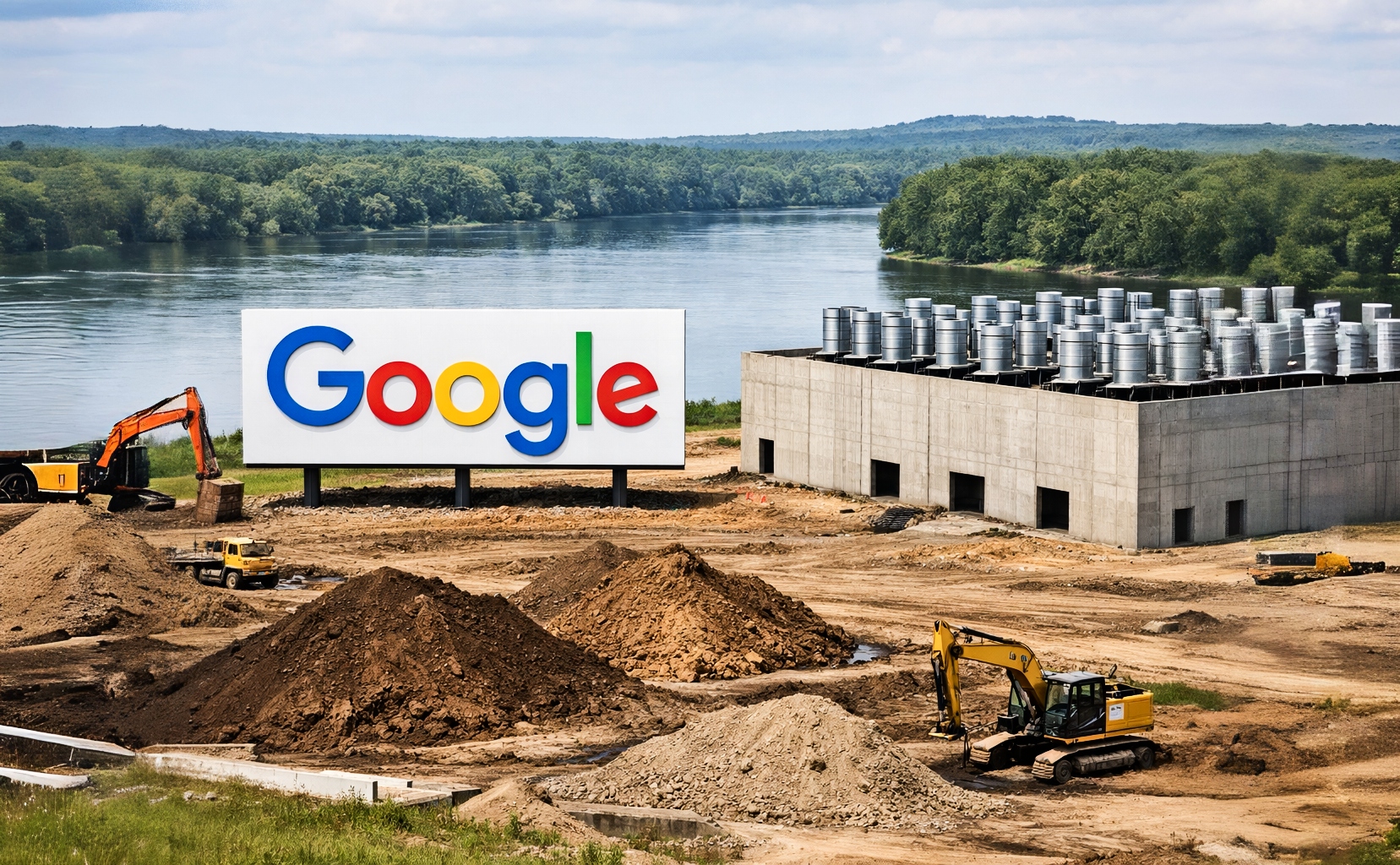
Even after Scioto County Commissioners voted to approve a tax abatement tied to a proposed data center campus in Franklin Furnace, many residents say they still have questions. And honestly? That’s fair.
Here’s what we know so far — and what’s still up in the air.
-
Is the Google deal a done deal?
Short answer: No.
Commissioners approved a tax abatement, not a construction project.
According to a statement from Google, the company is still in the early stages:
“Google is considering a potential data center project in Scioto County, Ohio,” said Molly Kocour Boyle, Head of Midwest Data Center Public Affairs for Google. “We are still very early in the process, working closely with local leadership.”
That means:
- No final construction timeline
- No permits issued yet
- No guarantee the project moves forward
Commissioners argue the abatement simply keeps Scioto County competitive if Google decides to proceed.
-
Will this make electric bills go up?
Possibly — but it’s more complicated than that.
In some regions, electric rates have risen as power demand from data centers has increased. That concern isn’t imaginary.
But large tech companies are increasingly helping pay for new power generation rather than just pulling from the existing grid. In Ohio and neighboring states, companies like Google and Meta have:
- Invested in grid upgrades
- Helped fund new power sources
- Explored advanced nuclear options (including small modular nuclear reactors)
Commissioners say this is one reason they felt more comfortable dealing with Google specifically — large operators with the financial ability to help stabilize the grid instead of overwhelming it.
-
What about pollution — noise, water, and the environment?
Data centers don’t get special treatment.
If built, Google would be bound by the same environmental laws as any other major industrial facility:
- EPA permits
- Ohio EPA water and discharge rules
- Noise regulations
- Ongoing monitoring and reporting
Noise complaints are one of the most common fears, but commissioners pointed to existing Google sites in Ohio located near schools and neighborhoods, noting that sound levels are typically lower than nearby highways.
As for pollution: there are many layers of approval required before construction can even begin, and enforcement does not stop once a building is up.
-
What about water use — especially the Ohio River?
Yes, data centers use a lot of water. That’s real.
The current concept involves:
- Drawing cooling water directly from the Ohio River
- Treating it through a filtration system
- Returning it under strict discharge permits
Google has a national reputation for aggressive water-management and sustainability programs, largely because water use is one of the biggest criticisms facing data centers everywhere they build.
If the project advances, water use would be monitored continuously — not just approved once and forgotten.
-
What does a 500-job campus mean for Franklin Furnace and Green Township?
This may be the hardest question of all — because it’s not just about money.
Franklin Furnace and Green Township have long valued:
- Rural character
- Small-town life
- Open land
But it’s also worth remembering that Franklin Furnace was born as an industrial town.
The community takes its name from a blast furnace built in the 1820s to produce charcoal pig iron. Heavy industry shaped the area long before highways, zoning, or modern environmental rules existed.
Commissioners argue the question now isn’t whether change comes — but what kind of change:
- One massive employer with long-term oversight
- Or piecemeal development with less accountability
Supporters say 500 permanent jobs could keep young people local. Opponents worry it permanently alters the community’s identity.
Both things can be true at the same time.
The Google project is not final, not guaranteed, and not without risk. But it’s also not a mystery box anymore.
The company is known. The numbers are clearer. The debate is shifting from fear of the unknown to whether the trade-offs are worth it.
And that conversation — loud, uncomfortable, and emotional — is far from over.