

























































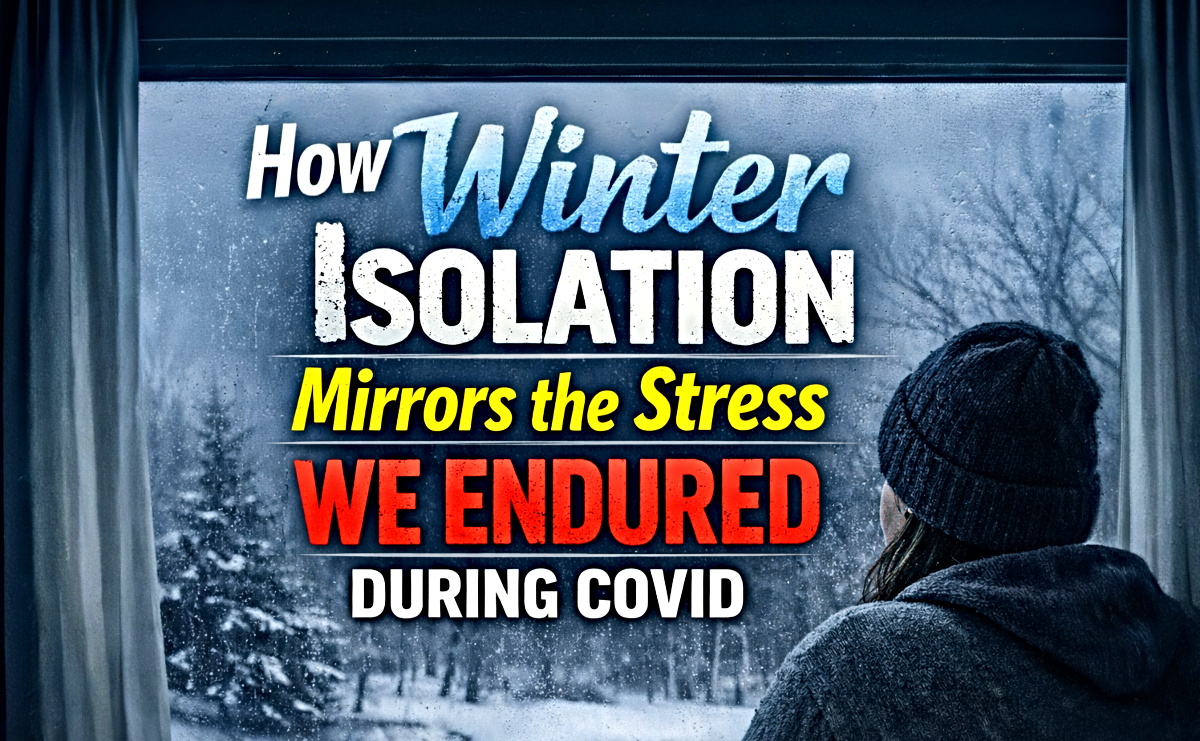
For more than two weeks, southern Ohio has been trapped in a familiar kind of stillness. Snow, ice, bitter cold, gray skies that never seem to lift. Roads empty earlier than usual. Conversations shortened. Plans postponed. People retreating inward—not because they want to, but because the environment insists on it.
It’s impossible not to feel echoes of the COVID lockdowns in moments like this.
Back then, we were told to stay home. To keep our distance. To wait it out. What many people don’t talk about enough is how heavy that waiting became. The stress wasn’t just about a virus. It was about uncertainty, isolation, financial fear, and the slow erosion of normal human contact. Mental health suffered quietly, often invisibly, while systems meant to help were overwhelmed or out of reach.
This stretch of bad weather isn’t the same as a pandemic. But it rhymes with it.
When people are confined—by policy or by weather—the walls don’t just close in physically. They close in emotionally. The cold keeps people inside, but it also keeps worries loud. Anxiety grows legs. Depression feels heavier when daylight is scarce. For those already carrying grief, addiction, loneliness, or mental illness, isolation isn’t neutral—it’s combustible.

The hardest part is that this kind of stress doesn’t announce itself. There’s no siren for burnout. No weather alert for despair. People still show up online. They still say “fine.” They still scroll. Meanwhile, the weight keeps stacking.
One thing we learned during COVID is that mental health doesn’t pause just because the world slows down. If anything, it accelerates. Services that were already stretched thin became nearly inaccessible. Therapy moved online—helpful for some, impossible for others. Emergency rooms became last-resort mental health clinics. Families absorbed pressure they weren’t equipped to carry.
A long stretch of cold and isolation can reopen those same fault lines.
Cabin fever sounds trivial until it isn’t. Until irritability turns into conflict. Until sleep patterns collapse. Until substance use creeps back in “just to take the edge off.” Until someone who was barely holding on feels like the world has gotten smaller again.
While many of us are counting down the days until the weather breaks, it’s worth remembering that not everyone experiences isolation the same way. Some people live alone. Some people are trapped in tense or unsafe homes. Some people don’t have reliable heat, transportation, or access to care. The cold doesn’t just inconvenience—it amplifies inequity.
Through all of this, there’s another group feeling the pressure more than most: law enforcement and first responders.
When roads are slick and temperatures drop, their risk rises. They respond when others are told to stay put. They drive when conditions are dangerous. They answer calls that don’t pause for weather or fatigue. Mental health crises don’t wait for spring. Domestic calls don’t reschedule. Accidents don’t check forecasts.
In times like this, first responders carry not just physical risk, but emotional load. They see the consequences of isolation up close—overdoses, mental health emergencies, desperation that has nowhere else to land. They do it knowing backup may be delayed, conditions are worse, and mistakes carry higher stakes.
It’s easy to thank them in passing. It’s harder—and more important—to recognize the sustained strain these stretches place on people who are already asked to absorb too much of society’s overflow.
So what’s the takeaway?
Not a platitude. Not “stay positive.” Not another suggestion to write it all down and wait it out.
The most honest advice under circumstances like these is this: shrink your world on purpose—but don’t disappear from it.
Choose fewer inputs, not more. Limit the noise that feeds anxiety. Check on one or two people intentionally instead of doom-scrolling everyone. Create structure where the environment has stripped it away. Get outside briefly even when it’s unpleasant—movement breaks mental stagnation. Ask for help earlier than feels necessary, not later when it’s desperate.
Most importantly, remember that endurance doesn’t mean silence. The lesson from COVID—and from stretches like this—is that pretending we’re unaffected helps no one. Naming strain is not weakness. It’s how pressure gets released before something breaks.
The weather will change. It always does. But how we treat ourselves and each other while we wait—that’s the part that lingers.
If there’s one thing worth carrying forward, it’s this: isolation is survivable, but only if we resist the lie that we have to survive it alone.