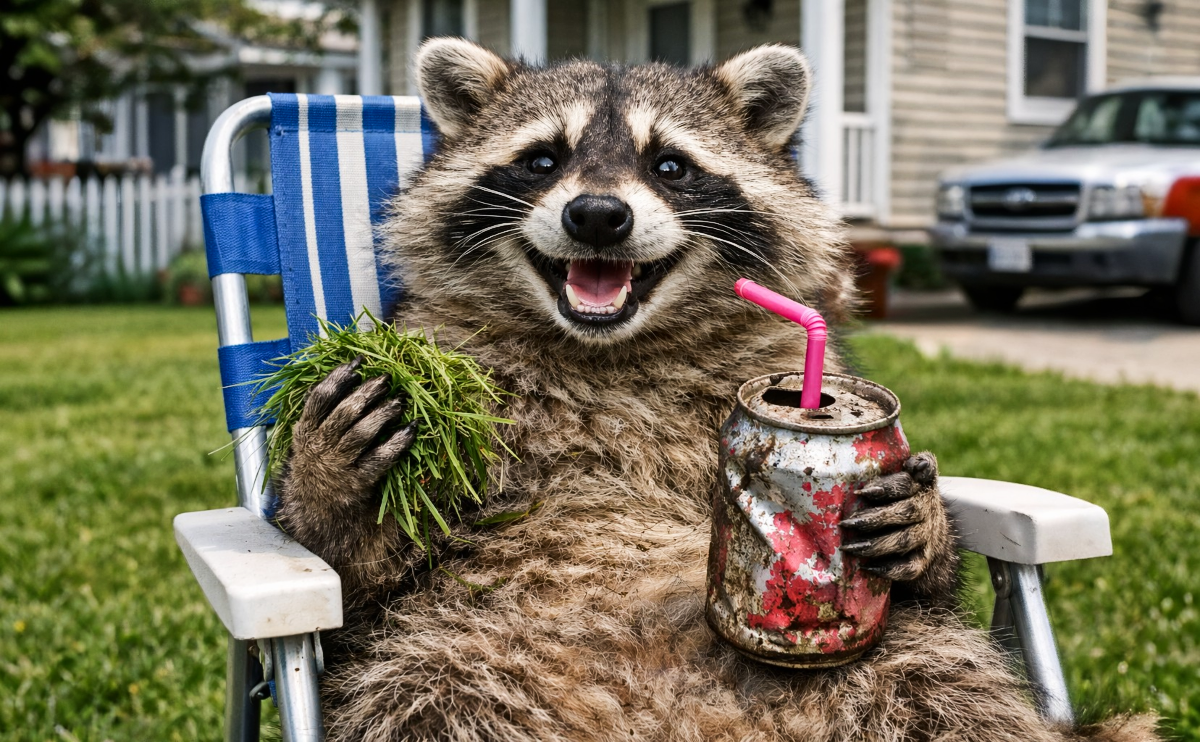
Police were called to High Street after a concerned caller reported a raccoon on the sidewalk and feared the animal might be sick.
When officers from the Portsmouth Police Department arrived, they found the raccoon doing something far less dramatic than expected:
It was calmly eating grass.
🌱 Yes, Raccoons Eat Grass
While raccoons are famous for tearing up lawns in search of grubs and insects (hello, flipped sod), they’re omnivores—and that means plants are on the menu too.
Wildlife experts note:
- Grass isn’t a primary food, but raccoons will nibble it
- They’re opportunistic eaters, especially when other food is scarce
- Grass may even act as a digestive aid, similar to how cats chew plants
In other words, a raccoon munching grass doesn’t automatically signal rabies or illness.
When to Worry—and When Not To
Police say to call authorities or wildlife officials if an animal:
- Appears aggressive or disoriented
- Is staggering, foaming, or unusually bold
- Is posing an immediate danger to people or traffic
But if it’s just foraging, minding its business, and acting like… a raccoon?
That’s usually nature doing nature things.
The Takeaway
This High Street visitor wasn’t sick.
It wasn’t dangerous.
It was just having a snack.
Sometimes the most suspicious behavior is simply a raccoon being a raccoon.