









































































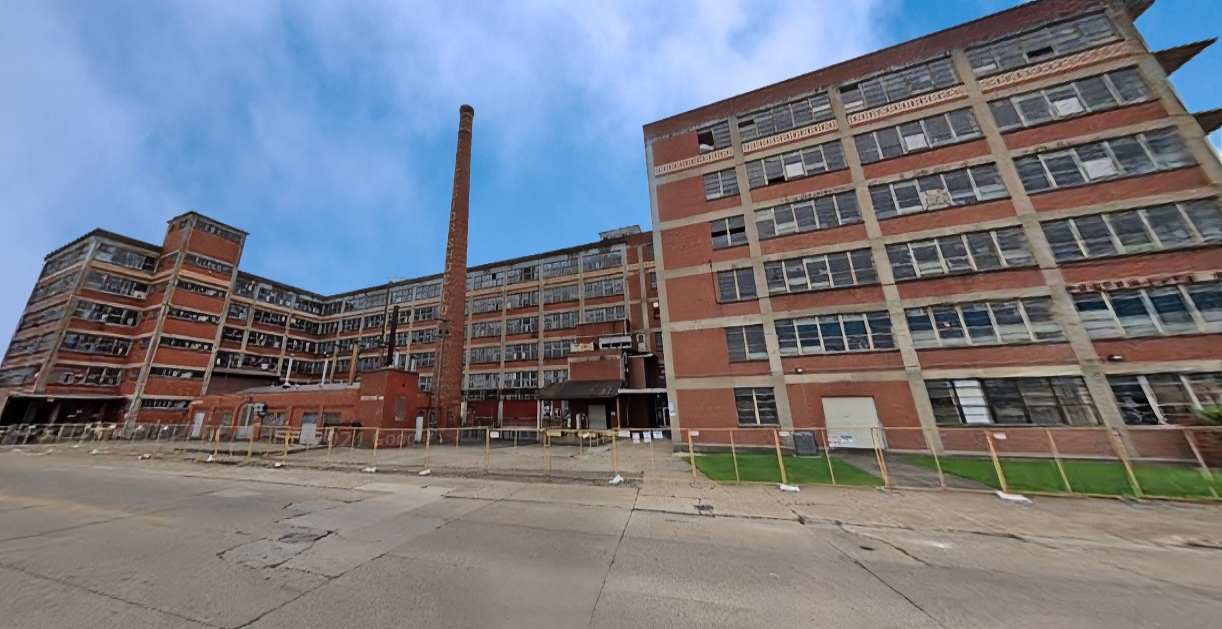
Standing at the corner of Gallia and Campbell Streets, a massive brick complex serves as a silent skyline of a “forgotten empire”. Known locally as the “triple ghost,” this 113-year-old structure has lived through three distinct industrial lives, each layered upon the last, representing the rise and fall of Portsmouth as the one-time shoe capital of the world.
The building’s story began in 1913 when the Excelsior Shoe Company laid its first bricks and erected the iconic towering smokestack that still features “Excelsior” laid into the masonry. Long before the era of federal projects, this factory was the “heartbeat” of the city. Hundreds of workers moved to the rhythm of the factory whistle, producing boots, work shoes, and the official Boy Scout shoe—a contract that brought national fame to the river town. This first “ghost” faded in the mid-1930s as the Great Depression and shifting markets forced the company to close.
The second era of the building’s life began in 1935 when the Williams Manufacturing Company took over the site. Williams transformed the complex into an industrial behemoth, expanding with a new wing that stretched toward Murray Street. For the next 40 years, it reigned as the largest employer in the city, churning out more than 4 million pairs of shoes annually. However, the pressures of automation and foreign competition eventually took their toll, and the factory fell silent in 1976, marking the symbolic end of Portsmouth’s dominance in shoemaking.
The building was “saved” in 1980 when Mitchell Lace moved its operations into the massive complex. While the work shifted from leather to braiding machines and synthetic fibers, the building’s purpose remained the same: keeping the local workforce employed. Under this third iteration, the site became the largest shoelace manufacturer in the world, shipping billions of laces and cords across the globe.

This third life ended in the early 2000s when Mitchell Lace finally departed, leaving the building silent once more. Today, the complex is transitioning again under a new name with a new plan for the next phase of its life.
For a city that has lost 60% of its population since 1930, the “triple ghost” stands as more than just a decaying factory. It is a monument to the resilience of the Rust Belt, proving that the brick and mortar of Portsmouth’s history is only surpassed by the endurance of the people who worked within its walls.