
































































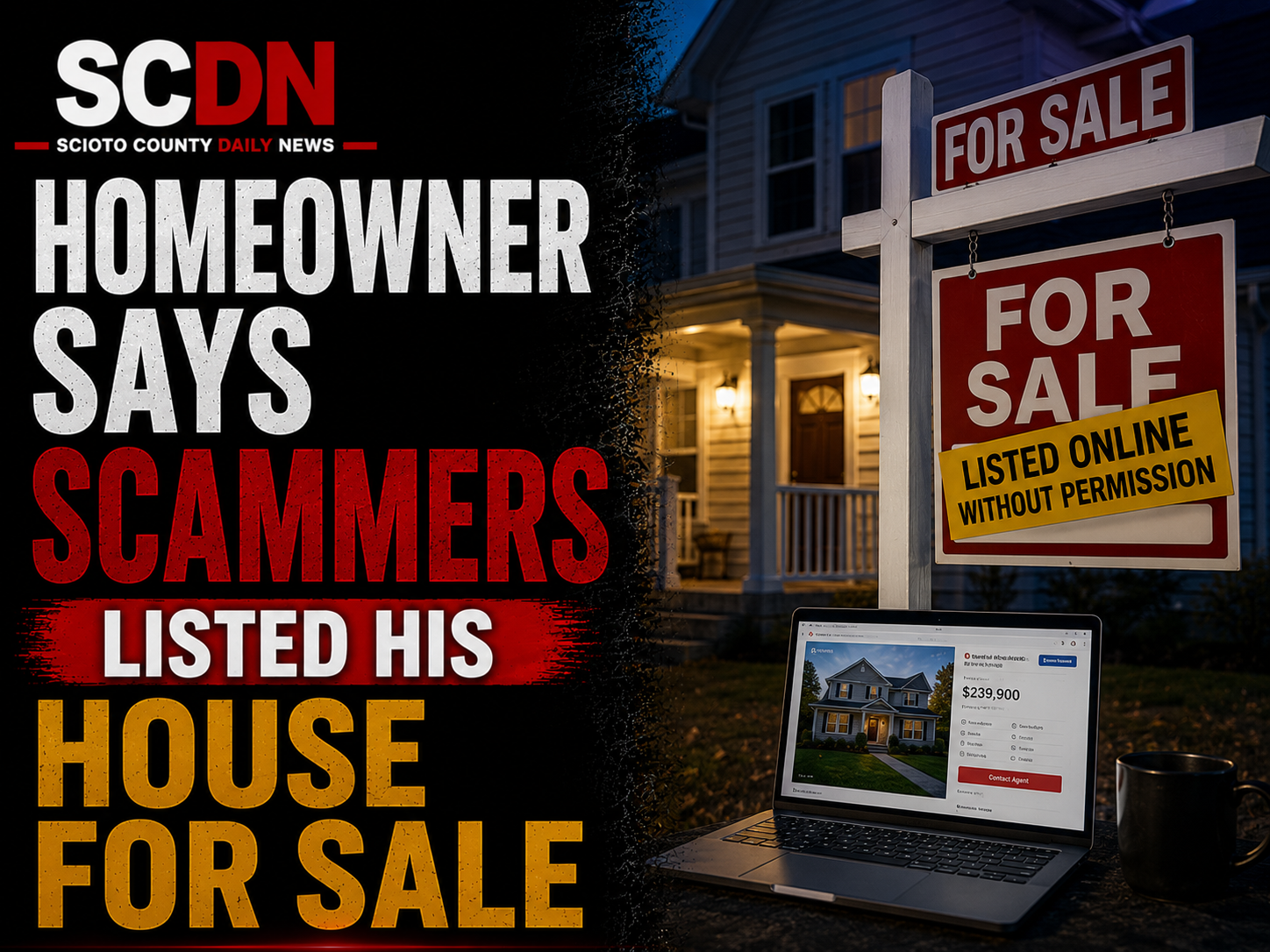
A bizarre encounter in Portsmouth appears to be tied to a growing real estate scam that has been popping up across the country.
Police were called after a 28th Street resident reported that two women came onto the property and claimed the home was for sale.
The homeowner quickly informed them that the house was definitely not on the market.
According to the report, the visitors initially refused to leave the property.
The homeowner told them they were calling police, at which point the women left.
🚨 A ZILLOW LISTING SPARKS CONFUSION
When officers followed up, they discovered the situation wasn’t as simple as it first appeared.
One of the women told police she had visited the property because she found it listed online and believed it was legitimately for sale.
She said she did not wish to pursue any complaint.
The homeowner, however, told officers he had already been investigating the matter himself and believed someone had fraudulently listed the property online as part of a scam.
The homeowner said the house is not for sale.
Police documented the incident and advised both parties.
🏠 HOW THIS SCAM WORKS
Real estate scams have become increasingly common in recent years.
Typically, scammers:
- Find a home that is vacant, abandoned, or simply not occupied often.
- Create a fake listing on Zillow, Facebook Marketplace, Craigslist, or another website.
- Advertise the property for sale or rent.
- Collect deposits, application fees, or earnest money from victims.
- Disappear before the victims discover the property was never available.
In some cases, scammers steal photos from legitimate real estate listings.

In others, they simply take photos from Google Maps or public records.
⚠️ WARNING SIGNS OF A FAKE REAL ESTATE LISTING
Experts recommend being cautious if:
- The price seems too good to be true.
- The seller refuses to meet in person.
- You’re asked to wire money.
- The “owner” claims to be out of state or overseas.
- You can’t verify ownership through county records.
- The property is listed by an unknown company with little online presence.
- The person advertising the property won’t let you tour it with a licensed agent.
👀 WHAT HOMEOWNERS SHOULD DO
If strangers begin showing up claiming your home is for sale or rent:
- Take screenshots of the listing.
- Report it to the website immediately.
- Contact local law enforcement.
- Check county auditor and recorder records.
- Monitor online real estate sites periodically.
Unfortunately, by the time homeowners discover the fake listing, multiple people may have already been victimized.
In this case, the misunderstanding appears to have ended without anyone losing money—but it serves as a reminder that not every online real estate listing is what it seems.