

















































































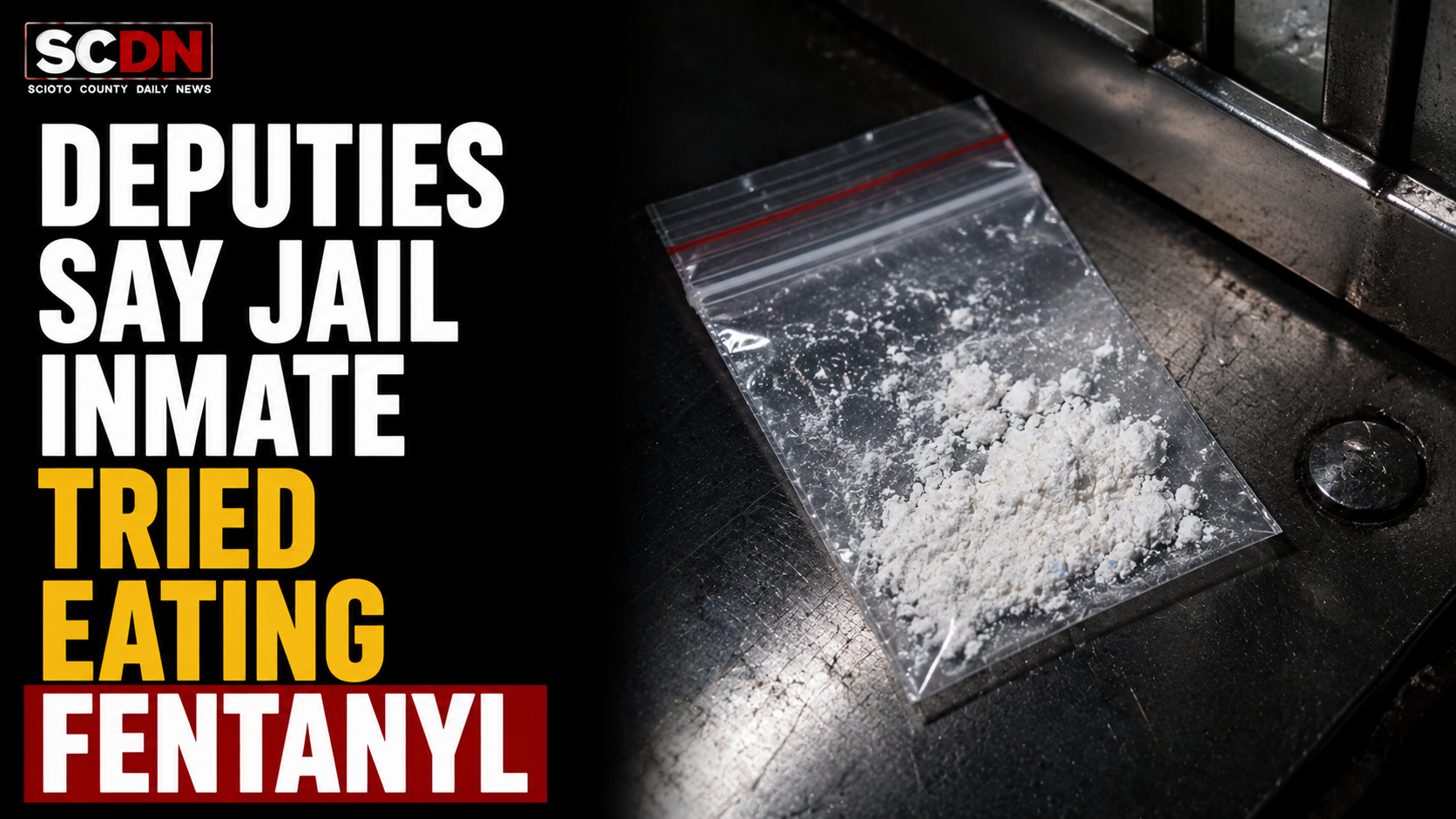
What started as a routine jail intake quickly escalated into a fentanyl case after corrections officers say an inmate repeatedly denied carrying contraband — only for additional drugs to allegedly be discovered moments later.
And officials say the case is another reminder that trying to sneak drugs into a jail can quickly pile on additional felony charges.
According to a report from the Lawrence County Jail, an inmate brought in by Ironton Police Department appeared extremely nervous while going through the booking process.
During an initial body scan, officers reportedly noticed the inmate’s foot was positioned oddly inside her shoe, as though she was attempting to conceal something.
When questioned, the inmate allegedly admitted she had an item hidden in her shoe and voluntarily handed officers a used syringe.

But investigators say that wasn’t the end of it.
After surrendering the needle, the inmate repeatedly denied having any additional contraband while being escorted deeper into the booking area.
According to the report, corrections officers soon became suspicious again during the clothing change process after the inmate allegedly began “reaching” toward parts of her body despite repeated commands to stop.
Officers then conducted another body scan.
Initially, nothing obvious appeared on the scanner.
But moments later, officers reportedly observed the inmate making chewing motions with her mouth before appearing to swallow something.
Corrections officers immediately ordered her to spit the item out.
According to the report, the inmate complied and spit out:
- a red baggie
- containing another clear baggie
- filled with a white powdery substance
Deputies later field tested the substance, which reportedly tested positive for fentanyl.
Investigators say the substance weighed approximately 1.4 grams.
Additional charges were then filed including:
- tampering with evidence
- illegal conveyance into a detention facility
- and drug possession charges
Why Concealing Contraband Can Make Charges Much Worse
Law enforcement officials say many inmates panic during booking and believe if they hide drugs or contraband long enough they can avoid additional trouble.
But in reality…
trying to conceal or destroy evidence inside a jail often creates entirely new felony charges on top of whatever initially brought someone to jail.
Officials say common mistakes include:
- hiding drugs in clothing or body cavities
- swallowing narcotics during booking
- passing contraband to other inmates
- or lying repeatedly after being directly questioned
In many cases, the act of hiding or attempting to destroy the evidence becomes more serious legally than the original possession itself.
And beyond the criminal charges, corrections officers warn there’s another major danger:
fentanyl exposure inside jails can create medical emergencies for:
- inmates
- corrections staff
- EMS crews
- and other prisoners nearby.
That’s why intake screenings and body scanners have become increasingly aggressive in facilities across Ohio and nationwide.
Because as this case allegedly shows…
surrendering one hidden item doesn’t end the problem if there’s still more contraband waiting to be discovered.