















































































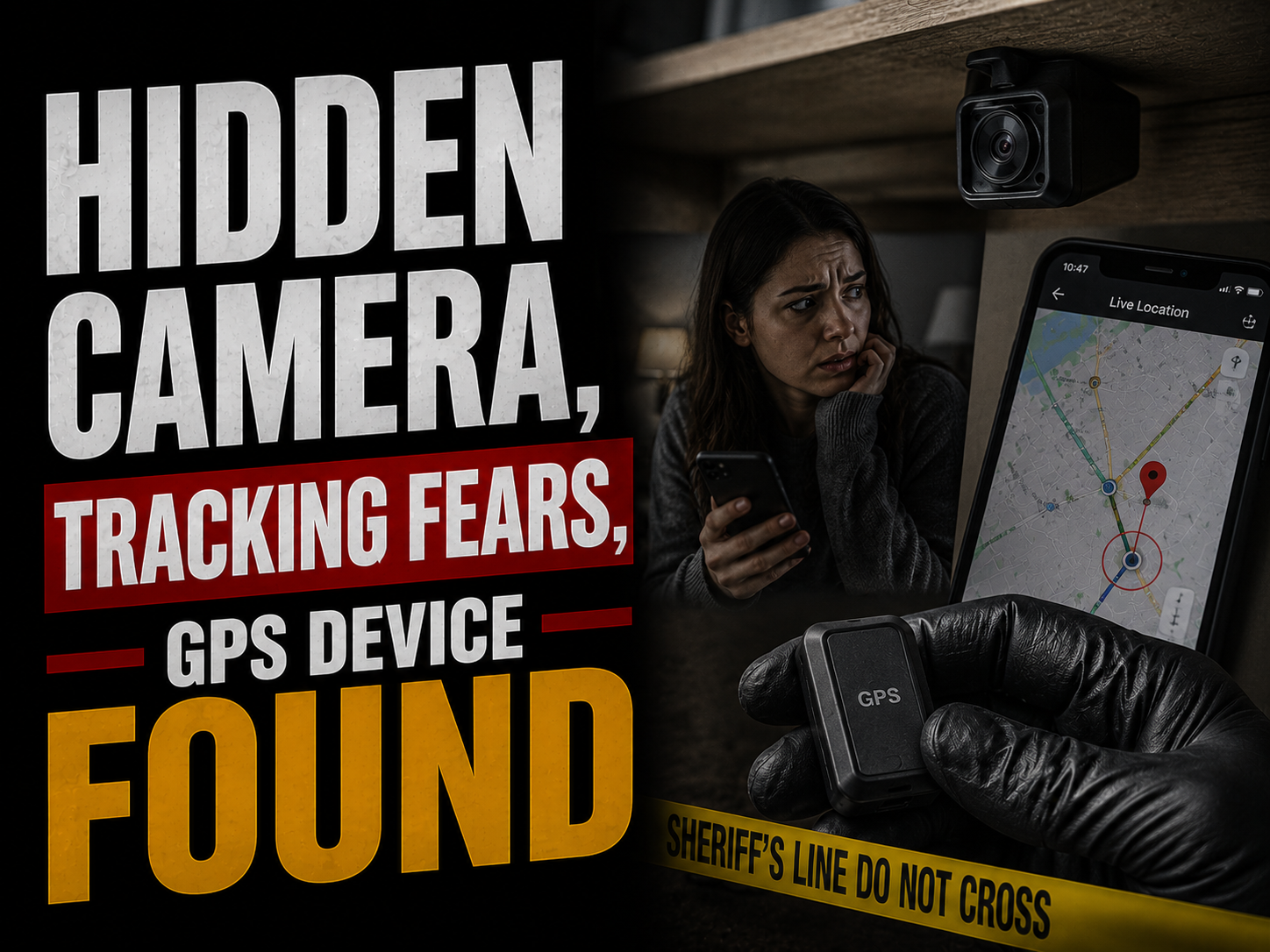
SCIOTO COUNTY, OH — A string of unsettling calls to the sheriff’s office is raising a bigger issue: when does monitoring turn into harassment — or even a crime?
Deputies recently handled three separate complaints involving suspected surveillance and tracking devices — each with its own twist.
📷 Camera Found During Protection Order Case
In one case, a woman called deputies after finding a camera plugged in under a dresser in her home.
She told officers it appeared to activate when plugged in, and said her estranged husband — whom she has a temporary protection order (TPO) against — owns similar cameras.
Deputies confirmed the man had been served with the protection order, and took a report to be forwarded to the court for possible charges.
📱 “I Think He’s Tracking Me”
In another call, a woman told deputies she believed her brother was tracking her through her phone or car, though she wasn’t sure how.
Deputies attempted to locate a tracking device on her vehicle but found nothing.

She was advised to contact her cell phone provider to check for unauthorized access or tracking apps.
📍 GPS Device Found on Property
In a third case, a resident reported finding a GPS tracking device on her property, along with camera footage of someone placing it there.
However, deputies later determined the device was a State Farm insurance tracker, though it was unclear who it belonged to.
The device was ultimately disposed of.
⚖️ When Is Tracking Illegal?
Situations like these fall into a growing legal gray area — but Ohio law is clear on some key points.
It can be illegal to:
- Place a tracking device on someone’s vehicle without their consent
- Install hidden cameras in private areas where there is an expectation of privacy
- Use technology to harass, intimidate, or stalk someone
- Violate a protection order by monitoring or contacting someone
Depending on the situation, charges could include:
- Menacing by stalking
- Violation of a protection order
- Invasion of privacy
- Telecommunications harassment
⚠️ A Growing Form of Harassment
Law enforcement says these types of complaints are becoming more common — especially in:
- Domestic disputes
- Divorce situations
- Ongoing family conflicts
Technology has made it easier than ever to:
- Track someone’s location
- Monitor their movements
- Or make them feel like they’re being watched
Even when no device is found, the fear itself can be very real — and very disruptive.
💡 What To Do If You Think You’re Being Tracked
If you suspect someone is spying on or tracking you:
- Check your surroundings
- Look for unfamiliar devices in your home, car, or belongings
- Common spots: under vehicles, inside wheel wells, near batteries, under furniture
- Check your phone
- Review apps and permissions
- Look for unknown tracking apps
- Contact your carrier for a security check
- Document everything
- Take photos or video of suspicious devices
- Save messages, emails, or threats
- Call law enforcement
- Especially if you have a protection order in place
- Don’t confront the person alone
- Let authorities handle it, especially if safety is a concern