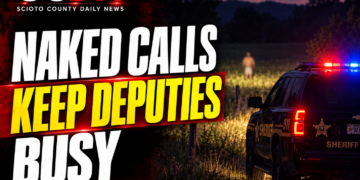
A bizarre and concerning call drew deputies to the west side after reports of a man lying on the ground, waving his arms in traffic, and stripping off his clothes.
Officers with the Scioto County Sheriff’s Office were called to the area near Lester Street and Washington Boulevard, behind a church near the 15th Street water tower, after multiple callers said a man appeared to be possibly drug-related and in danger.
Callers told dispatch the man had been standing in traffic, waving his arms wildly, and had removed most of his clothing, leaving him wearing only jeans.
“I Was Being Chased by a Pit Bull”
Deputies located the man on 15th Street and spoke with him about what was going on. He told officers he had been taking his clothes off because he believed he was being chased by a pit bull.
Deputies searched the area and reported no pit bull—or any dog—was found.
Based on the man’s behavior and statements, officers noted he may be experiencing mental health issues or be under the influence of drugs.
No Arrest, Just De-Escalation
With no immediate crime committed and no animal threat located, deputies advised the man to go inside his residence, attempting to de-escalate the situation and remove him from traffic.
No arrest was made.
A Familiar, Troubling Pattern
Incidents like this highlight a growing challenge for law enforcement: calls that sit at the intersection of public safety, mental health, and substance abuse.
Police can:
- Get people out of immediate danger
- Calm situations down
- Offer direction in the moment
What they can’t do is force treatment unless strict legal thresholds are met.
❓ The Bigger Question
When someone is clearly distressed—stripping in traffic, reacting to threats that aren’t there—is telling them to go home enough?
Calls like this leave deputies doing the only thing the law allows, while the underlying problem remains—waiting for the next 911 call.