
























































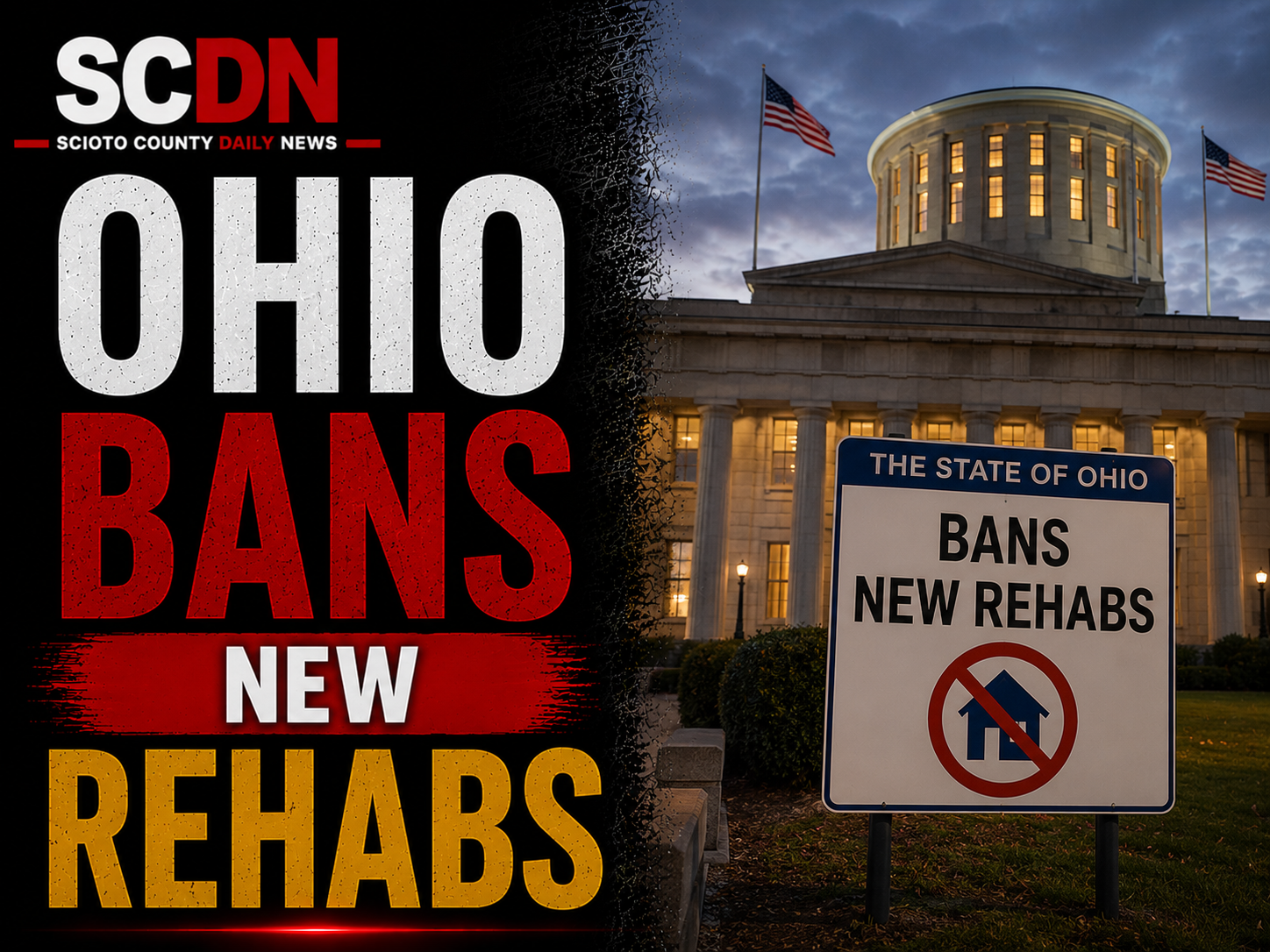
A move by state officials to temporarily halt new behavioral health and addiction treatment provider applications is being welcomed by local leaders who have spent years raising concerns about the rapid growth of the recovery industry in Southern Ohio.
State Rep. Justin Pizzulli announced that the Ohio Department of Mental Health and Addiction Services has implemented a temporary freeze and enhanced review process for new behavioral health and rehabilitation provider applications. The action comes amid ongoing concerns about fraud, patient brokering, Medicaid abuse, and questionable operators entering the addiction recovery system.
“After years of fraud concerns, patient brokering, Medicaid abuse, and questionable out-of-state operators flooding communities, Ohio is finally cracking down,” Pizzulli said. “Addiction recovery should be about helping people, not exploiting them for money.”
The temporary freeze does not affect existing providers, authorizations, or services already being offered.
For many local officials, the announcement is the latest step in a broader effort to bring accountability to an industry that has exploded across Southern Ohio.
Last year, Scioto County Commissioner Scottie Powell pointed to the sheer number of recovery facilities concentrated in the region.
“There are 132 recovery facilities in Scioto County alone,” Powell said at the time. “That’s more than Franklin County, which has over a million people. We have just 72,000.”

According to local officials, there are approximately 236 registered recovery houses spread across Scioto, Lawrence, and Adams counties. That figure does not include facilities that may be operating without registration or outside of established oversight systems.
Critics have long argued that Ohio’s recovery housing industry grew faster than regulators could monitor it. Unlike many other businesses and care facilities, recovery houses have historically operated with limited state oversight and few tools available for local communities to address complaints or safety concerns.
“If someone tells me they’re putting in a recovery house down the road, people ask, ‘Can I stop it?'” Powell previously said. “Right now, the answer is no. There’s no legal mechanism.”
Those concerns helped drive support for House Bill 58, legislation sponsored by Pizzulli that would establish statewide certification standards and significantly increase oversight of recovery housing facilities.
The bill would require recovery houses to obtain state certification, allow local ADAMH boards to inspect facilities and investigate complaints, criminalize patient referral payments commonly known as patient brokering, and create mechanisms for local enforcement against facilities that fail to meet standards.
Powell has worked alongside Pizzulli and Scioto County Prosecutor Shane Tieman during discussions surrounding the legislation.
“Even people who oppose it in theory are realizing we need standards of care—and the ability to shut down those who won’t comply,” Powell said during earlier discussions about the bill.
House Bill 58 has already passed the Ohio House and is currently awaiting action in the Ohio Senate’s Addiction and Community Revitalization Committee.
While lawmakers continue to debate long-term reforms, the state’s decision to pause new provider applications signals that regulators are taking a closer look at an industry that has become both a critical part of addiction recovery efforts and a source of growing concern for local communities.
Supporters of the crackdown stress that the goal is not to punish legitimate providers but to ensure vulnerable individuals receive quality care while preventing bad actors from profiting off addiction.
“The providers doing things the right way have nothing to worry about,” Pizzulli said.