




























































Ohio House Bill 58 is already in full enforcement across the state. A recovery housing provider operating seven unaccredited facilities in Portsmouth has been ordered to shut down after the Ohio Department of Mental Health and Addiction Services (OMHAS) requested a preliminary injunction in Scioto County Common Pleas Court.
The provider, STEP Wellness, was sued by the state back in October for failing to meet basic accreditation standards required under Ohio law. The court order follows a string of concerning incidents and shines a spotlight on Ohio House Bill 58, a proposed law that aims to rein in the rapid and largely unregulated growth of recovery housing across the state—especially in places like Portsmouth.
Seven Unlicensed Homes, One Court Order
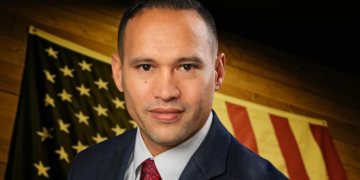
According to State Representative Justin Pizzulli (R-Scioto County), the seven STEP Wellness facilities had been operating illegally in Portsmouth without state accreditation—a first-degree misdemeanor.
“My constituents deserve to know that regulated providers in the community are following the law,” Pizzulli said. “We need to investigate and enforce the law against operators who believe they can cheat the system and put Ohioans at risk.”
The court has now ordered the facilities to cease operations until they complete the state-required accreditation process, which includes submitting documentation about services, policies, safety, staffing, and cleanliness.
In legal filings from Attorney General Dave Yost’s Office, the state stressed that accreditation helps ensure facilities meet critical standards:
“These things may seem minor to some, but they can be monumental for a vulnerable population such as the population that lives in recovery housing.”
SCDN Has Been Reporting on STEP Wellness for Months
This shutdown comes after Scioto County Daily News previously reported troubling incidents at STEP Wellness’s Grant Street location, including a late-night manhunt in July that started when a man smashed out a door and window, fled the building, returned to threaten staff, and then hid in a nearby abandoned house.
Police eventually arrested Anthony Frazier, who had multiple charges, including aggravated menacing and obstructing official business.
The chaos raised questions about security, staffing, and oversight—questions that continue to dog other unregulated facilities.
A System in Crisis: The Push for House Bill 58
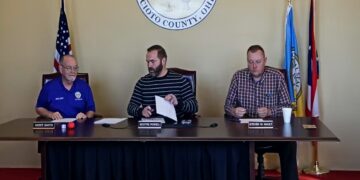
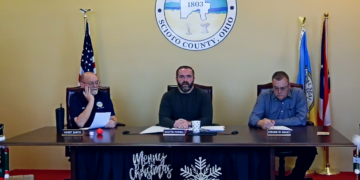
This case highlights the very issues House Bill 58 is designed to address. Backed by Pizzulli and Scioto County Commissioner Scottie Powell, the bill would create long-overdue oversight, inspections, and local enforcement powers for recovery housing.
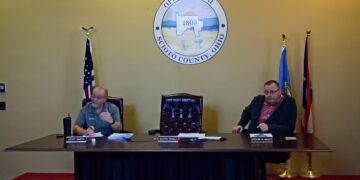
“There are 132 recovery houses in Scioto County,” Powell said recently, “more than Franklin County, which has over a million people. We only have 72,000. That’s not right.”
What Ohio House Bill 58 Would Do:
- ✅ Require state approval before new recovery homes open, expand, or relocate
- ✅ Mandate annual inspections and allow local complaints to be investigated
- ✅ Create a Certificate of Need (CON) process to control facility density based on population
- ✅ Give local prosecutors the authority to pursue injunctions—just like in the STEP Wellness case
Not Just a Local Problem

Powell and Pizzulli argue that the issue is statewide, not just a Scioto County problem. According to Ohio Recovery Housing’s own data, a quarter of Ohio counties have more beds than needed, while many others have none.
“We can shut down a bad diner,” Powell said. “But not a bad rehab facility? That’s unacceptable.”