














































































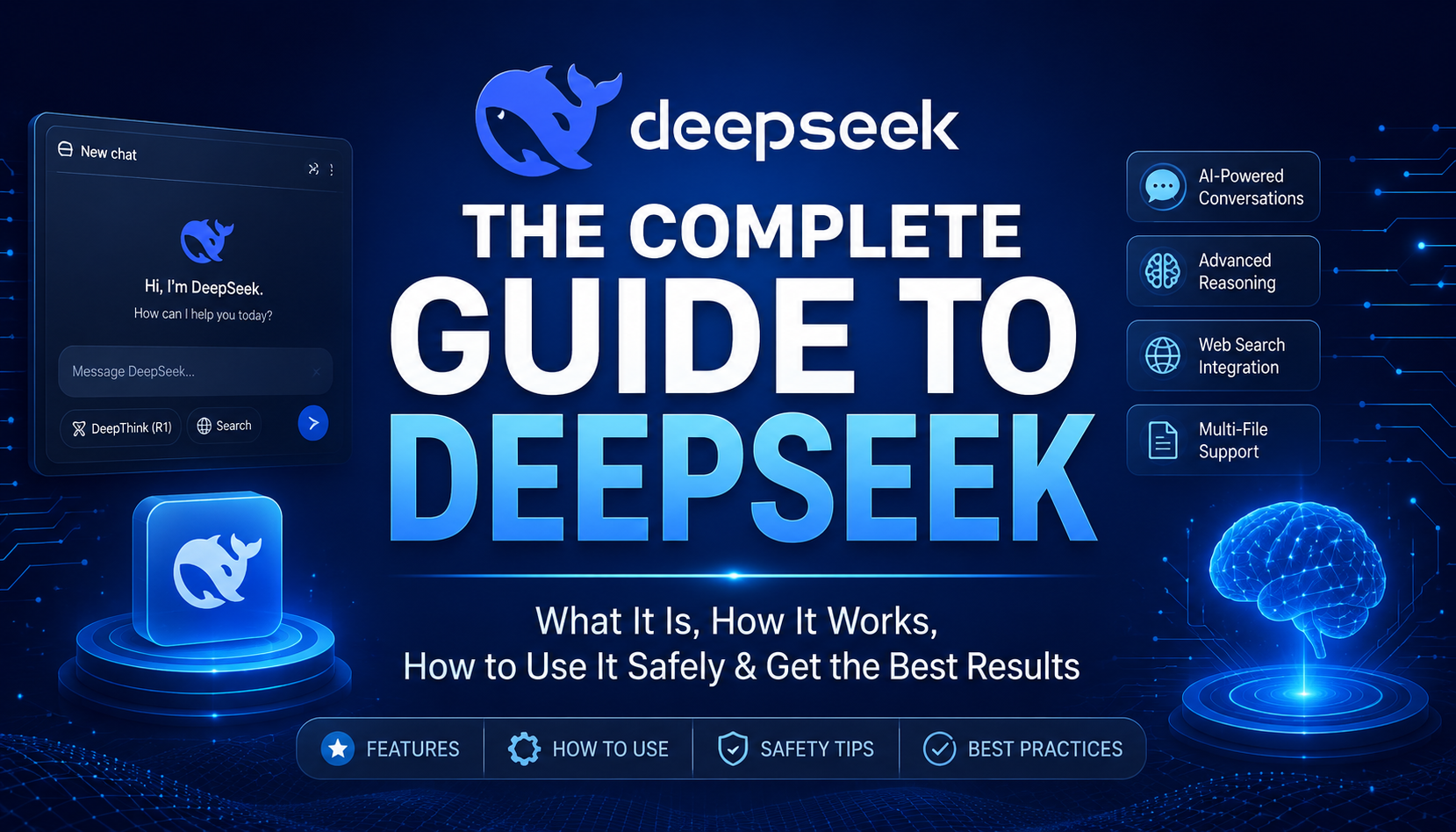
DeepSeek is no longer just a niche AI brand for developers. Its official website now promotes free access to its chat product, plus web, app, and API access, while its latest product pages say DeepSeek-V4 Preview is available across those channels. Official DeepSeek materials also describe features such as web search, Deep-Think mode, file upload, text extraction, and long-context chat.
For everyday users, that means DeepSeek can be used much like other AI assistants: to summarize documents, help write drafts, answer questions, explain code, and organize research. For developers, the company’s API docs say the service is compatible with OpenAI- and Anthropic-style tooling, which lowers the barrier for plugging it into apps and workflows. DeepSeek’s current API docs also expose features such as thinking mode, configurable reasoning effort, and context caching.
But the biggest question for most readers is not what DeepSeek can do. It is whether it is safe to use. On that point, DeepSeek’s own privacy policy says it may collect user inputs, prompts, uploaded files, photos, feedback, chat history, voice input, and other content provided to the service. That means users should treat DeepSeek like any other third-party AI platform: useful, powerful, and not the place to dump confidential business records, legal strategy, unpublished reporting notes, passwords, or sensitive personal data.
That caution matters because AI tools are built to generate answers, not to guarantee truth. DeepSeek’s own release notes for one newer reasoning model highlight “reduced hallucinations,” which is another way of saying wrong or invented answers are still a real concern. The best way to use DeepSeek is to treat it as a fast assistant for drafts, outlines, summaries, and brainstorming, then verify names, dates, numbers, and quotes before you publish or act on any output.

Users will usually get better results when they give the model a job, a format, and a limit. Instead of typing “tell me about Ohio,” a stronger prompt would be: “Write a 400-word local-news explainer for a general audience on Ohio property taxes. Use short paragraphs and include three bullet points.” That kind of structure gives the model a target. The same principle shows up in DeepSeek’s API design: its multi-turn chat guide says the API is stateless, meaning context only exists if the user provides it. In plain terms, clearer context leads to better answers.
For readers deciding whether to try it, the answer is simple: DeepSeek looks worth using for research help, writing support, coding assistance, and document summarizing. But it should be used with the same caution people should already bring to any AI system. Keep sensitive material out, keep your prompts specific, and keep a human hand on the final result. That is where DeepSeek is most useful right now: not as a replacement for judgment, but as a fast tool for people who still plan to think for themselves.