



























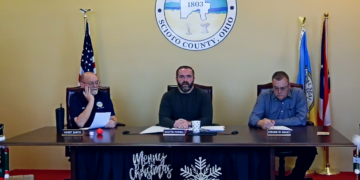








































As data center projects continue to pop up across Scioto, Pike, and Lawrence counties, one concern keeps coming up at public meetings: Can our electric grid handle it?
Now, a major new development suggests at least one tech giant is putting real money behind strengthening the region’s power supply.

This week, Meta Platforms—the parent company of Facebook, Instagram, and WhatsApp—announced an agreement with Oklo to help develop a large-scale nuclear power campus in Pike County that would directly support Meta’s data centers in southern Ohio.
First Things First: Who Is Meta?
Meta is best known as the company behind Facebook, but it’s far bigger than social media.
Meta runs massive online platforms that rely on constant data processing, including:
- Facebook and Instagram
- Messaging services like WhatsApp
- Cloud storage for photos and videos
- Artificial intelligence systems
- Advertising networks used by millions of businesses
To keep all of that running 24/7, Meta depends heavily on data centers—huge facilities filled with servers that store, process, and move digital information.
What Data Centers Actually Do (In Plain English)
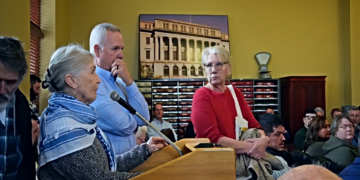
At recent Scioto County meetings, some residents expressed frustration that data centers are “just for AI” or “making silly pictures.”
The reality is broader.
Data centers power:
- Social media and smartphones
- Online shopping (Amazon, Walmart, local businesses)
- Music and TV streaming (Netflix, Spotify, YouTube)
- Banking, fraud detection, and payment processing
- Emergency services, hospitals, and medical records
- Cloud backups for phones, photos, and documents
AI is part of it—but data centers existed long before AI, and they now support almost everything people do online.
The Power Problem — and Meta’s Answer
One of the biggest fears raised locally is that large data centers could:
- Overload the electric grid
- Drive up power costs for residents
- Rely too heavily on fossil fuels
That’s where the Meta–Oklo agreement comes in.
Under the deal, Meta has committed funding to help Oklo develop up to 1.2 gigawatts of new nuclear power in Pike County—enough electricity to power hundreds of thousands of homes.
In simple terms:
👉 Meta is helping pay to add new power to Ohio’s grid instead of just pulling from what already exists.
What Oklo Is Planning in Pike County
Oklo plans to build a series of small, advanced nuclear reactors—called Aurora powerhouses—on 206 acres in Pike County, land that was formerly owned by the U.S. Department of Energy and is near the Portsmouth Gaseous Diffusion Plant site.
The land transfer was supported by Southern Ohio Diversification Initiative, which has been working for years to bring new life and jobs to former federal property.
According to Oklo:
- Site work could begin as early as 2026
- First power generation is targeted for around 2030
- Full buildout could continue through 2034
- The project could create thousands of construction jobs and long-term operations positions
Why Nuclear — and Why Here?
Ohio sits inside the PJM Interconnection, one of the largest electric grid systems in the country. That makes southern Ohio especially attractive for projects that need:
- Strong transmission lines
- Reliable baseload power
- Room to expand
Unlike wind or solar, nuclear power runs 24/7, making it a strong match for data centers that cannot afford outages.
Meta says this investment is part of its push to keep energy production domestic, reliable, and cleaner—rather than relying on overseas infrastructure.
Familiar Concerns Remain
Just like data centers themselves, nuclear development raises concerns for residents, including:
- Environmental safety
- Long-term oversight
- Transparency
- Local health impacts
- Whether the jobs stay local
Those questions echo what Scioto County residents raised recently about data centers: water use, noise, pollution, and whether communities see real benefits.
Local officials and developers say regulatory oversight—including federal nuclear regulators and environmental agencies—will play a major role as plans move forward.
The Bigger Picture
What’s becoming clear across Scioto, Pike, and Lawrence counties is that Southern Ohio is emerging as a key hub for digital and energy infrastructure.
Whether it’s data centers, advanced manufacturing, or nuclear power, these projects are being built somewhere.
The question facing the region now isn’t whether these industries will exist—but whether Southern Ohio wants to be part of shaping them, negotiating protections, jobs, and long-term investment at home rather than watching them go elsewhere.
As public meetings continue and details become clearer, one thing is certain: the conversation about data centers, power, and the future of the region is far from over.