














































































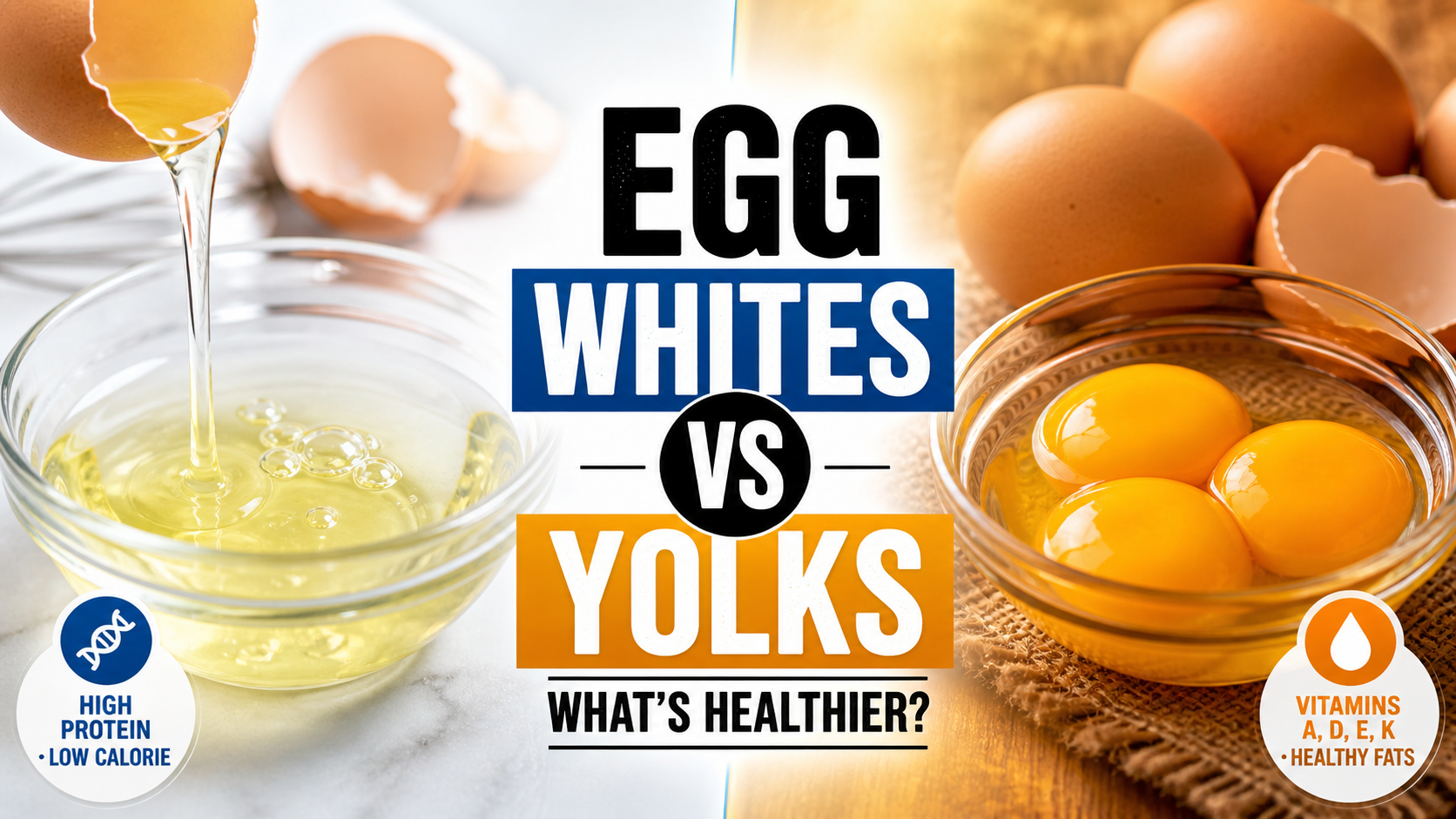
Egg Whites vs. Yolks….For decades, the egg yolk has been treated like the bad guy at breakfast — rich, yellow, fatty, and guilty by association with cholesterol. Egg whites, meanwhile, became the darling of bodybuilders, dieters, and anyone ordering an omelet with a side of self-control.
But the nutrition fight is not as simple as “white good, yolk bad.” According to Harvard Health, a large egg contains about 6 grams of high-quality protein, meaning it provides all nine essential amino acids the body must get from food. The same Harvard review notes that while egg yolks do contain cholesterol, blood cholesterol is not affected by dietary cholesterol as strongly as once believed.
What Egg Whites Do Best
Egg whites are the lean protein machine of the egg. According to UT Physicians, one egg white has about 17 calories and 3.6 grams of protein, with virtually no fat or cholesterol. That makes egg whites useful for people trying to increase protein while keeping calories, fat, and cholesterol low.
That is why egg whites remain popular with people focused on weight loss, bodybuilding, heart-health diets, or strict calorie tracking. They are simple, efficient, and hard to argue with nutritionally — as long as protein is the main goal.
Pros of egg whites:
They are low in calories, fat-free, cholesterol-free, and provide high-quality protein.
Cons of egg whites:
They are missing much of what makes eggs nutritionally valuable. Egg whites contain far fewer vitamins, minerals, healthy fats, antioxidants, and brain-supporting nutrients than the yolk.
What Egg Yolks Bring to the Table
The yolk is where the egg stores most of its nutritional firepower. Harvard’s Nutrition Source notes that one large egg yolk contains about 200 milligrams of cholesterol but also contains nutrients that may help lower heart-disease risk, and the fat in eggs is mostly mono- and polyunsaturated.
Harvard Health also describes eggs as rich in nutrients such as lutein and zeaxanthin, which are linked to eye health, and choline, which is needed by nerves and the brain.
Live Science quoted registered dietitian Kanter saying, “Nutrients found exclusively in the yolk include choline, vitamin B12, vitamin D and iron, among others.” That is the core argument for eating the whole egg: the yolk is not just fat and cholesterol. It is where many of the egg’s most valuable nutrients live.
Pros of egg yolks:
They contain choline, vitamin D, vitamin B12, iron, lutein, zeaxanthin, healthy fats, and other nutrients that egg whites largely lack.
Cons of egg yolks:
They contain the egg’s cholesterol and fat, which may matter more for people with heart disease, high cholesterol, diabetes, or specific medical advice to limit yolks.
What Medical Experts Say About Cholesterol
The old warning against eggs has softened, but it has not disappeared. The American Heart Association reported that Jo Ann Carson, professor of clinical nutrition at UT Southwestern Medical Center, said, “Eating an egg a day as a part of a healthy diet for healthy individuals is a reasonable thing to do.” She also warned that eggs remain a source of dietary cholesterol.
The AHA also reported that its 2019 science advisory says healthy people can include up to one whole egg or the equivalent each day, and older people with healthy cholesterol levels can have two because of eggs’ nutritional benefits and convenience.
The Cleveland Clinic offers a more cautious version for people with risk factors. According to the Cleveland Clinic, the American Heart Association recommends adults without heart disease limit intake to one egg or two egg whites per day, while people with heart disease or high cholesterol are often advised to limit themselves to about four yolks per week. Cleveland Clinic dietitian Julia Zumpano said, “Be cautious about the number of egg yolks you consume.”
The Mayo Clinic gives similar guidance, saying most healthy people can eat up to seven eggs a week without increasing heart-disease risk, while people with diabetes may need more caution.
So, Which Is Healthier?
The answer depends on what “healthier” means.
For pure protein with the fewest calories, egg whites win. They are the cleaner choice for people who need protein without extra fat or cholesterol.
For overall nutrition, the yolk wins. It contains the vitamins, minerals, antioxidants, fats, and choline that make eggs more than just a protein source.
For most healthy adults, the best answer may be the whole egg — in moderation. A whole egg gives both the protein from the white and the nutrient density of the yolk. For people with heart disease, high cholesterol, diabetes, or strict dietary limits, egg whites may be the safer everyday choice, with yolks limited according to medical advice.
The Bottom Line
Egg whites are not fake health food. They are useful, lean, and protein rich.

Egg yolks are not the nutritional villain they were once made out to be. They carry cholesterol, but they also carry much of the egg’s real nutrition.
The smartest plate may not be a war between egg whites and yolks at all. For many people, it is moderation: whole eggs sometimes, egg whites when needed, and fewer breakfast plates loaded with bacon, sausage, butter, and processed carbs. As the science has shifted, the egg has earned a more complicated reputation — not innocent, not guilty, but worth understanding before throwing half of it away.