














































































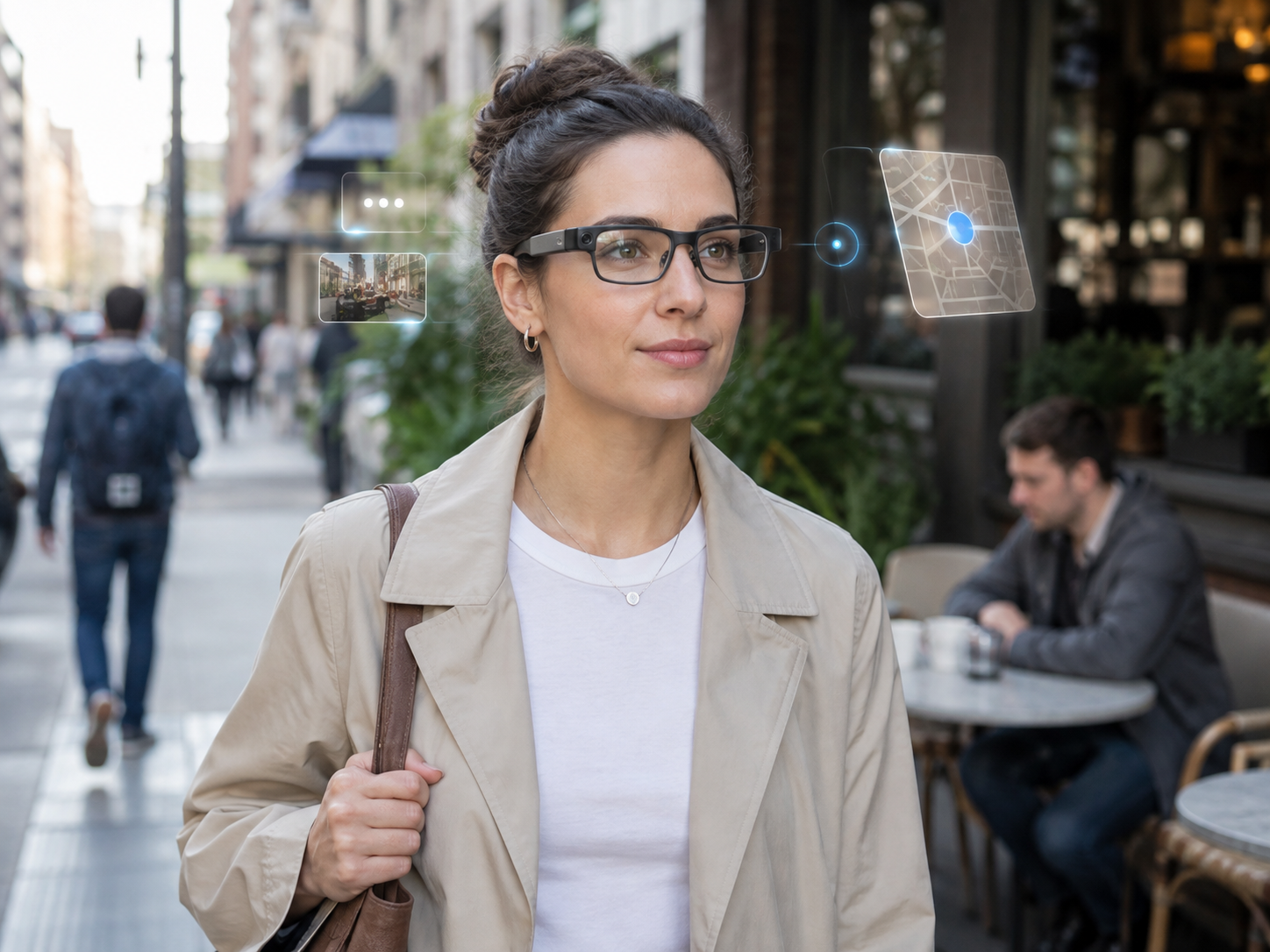
Everyday technology has usually meant screens: phones, laptops, tablets, watches, and TVs. Smart glasses are changing that by moving digital help into something people can wear naturally. Instead of reaching for a phone every time they want to take a photo, hear a message, ask a question, or capture a quick moment, users can now do some of those tasks hands-free. AI-powered smart glasses are not replacing every device, but they are changing how people interact with technology during normal daily life.
Why Are Smart Glasses Becoming More Practical?
Smart glasses are becoming more practical because they are starting to look and feel more like everyday eyewear. Earlier smart-glasses concepts often felt too bulky, too futuristic, or too awkward for regular use. Many people liked the idea, but not the experience.
The newer direction is different. Instead of making eyewear look like a headset, brands are building technology into familiar frames. That makes adoption easier because the product feels closer to something people already understand.
Smart glasses can now support:
- Hands-free photos
- Short video capture
- Open-ear audio
- Calls
- Voice commands
- AI assistance
- Quick information access
- First-person content creation
- Everyday communication
The growing interest in display-less smart glasses shows how the category is moving toward lighter eyewear designs with practical daily features rather than bulky headset-style devices.
How Do AI-Powered Smart Glasses Change Daily Tasks?
The biggest change is convenience. Many everyday digital tasks are small, but they interrupt the flow of the day. A user may want to answer a call, record a quick video, listen to a message, ask a question, or capture a reminder. Usually, that means pulling out a phone.
Smart glasses reduce some of that friction.
They can make it easier to:
- Take a quick photo while walking
- Record a first-person clip
- Listen to audio without earbuds
- Make a call without holding a phone
- Ask a simple question by voice
- Capture a note before it is forgotten
- Stay connected while carrying bags
- Use technology without constantly looking down
That does not mean phones become unnecessary. Phones are still better for typing, browsing, editing, payments, long messages, and detailed work. Smart glasses simply handle some smaller tasks in a more natural way.
Why Is Hands-Free Technology So Useful?
Hands-free technology is useful because real life is active. People are often walking, cooking, commuting, traveling, shopping, working, exercising, or spending time with family. In those moments, holding a phone is not always convenient.
Smart glasses fit into these situations because they stay on the face and respond quickly.
Hands-free features are helpful during:
- Travel days
- Outdoor walks
- Family outings
- Worksite visits
- Commuting
- Fitness routines
- Events
- Shopping trips
- Casual content creation
The benefit is not only speed. It is also presence. When technology can be used without stopping completely, users can stay more involved in the moment.
How Do Meta Glasses Fit Into Everyday Technology?
The appeal of Meta glasses is that they show how smart eyewear can bring AI, audio, camera features, and voice control into a familiar accessory. They are designed around the idea that people may want digital support without holding a device all the time.
This matters because eyewear sits in a unique place. It is close to the eyes and ears, so it can support first-person capture, voice interaction, and audio communication in a way that feels more immediate than a phone in a pocket.
For everyday users, this can mean:
- Faster photo and video capture
- Easier hands-free calls
- Quick audio access
- Less screen-checking
- More natural first-person content
- Simple AI assistance during normal routines
The strongest use case is not replacing the phone. It is making common phone tasks easier when a phone is inconvenient.
How Is AI Making Smart Glasses More Useful?
AI turns smart glasses from simple recording devices into more responsive tools. Without AI, smart eyewear may mainly function as a camera, audio device, or Bluetooth accessory. With AI, the glasses can become more useful for voice-based assistance, quick questions, and context-aware tasks.
AI can help users:
- Ask for simple information
- Get spoken responses
- Create reminders
- Support travel or daily planning
- Identify certain objects or scenes where available
- Draft short messages
- Capture ideas
- Reduce the need to open apps
The usefulness of AI depends on accuracy, connection, and the type of task. It should not be treated as perfect. But for quick, low-risk everyday help, it can make wearable technology feel more practical.

How Are Smart Glasses Changing Content Creation?
Smart glasses are changing content creation because they make first-person capture easier. A phone requires the user to stop, hold the device, frame the shot, and record. Smart glasses can capture what the wearer is seeing with less interruption.
This is useful for:
- Travel clips
- Walking tours
- Behind-the-scenes videos
- Product demonstrations
- Outdoor activities
- Family memories
- Event highlights
- Social media content
First-person content feels natural because it shows the viewer what the creator saw. It may not always be perfectly framed, but it can feel more immediate and authentic.
That said, users still need to edit carefully. Wearable footage can be shaky, noisy, or too long. The best clips are usually short and intentional.
What Everyday Devices Could Smart Glasses Replace?
Smart glasses may replace some small device interactions, but not entire devices. They can reduce dependence on phones, earbuds, and cameras in specific moments.
They may replace:
- Pulling out a phone for a quick photo
- Wearing earbuds for short audio use
- Holding a camera for casual first-person clips
- Typing a simple reminder
- Opening an app for a quick voice question
- Taking a call while carrying items
They will not fully replace:
- Smartphones
- Laptops
- Professional cameras
- Editing software
- Noise-canceling headphones
- Larger screens
- Detailed productivity tools
This distinction matters. Smart glasses are most useful when they remove small interruptions, not when they try to do everything.
What Should Users Consider Before Buying Smart Glasses?
Smart glasses can be useful, but buyers should think beyond the feature list. A wearable device succeeds only if it is comfortable and practical enough to use regularly.
Important questions include:
- Are they comfortable for long wear?
- Is the battery life enough for normal use?
- Are the controls easy to understand?
- Is the camera useful for everyday clips?
- Is the audio clear enough?
- Do the AI features solve real problems?
- Are privacy settings easy to manage?
- Do they look like something the user would wear often?
- Will the novelty last after the first week?
Connected devices also need basic privacy and security habits. Users should review app permissions, update software, protect accounts, and understand how media is stored or shared. General internet-connected device security habits are useful here because smart glasses are not just eyewear. They are cameras, microphones, apps, and connected accounts in one wearable product.
What Privacy Issues Should Users Keep in Mind?
Privacy is one of the biggest concerns with smart glasses. A phone camera is usually obvious because it has to be lifted and aimed. Glasses can feel less noticeable, even when they include recording indicators.
Responsible use matters.
Users should avoid recording:
- Private conversations
- Restrooms or changing areas
- Sensitive workplaces
- Children without permission
- Medical or legal settings
- People who clearly do not want to be recorded
- Places with no-recording rules
A simple rule works well: if recording with a phone would feel inappropriate, recording with smart glasses is probably inappropriate too.
Smart glasses can make capture easier, but easier does not always mean appropriate.
Final Thoughts
AI-powered smart glasses are changing everyday technology by making some digital tasks more natural, faster, and less screen-dependent. They support hands-free photos, short videos, calls, audio, voice commands, and quick AI assistance in moments where pulling out a phone feels inconvenient.
They are not perfect, and they are not a full replacement for phones, cameras, earbuds, or computers. Battery life, privacy, comfort, camera quality, and social acceptance still matter.
But the direction is clear. Everyday technology is moving beyond handheld screens and into wearable accessories that fit more naturally into daily routines. Smart glasses are becoming part of that shift by helping people use technology while staying more present in the world around them.