













































































The oven is the most expensive and least reversible purchase in a pizzeria project. Tables, shelving, and refrigeration can be swapped out over a weekend. The oven sets your layout, your hood, your utility hookups, and the taste of the product, so a mistake here follows you for years.
Below is the order of decisions that leads to the right choice. It starts with your dough, and the catalog comes much later.
Start With the Dough
Your dough style sets the baking temperature and the bake time, and those two things determine the class of equipment you need.
Neapolitan pizza bakes at very high heat in under two minutes, and the thin, wet crust needs strong top and bottom heat at the same time. New York style runs longer and considerably cooler, so it wants a steady, even chamber. Detroit and Sicilian pizzas bake in deep pans, which calls for solid bottom heat and enough clearance above the pan. Thin, crispy crusts do well on a conveyor.

Buying the oven before the recipe is locked means fitting the dough to the equipment. Plenty of shops work that way, and the ceiling on quality is set before they open.
Three Oven Types and What They Give You
Commercial pizza ovens fall into three groups, and the real difference between them is how they behave in service:
- deck ovens with a stone hearth produce the classic crust and give the baker full control, though they ask for skill and constant attention;
- conveyor ovens deliver the same result no matter who is on shift, and they leave almost no room for adjustment;
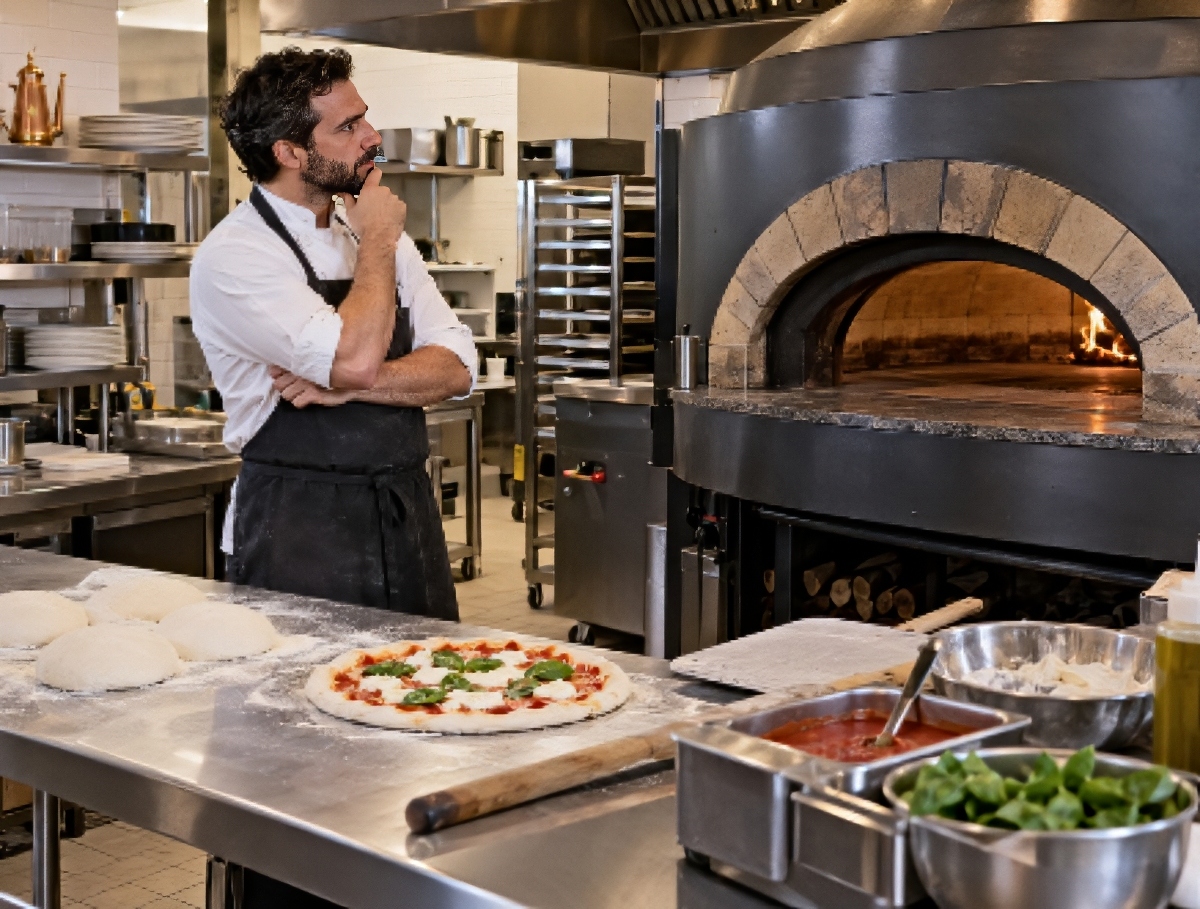
- wood-fired ovens bring flavor and a show for the dining room, along with a chimney, floor space, and separate training for the crew.
A delivery-driven shop is usually calmer with a conveyor, since it removes the dependence on who is working that night. A shop built around artisan pizza loses its whole premise on a conveyor. Your concept makes this call.
Gas or Electric
The second fork in the road is the heat source.
Gas models recover temperature faster after a load of cold dough goes in, which shows up during a rush, and in most regions gas costs less to run. In exchange they need a supply line at the right pressure and a separate round of approvals.
Electric ovens are simpler to bring online, since all they need is dedicated power. They hold temperature more tightly and adjust in finer increments, which helps when every pie has to match the last one.
Settle this question while you are still looking at spaces. Running a gas line into a building that has none costs more than the oven itself, and adding electrical capacity is sometimes impossible.
Chamber Size Matters More Than It Looks
The most common sizing mistake looks like this: the owner reads the pizzas-per-hour figure and never checks the deck dimensions.
Those dimensions decide how many pies of your diameter fit inside at once. Manufacturers rate capacity on a common mid-range size, so a larger pie means fewer per load and real output below the published figure. If your menu has a large diameter or rectangular pans, ask for deck dimensions and check the fit against your biggest item.
Look at the number of decks as well. Two smaller chambers stacked together often beat one large one, since they hold different temperatures and lose less heat on every load.
Size for Your Peak Hour
Capacity gets calculated against the busiest hour of your week, since an average day tells you nothing useful.
Friday night runs several times heavier than Tuesday, and that hour is where your reputation gets made. Take the orders you expect at peak, convert them into pies, then add room for growth. That figure is your minimum output.
Keep in mind that manufacturer ratings come from ideal conditions: a full load, a fully heated deck, one diameter. A working kitchen behaves differently, so build in a cushion.
Preheat, Duty Cycle, and Energy Bills
An oven costs you money outside of the baking window too.
A deck oven takes a long time to reach temperature, which pushes the whole kitchen schedule earlier. A conveyor heats faster and holds itself steady, though it runs all day and burns energy through the slow hours. A wood-fired oven needs someone who can manage a fire.
When you figure cost of ownership, add fuel to the purchase price. A commercial pizza oven run for several years often costs about as much to operate as it did to buy. Ask your supplier for consumption in normal operation, not just the peak rating.
What the Oven Demands From the Space
Site requirements are the most expensive thing to fix after the fact, so check them before you sign a lease:
- dedicated electrical capacity or a gas line at the required pressure;
- a route for the hood and room for fire suppression;
- doorway widths and the path the oven will physically travel to get inside;
- floor loading under the weight of the equipment, especially above ground level;
- the clearances to walls and neighboring equipment specified by the manufacturer.
Fire marshal and health department requirements vary by county. Find out what yours are before the buildout starts.
Service, Parts, and the Used Market
Used equipment is tempting, since restaurants close constantly and ovens turn up for a fraction of the price.
The risk is specific. Inspect the stone and insulation on a deck oven, the belt, drives, and fans on a conveyor, the masonry and flue on a wood-fired oven. Before closing, find out whether anyone services that brand locally and whether parts are stocked. An oven that quits on a Friday and waits two weeks for a part erases the savings in one weekend.
The sensible compromise is to buy the oven new, with a warranty and installation included, then shop the used market for prep tables, shelving, and small equipment.
The Oven Does Not Work Alone
Pizza is rarely the only thing on the menu.
The moment pasta, wings, baked sandwiches, or desserts appear, the kitchen needs other professional ovens, usually convection models. Plan for them from the start, since they also need power, space under the hood, and a slot in the shift schedule.
Think through the small items too. Peels of the right length, screens, stones, stands, and a cooling rack affect line speed as much as the chamber does. Order them with the oven so the sizes match your deck.
Checklist Before You Buy
- the dough recipe is locked, and the bake temperature and time are known;
- the oven type suits your concept;
- the fit is verified against your largest pizza diameter;
- output is calculated for the peak hour with a cushion;
- normal-operation energy use is confirmed by the supplier;
- power, gas, hood, and clearances are cleared with the site;
- service and parts are available in your area;
- companion cooking equipment is included in the kitchen plan.
Work through that list in order and the oven stops being a gamble. The dough sets the temperature, the temperature points to the oven type, and the space tells you what you can actually install. Once those three line up, everything else in the kitchen can be adjusted as you go.