
















































































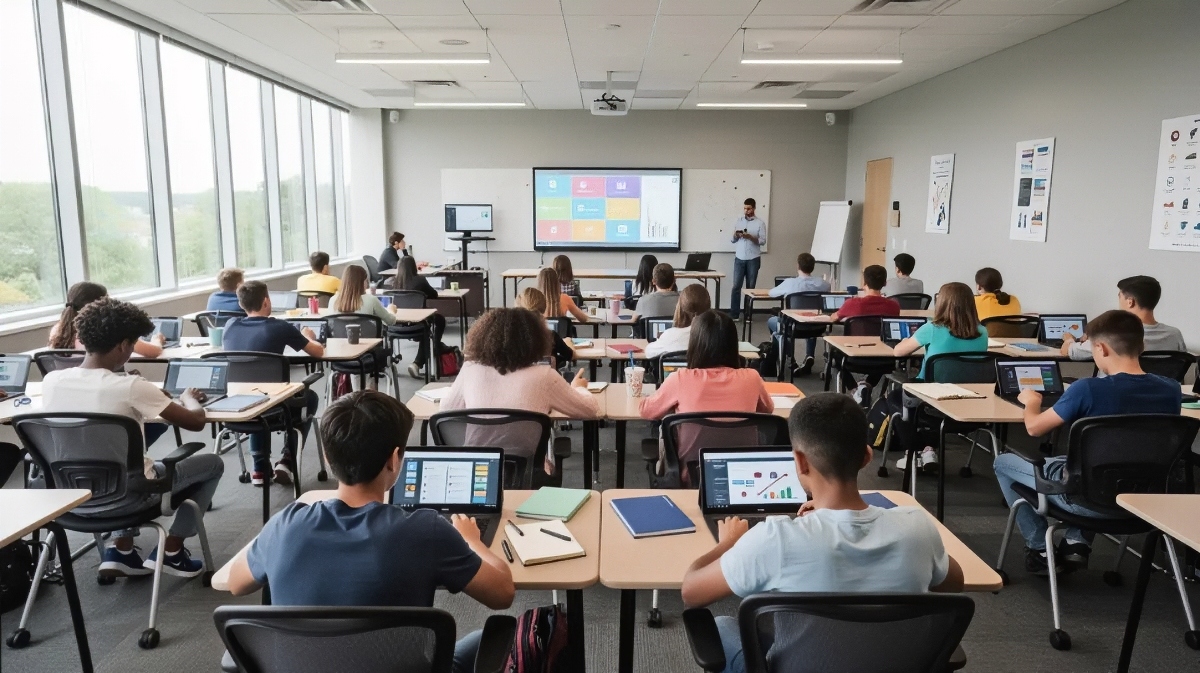
Education leaders face a narrowing window for technology decisions. Over the next five years, custom software could help schools and universities connect fragmented systems, support educators, and tailor learning experiences to student needs. Yet new platforms and artificial intelligence are not guaranteed to improve learning outcomes. Their value depends on thoughtful design, reliable data, accessible interfaces, and sustained investment.
This article examines where custom education software is already delivering practical benefits, which developments remain uncertain, and how organizations can prepare their people, systems, and budgets for responsible implementation.
Why Education Leaders Need to Plan Now
U.S. K–12 districts widely use learning management systems, and many have begun adopting AI enabled tools. Students commonly have access to digital devices, while remote learning now serves mainly as a supplement to classroom instruction. Educational technology is moving toward integrated, intelligent systems.
The infrastructure is in place. The question now is whether it delivers learning outcomes. Here is why the next five years will force decisions:
- Pandemic era funding for connectivity and devices is expiring, so districts need tools with measurable returns.
- Personalization and flexibility depend on deliberate investment.
- State rules on school AI, student data, and algorithmic fairness are expanding.
- Evolving industries will make continuous learning increasingly important.
Custom software is built or adapted for an institution’s workflows, teaching goals, and compliance needs. Unlike off the shelf products such as Canvas or Google Classroom, it offers more control over data, user roles, and integrations. Development costs are higher upfront, and ongoing maintenance remains essential.
From Generic Tools to Custom Learning Platforms
The future of education technology depends less on how many tools a district purchases and more on whether those tools connect, talk to each other, and serve actual instructional goals.
A district can add custom assessment and attendance modules to its learning management system when standard features fall short. A pilot might combine hybrid attendance tracking with early warning analytics while keeping the existing LMS. Institutions can explore custom software solutions to support those goals. “The goal is to fit the technology to instructional practice, not force educators to change effective methods to suit the software,” says a SoftDoes software development expert.
Modern custom education platforms are not a standalone LMS. They function as a hub connected to other systems through open standards and APIs:
- They connect SIS, content, assessment, and state reporting systems.
- AI platforms can map tailored curricula for individual students.
- Digital platforms support learners across locations and learning settings.
- Purpose built systems can enable adaptive, immersive learning.
AI, Adaptive Learning, and the Limits of Automation
Artificial intelligence is evolving into sophisticated adaptive learning agents. Here is what machine learning does in production today, and where claims outrun evidence.
Proven capabilities already in classrooms:
- Diagnostic assessments identify students’ skill mastery before instruction.
- Adaptive tools increase difficulty after success and review skills after errors.
- AI tutors can help students outside classroom hours.
- AI platforms adapt content and learning paths to student needs.
- Platforms tailor content across subjects such as reading and math.
- Learning analytics flag students who need support or may disengage.
Capabilities that remain speculative:

- Fully autonomous AI tutors that manage learning across all subjects and declare mastery without teacher oversight.
- Generative AI that writes entire curricula with consistent quality and standards alignment.
- Automated assessment of open ended, creative student work with human level reliability.
As artificial intelligence reshapes classrooms, educators face a growing pressure to articulate why true understanding matters, especially as AI in education forces schools to re-evaluate the deeper purpose of learning. Known risks include biased data, opaque recommendations, and algorithms that prioritize measurable skills over critical thinking.
Data Interoperability: The Hidden Foundation of Effective EdTech
Successful custom solutions treat learning data interoperability as a first class feature, not an afterthought. Clean, normalized data across tools is the prerequisite for trustworthy AI driven insights, personalized learning paths, and accurate state reporting.
Consider a district where attendance, engagement, assessments, and grades sit in separate systems. Educators manually transfer data, delaying reports and increasing errors. Data interoperability lets systems exchange and integrate information, reducing silos and supporting more agile decisions. APIs enable real time sharing. Connected, consistent data is also essential for reliable AI and machine learning insights.
 Building Accessible and Inclusive Interfaces
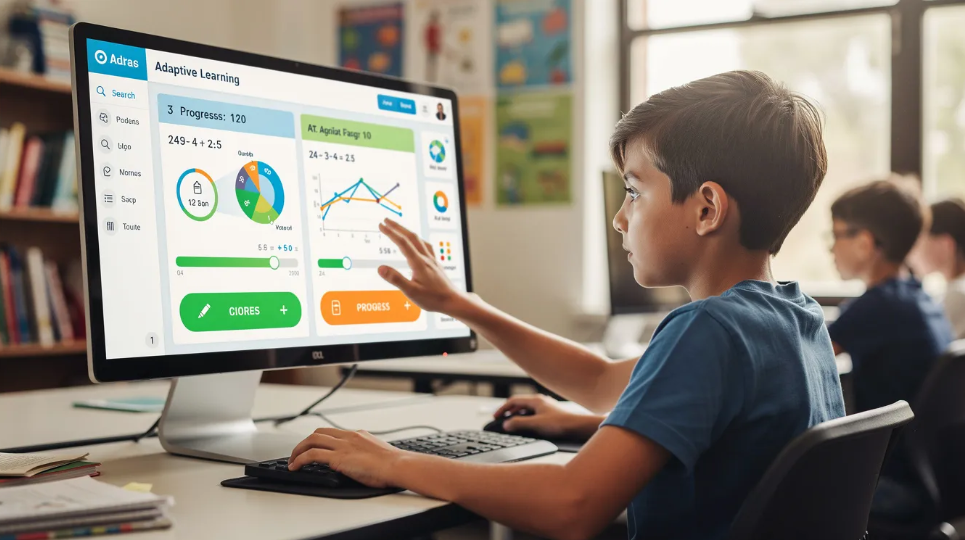
Any platform designed for accessible digital learning must view equity as a fundamental requirement rather than an optional add-on. Here is what the next five years demand.
- Meet WCAG AA standards with keyboard and screen reader support.
- Provide captions, transcripts, and accessible learning materials.
- Offer accessible alternatives to augmented and virtual reality.
- Support audio, multiple languages, and low bandwidth access.
- Use UNICEF’s GPE funded portal for accessible tools and textbooks.
- Use low cost hardware adaptations for learners with disabilities.
- Test accessibility regularly with students and educators.
As Mashable reports, digital equity remains key as schools rapidly adopt new educational technologies.
What It Really Takes to Implement Custom Education Software
Custom education software projects often fail when institutions overlook nontechnical requirements. Education leaders should plan for:
- Clear ownership: Appoint a senior leader to oversee the project and allocate staff time.
- Change management: Include teacher training and professional development.
- Academic timing: Schedule launches around semesters to avoid disruption.
- STEM planning: Budget for robotics, automation, hands on labs, and related curriculum.
Budget for discovery, accessible design, development, integrations, cloud infrastructure, security, and ongoing support. Separate one time costs, such as initial design and development, from recurring expenses, including hosting, staffing, and licenses. Plan for continuous improvement after launch.
How to Choose the Right Custom Software Partner
Vendor choice is often the single factor that determines whether custom software delivers value. Here is how to evaluate partners.
Assess relevant case studies and experience
A healthcare portal may demonstrate strong engineering, but not familiarity with accreditation workflows or FERPA. Ask for references from education institutions of similar size and complexity.
Evaluate tech stack alignment
Confirm the partner’s cloud experience, data storage and encryption practices, and support for education standards such as OneRoster, LTI, CASE, and Ed-Fi. Verify identity protocols, including OAuth2 and SAML.
Establish communication protocols
Define a product owner role on the institution side. Require regular demos, a shared backlog, and clear escalation paths. The team on both sides should connect frequently, not just at milestone reviews.
Demand transparent pricing and delivery processes
Ask how change requests affect scope and cost, and review quality assurance practices. Agree on post launch service level agreements for support, issue resolution, and maintenance windows that fit the academic calendar.
Building the Next Chapter of Learning
Custom software is not a guaranteed solution. It is a tool that, when aligned with pedagogy, realistic budgets, and institutional commitment, gives education leaders the flexibility to build what their students and educators actually need. Start with a data audit. Build your team. Pilot before you scale.