



































































Most people take hundreds of photos every month but never share them because they do not look quite right. You might have a great shot of your dog that is ruined by a messy background or a perfect selfie with bad lighting. Traditional editing software is often too expensive and takes a long time to learn. This is why many people are switching to automated tools that do the work for them.
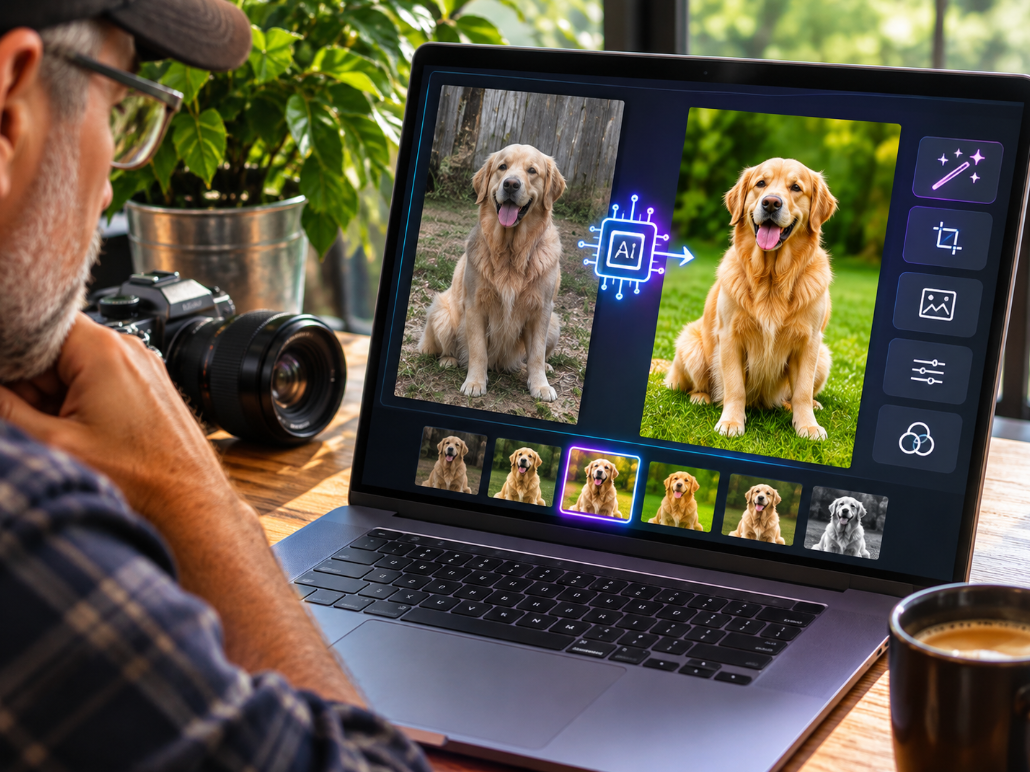
Using an AI photo editor online can save you hours of manual clicking and dragging. These tools use smart technology to look at your image and understand what needs to be fixed. You do not need to know about layers or color curves to get a professional result. You simply upload your file and let the software handle the rest.
If you want to change colors or swap backgrounds quickly, an AI image editor online is your best bet for daily tasks. These platforms run in your web browser, so you do not have to worry about your computer slowing down. They are built for speed and ease of use, making them perfect for social media users and small business owners.
1. EZImage
EZImage is built for people who want results in seconds rather than minutes. It focuses on the most common problems people face, such as blurry shots or distracting objects in the background. The interface is clean and does not overwhelm you with too many buttons. You can find what you need right away without looking through a manual.
This tool is particularly good at upscaling images that look grainy. If you have an old photo that is too small to print, the software can add pixels to make it look sharp again. It also has a one-click enhancer that balances the light and dark areas of your picture automatically.
Key Features
The platform offers a powerful background remover that works on complex edges like hair. It also includes an object removal tool that lets you paint over things you want to disappear. The auto-color correction feature helps fix photos taken in bad indoor lighting.
Pros and Cons
Pros include the fact that you do not need to create an account to try basic features. The processing speed is very fast even on slower internet connections. On the downside, it lacks some of the advanced artistic filters you might find in more creative apps.
Best For
This tool is best for social media managers who need to clean up product photos quickly. It is also great for families who want to fix their vacation photos before printing them.
2. ImageEditorAI
ImageEditorAI takes a more creative approach to editing by using generative technology. This means it can actually create new parts of an image based on what you tell it to do. If you have a photo of a park but want it to look like it is snowing, this tool can make that happen. It is more than just a repair tool, it is a creative assistant.
The software is very good at understanding natural language prompts. You can tell the editor to change a shirt color or add a hat to a person, and it will blend the new item in naturally. This level of control used to require hours of work in expensive desktop programs.
Key Features
The standout feature is the generative fill which allows you to expand the borders of a photo. It also has a style transfer tool that can make your photo look like a painting or a sketch. The portrait retouching tool is also very effective at smoothing skin without making it look fake.
Pros and Cons
The main benefit is the high level of creativity you can achieve with very little effort. The results look very realistic and blend well with the original pixels. However, the more complex generative features can sometimes take a few moments to process.
Best For
This tool is best for content creators who want to make unique images for blogs or websites. It is also perfect for people who want to experiment with different looks for their personal photos.
3. Canva
Canva is a household name for design, but its photo editing tools have become much smarter recently. They have integrated several automated features that help you edit photos while you are building a graphic. This makes it a great all-in-one stop for anyone making posters, flyers, or social posts.
The Magic Edit tool is one of their most popular additions. It allows you to brush over an area and describe what you want to change. Because Canva is a design platform, you can easily move your edited photo into a template once you are finished.
Key Features
Canva offers a Magic Grab tool that lets you pick up a person or object in a photo and move them around as if they were a separate sticker. It also has a background remover that is very reliable for marketing materials. The app includes a large library of filters that you can adjust with a simple slider.

Pros and Cons
The biggest pro is the integration with thousands of design templates and fonts. It is very easy to go from a raw photo to a finished advertisement. The con is that many of the best AI features are locked behind a paid subscription.
Best For
Canva is best for small business owners who need to create marketing assets. It is also a top choice for students making presentations.
4. Pixlr
Pixlr has been around for a long time, but it has stayed relevant by adding modern smart tools. It offers a more traditional editing experience that feels a bit like a simplified version of professional software. You get the benefit of layers and masks, but with AI buttons that do the hard work for you.
The platform is split into different versions depending on your skill level. Pixlr X is for quick edits, while Pixlr E is for more detailed work. Both versions now include smart tools that can identify the main subject of your photo instantly.
Key Features
Pixlr includes a generative expand feature that helps you change the aspect ratio of a photo without cropping anything out. It also has a smart cutout tool that identifies people, clothes, and sky automatically. The AI bokeh effect is great for adding a professional blur to the background of portraits.
Pros and Cons
A major pro is that it works very well on mobile browsers as well as desktops. It gives you more manual control than some of the other tools on this list. A downside is that the free version often shows a lot of ads which can be distracting.
Best For
This tool is best for people who have a little bit of editing experience and want more control over the final look. It is a good middle ground between simple and professional.
5. Adobe Express
Adobe Express is the web-based version of the famous creative suite. It uses the same technology found in professional tools but makes it much easier to use. You get access to the Firefly engine, which is known for producing high-quality and safe images for commercial use.
The interface is very modern and focuses on quick actions. You can find buttons for removing backgrounds, resizing for specific platforms, and generating text effects all in one place. It feels very polished and stable compared to some newer startups.
Key Features
The text-to-image generator is one of the best in the industry. It also has a very strong set of portrait tools that can fix red-eye and brighten smiles automatically. The platform allows you to schedule your social media posts directly after you finish editing.
Pros and Cons
The main pro is the quality of the AI, which rarely makes mistakes with edges or textures. You also get access to a massive library of Adobe Stock photos. The con is that the interface can feel a bit heavy and might take a moment to load on older computers.
Best For
Adobe Express is best for professional freelancers who need to maintain a high standard of quality. It is also great for anyone who already uses other Adobe products.
Final Recommendation
Choosing the right tool depends on what you plan to do with your photos. If you are in a rush and just want to fix a few basic issues, EZImage is the most straightforward option. It removes the clutter and lets you focus on getting the job done.
For those who want to be more creative and actually change what is in the photo, ImageEditorAI provides the most interesting features. It allows you to turn a simple snapshot into something much more artistic.
If you are working on a project that involves text and layout, Canva or Adobe Express are the better choices. They provide the extra tools needed to turn a photo into a finished piece of media. No matter which one you choose, these AI tools make it possible for anyone to create beautiful images without needing a degree in graphic design.