















































































In the era of increasing interest in wellness, detoxification, and natural health support, activated charcoal has become a hype ingredient. Some influencers insist on adding it to their wellness routines; some marketers project its real efficiency in daily wellness rituals. Yet, where is the truth? That’s what you can learn from this article.
Why Activated Charcoal Keeps Appearing in Wellness Discussions
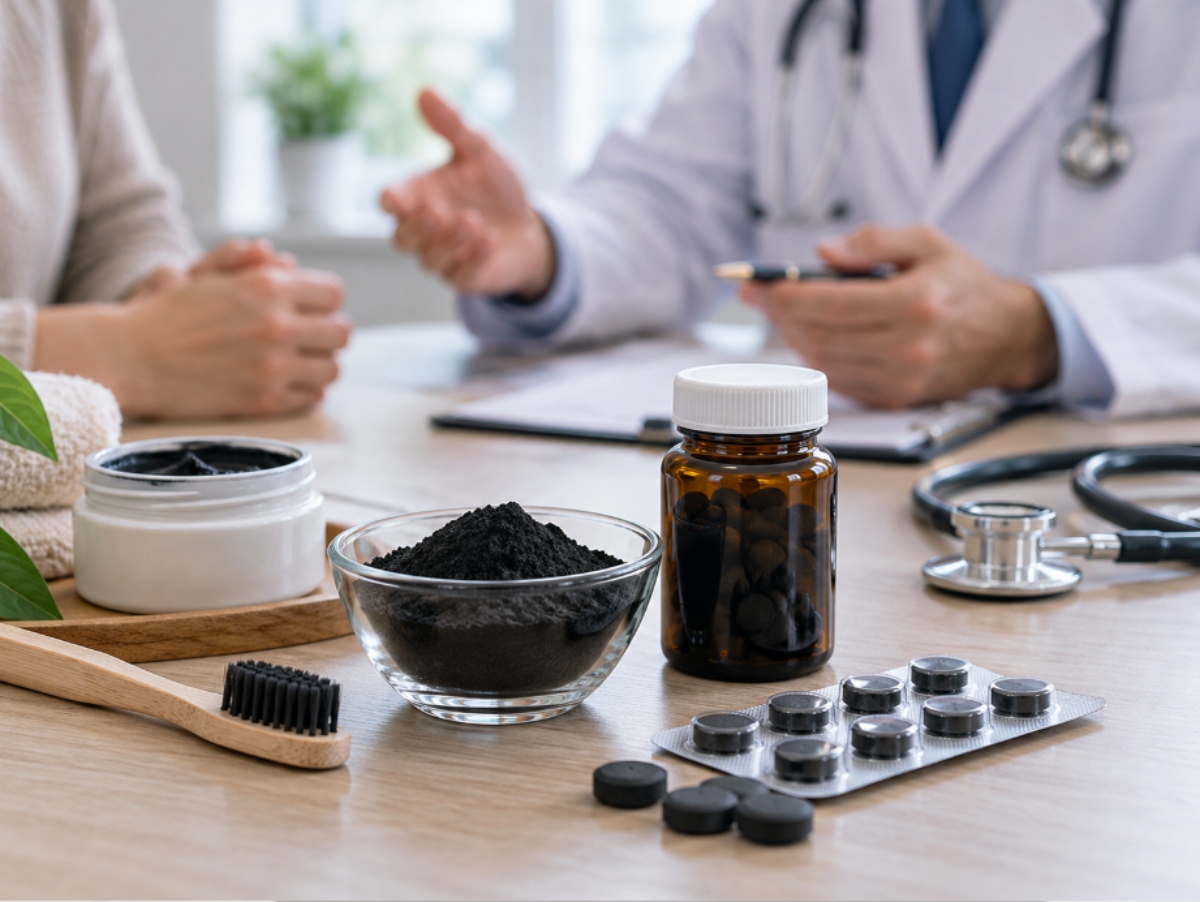
Activated charcoal’s popularity is grounded in the real healthcare effects of this compound and its natural origin. For people focused on using only natural-based products, it becomes a new super-product. At once, marketers contribute to its appearance in wellness discussions. Some cosmetics producers add it to their products, i.e., facial peeling products, toothpastes, or cleansers, insisting on its effectiveness as a teeth whitener or skin cleanser.
At once, activated charcoal is often positioned as a natural ‘detoxifier’ that helps remove toxins and waste. This refers to the real use of activated charcoal in medicine, but often its features for wellness are exaggerated, and mostly they have nothing in common with real cases of its use.
Understanding How Activated Charcoal Works
Activated charcoal is a product of thermal and chemical processing of natural wood coal, mineral coal, or turf. This black, flavorless powder has advanced filtering characteristics, which make it one of the most sought-after components for filtering systems. At once, activated charcoal has pronounced absorbing qualities that are used in healthcare. When it is activated under extremely high temperatures (up to 900 C/1652 F), it becomes extremely porous and binds various toxins, gases, and chemicals, neutralizing them. That’s why activated charcoal is often used in emergencies for fast detoxification in acute intoxication cases.
What a 250 mg Tablet Label Actually Tells You
However, home use of activated charcoal is limited. First of all, it refers to its concentration. When you have Activated Charcoal 250 mg, it means that a single tablet of the product contains 250 mg of the active component. At once, when you take it to reduce mild intoxication symptoms or digestive discomfort, you need to consult your doctor first to decide on a proper dosage, which depends on age, weight, and specific symptoms you want to reduce with its help.
Important Limitations Consumers Should Not Ignore
The most important thing to know about activated charcoal is that it is not a wellness supplement for daily use. Its intake for possible intoxication relief is limited to 1-3 days and only under the prescription of a specialist. That’s why it is not a supplement for so-called ‘detoxification and waste removal’.
Moreover, it has severe limitations:

- As a non-selective sorbent, activated charcoal binds both toxins and necessary components in your stomach. This means that when you take oral medications (such as antidepressants, oral contraceptives, or painkillers), their action will be neutralized by activated charcoal.
- When you take it regularly, it can bind minerals, vitamins, and necessary enzymes you take with food, leading to a nutritive deficit.
- It has several side effects, such as severe constipation and nausea.
- It is strictly prohibited for use in patients with acute digestive ulcers and hypersensitivity to it.
Lastly, activated charcoal can help only with mild intoxication, but for severe intoxication it is not effective, and the only solution in this case is to call emergency services.
Know the Facts Before Adding Another Supplement
As you can see, marketing of activated charcoal is a trap. It is not a new-gen wellness supplement for detoxification, but a product with limited use scope and severe time limitations. That’s why you can use it as an example of how important it is to check clinical evidence and use limitations in spite of believing in trendy wellness claims.