
















































































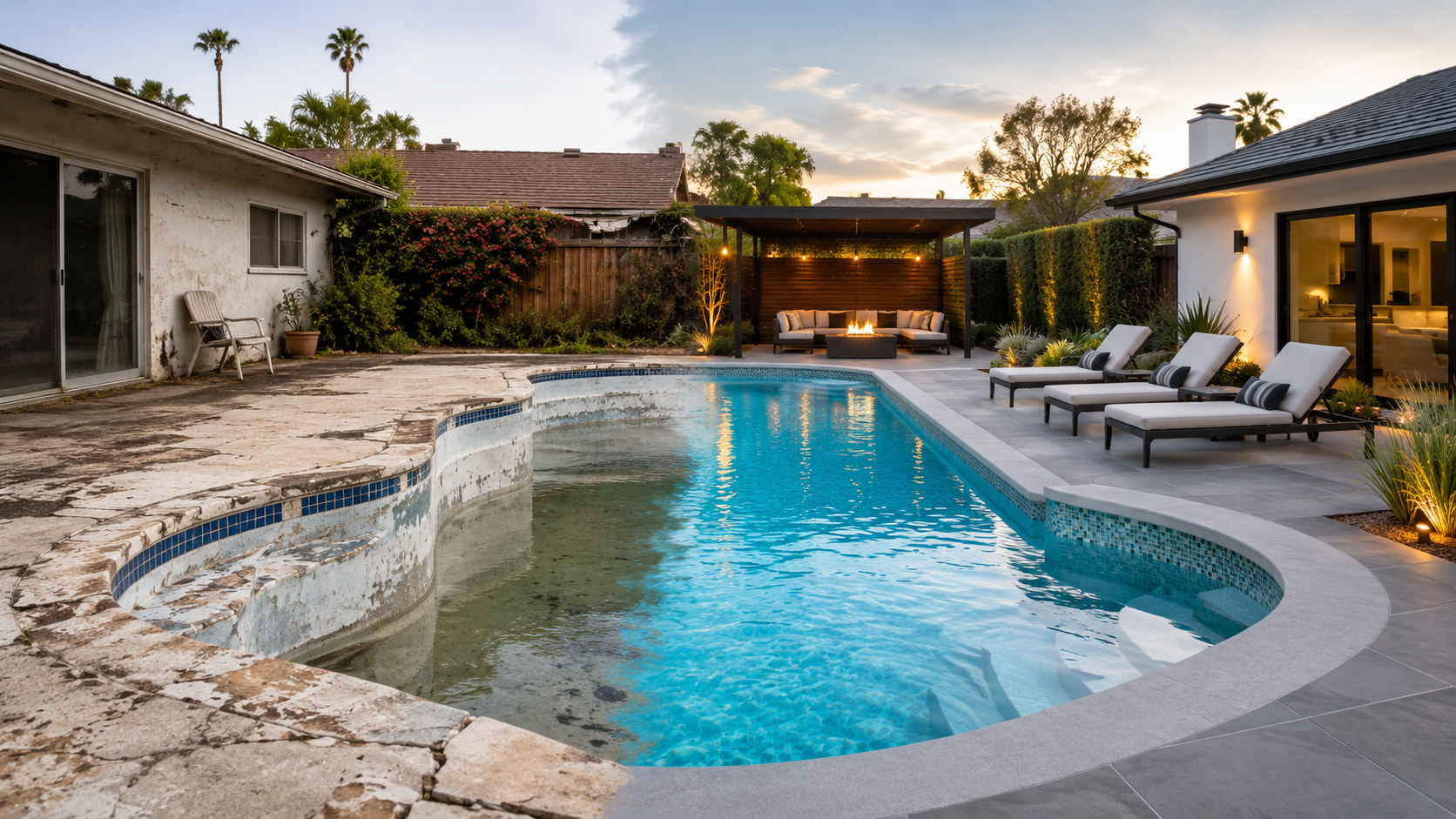
Owning a property with an older water feature often feels like a double-edged sword. While the idea of jumping into cool water on a hot July afternoon is highly appealing, staring at cracked tiles and peeling plaster quickly dampens that excitement. In fact, nearly sixty percent of new homeowners consider an aging backyard an immediate financial burden rather than a relaxing asset. Beyond simple aesthetics, fixing these underlying physical issues immediately boosts the overall market value of the property. Transforming that neglected area into a modern retreat requires a clear strategy, balancing structural necessities with visual upgrades.
Evaluating the surface materials carefully
Deciding to remodel swimming pool surfaces involves choosing between traditional white plaster and exposed aggregate finishes. Plaster remains a popular budget-friendly option, offering a classic, smooth look that many families recognize. However, it stains easily and usually needs replacing every seven to ten years. Conversely, pebble-based finishes cost significantly more upfront but naturally hide chemical stains and easily last over two decades. Landscape designer Marcus Thorne advises homeowners to prioritize durability over initial savings, noting that these rougher textures also provide essential slip resistance for wet feet along the shallow steps.
Upgrading to energy-efficient mechanical systems
Visual updates mean very little if the water circulation system relies on outdated, noisy technology. Older single-speed pumps consume massive amounts of electricity because they constantly run at full power, regardless of the actual filtration needed. Replacing them with variable-speed models drastically cuts monthly utility bills, as these intelligent systems adjust their flow rate based on real-time demands. The main drawback is the hefty initial purchase price, which can shock some buyers. Yet, the long-term energy savings usually cover that premium within the first two years of operation, making it a very logical upgrade.
Adapting designs to handle harsh local climates
Extreme weather conditions severely impact how outdoor materials hold up over the years. Intense summer sun combined with heavy humidity causes standard patio paints to blister and cheap coping tiles to crack under the pressure. When tackling swimming pool renovations Houston style, for instance, contractors must select heat-resistant stone and heavy-duty sealants that endure extreme, rapid temperature shifts. Selecting climate-appropriate materials might limit your decorative color choices slightly, but it guarantees that the surrounding deck remains safe and comfortable to walk on during scorching, humid afternoons.

Connecting the water with the surrounding patio
A beautiful, freshly plastered basin looks completely out of place if it sits next to a crumbling concrete deck. Bridging the gap between the water’s edge and your outdoor seating area creates a cohesive, resort-like atmosphere. Many property owners debate between pouring fresh concrete or applying a textured overlay to the existing slab. Tearing out old concrete creates a massive, expensive mess and often ruins the adjacent lawn. Applying a custom overlay directly onto the old surface avoids heavy demolition while allowing you to easily mimic the elegant appearance of natural flagstone or slate.
Reviving a tired exterior space transforms how you interact with your home daily. By thoughtfully selecting resilient materials and upgrading to modern, efficient equipment, you eliminate the constant stress of patching endless seasonal leaks. Ultimately, investing in a proper outdoor update ensures your yard becomes a reliable, beautiful gathering place for family and friends to enjoy for many years.