











































































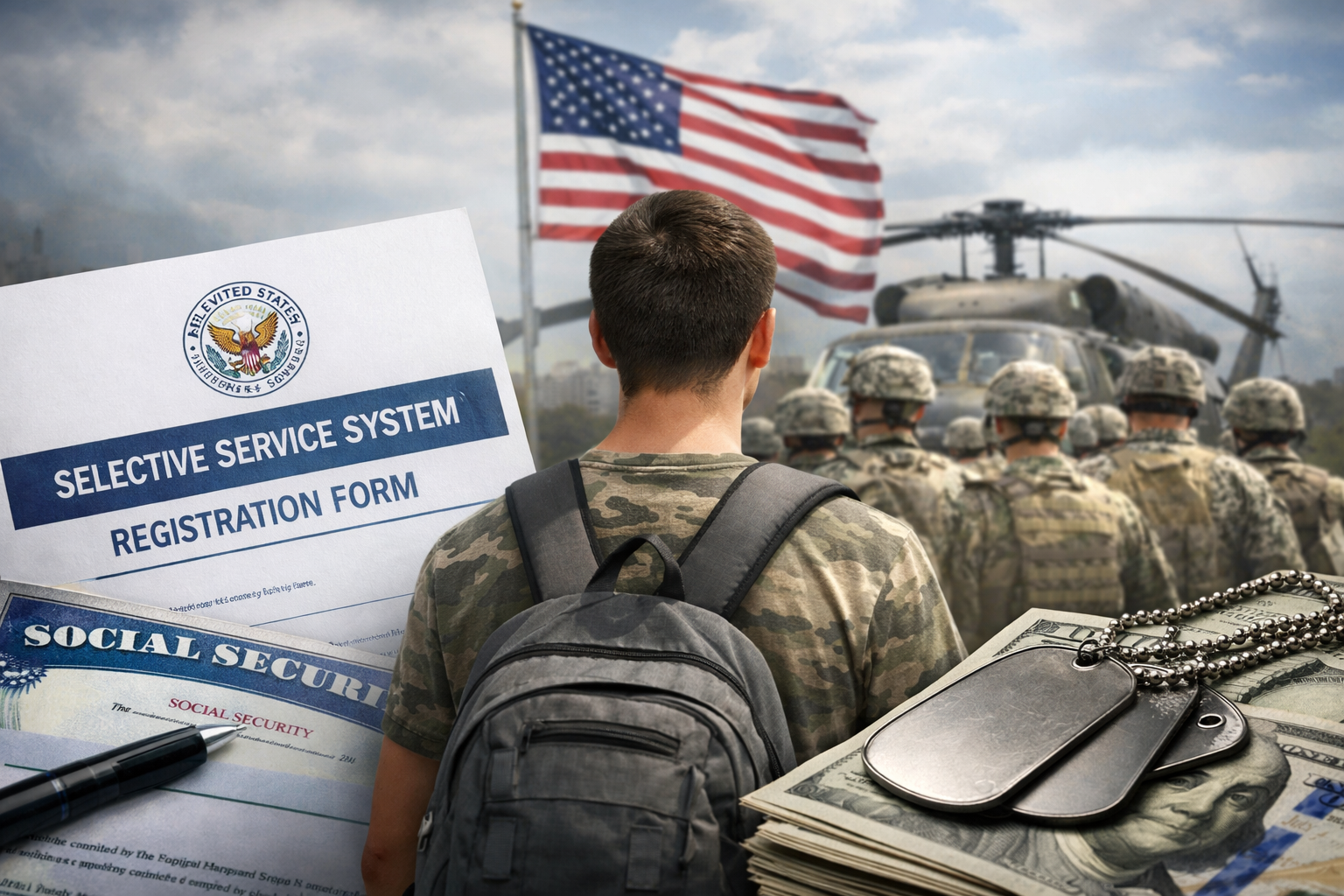
The federal government is moving toward automatically registering eligible young men for the Selective Service by December 2026, shifting that responsibility from individuals to the government through federal data matching. The Selective Service System says the change was mandated by the fiscal 2026 National Defense Authorization Act, and the federal regulatory dashboard shows the agency’s proposed implementing rule was received March 30 and remains pending review.
What is not happening, at least for now, is a return to the draft itself. The Selective Service says there is “no draft at present,” and its website says any actual conscription would require action by both Congress and the president. Reuters and PolitiFact have also reported that automatic registration does not reinstate the draft and does not mean automatic induction into the military.
Under current law, nearly all male U.S. citizens and many male immigrants are required to register at age 18, with late registration allowed until age 26. The Selective Service says failure to register is a felony punishable by up to $250,000 in fines and/or five years in prison, and can also jeopardize access to student aid, job training, government jobs and, for some immigrants, U.S. citizenship.
Women are still not included. The Selective Service says the law currently requires only men to register, and reporting from Stars and Stripes says repeated efforts to add women have been stripped before final passage.

Supporters say the change is administrative and overdue. Rep. Chrissy Houlahan said it “saves taxpayers significant money” and makes it easier for young men to comply with a law already on the books, while reducing the chance they unknowingly commit a felony. In remarks cited by Reason and Marine Corps Times, Houlahan also said the change would help make any future draft system “fair and equitable” and allow money now spent on outreach and advertising to be redirected toward readiness and mobilization.
Opponents argue the move still expands the machinery for a future draft. A coalition of anti-draft groups said the system acts as a “critical guard rail” issue because automating the rolls could make larger wars easier to plan, and warned the new law gives the Selective Service “unprecedented authority” to pull from federal databases in ways they say could create errors, privacy risks and misuse. The coalition called on Congress to repeal the Military Selective Service Act rather than automate registration.
The issue has drawn added public attention since March, when White House Press Secretary Karoline Leavitt said military options were not being taken “off of the table” for President Donald Trump during the Iran conflict, while also saying ground troops were not part of the current plan. PolitiFact later reported that Leavitt did not say a draft was under active consideration and noted that a draft remains unlikely under current conditions.
As of Thursday, April 9, the main development is procedural: automatic registration is moving through rulemaking, implementation is targeted for December 2026, and there is still no active U.S. military draft.
