
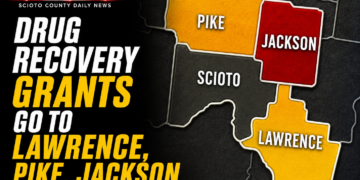









































































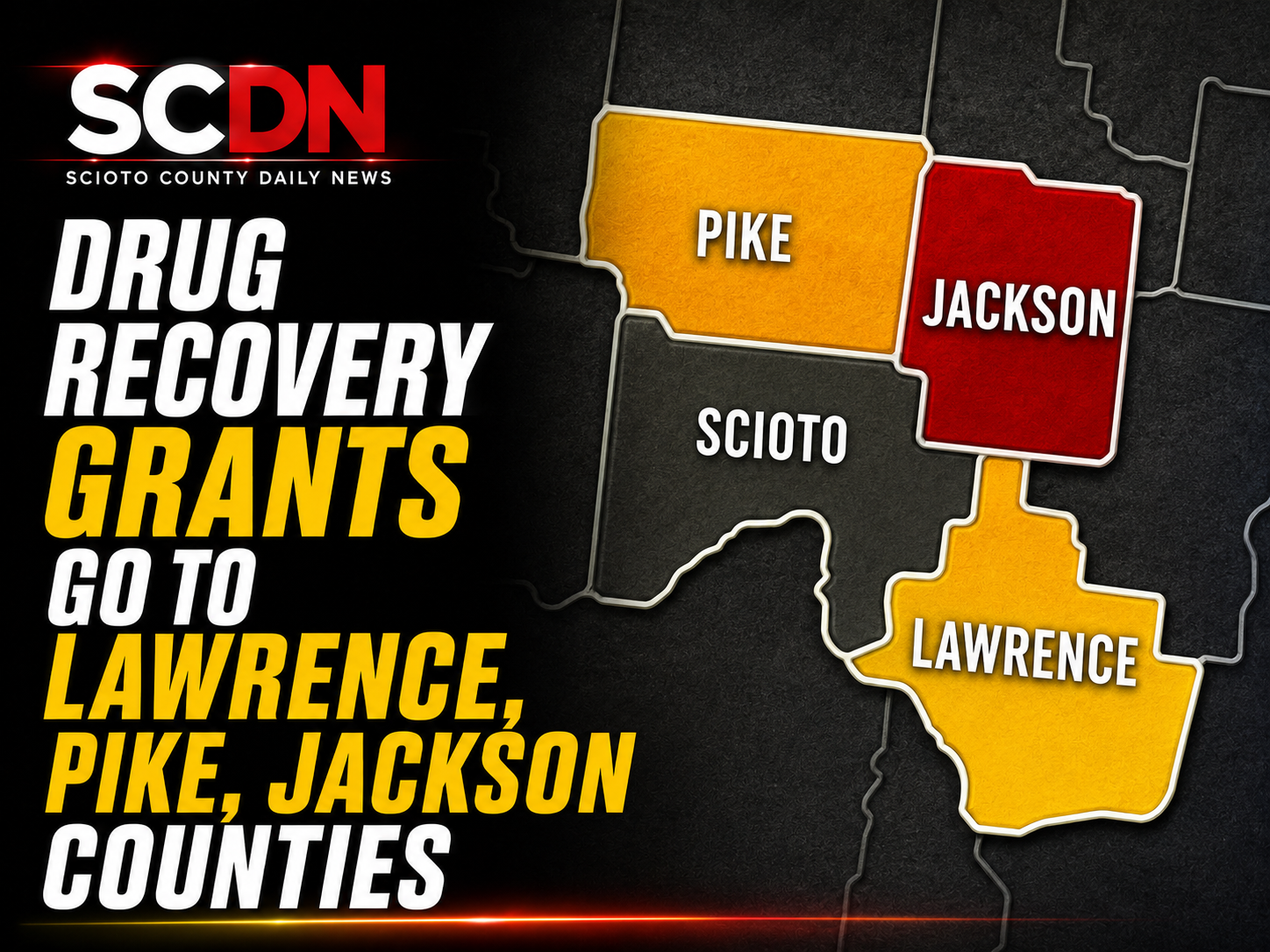
Ohio Attorney General Andy Wilson’s office is sending more than $2.5 million to local drug response programs across the state, including grants for nearby Lawrence, Pike, and Jackson counties.
The money goes through Ohio’s Drug Abuse Response Team, or DART, grant program.
These teams are designed to help overdose survivors and families at one of the most critical points: right after an overdose, when a person may be most likely to accept help.
Attorney General Wilson said the goal is to connect people with treatment and recovery support before they fall back into the same cycle.
“Overdose survivors need urgent, hands-on support to break the cycle of addiction,” Wilson said. “These grants empower local law enforcement and healthcare partners to meet people where they are in their most vulnerable moments and guide them toward lasting recovery.”

The grants help communities create or expand specialized outreach teams that bring together law enforcement and behavioral health providers.
Those teams can offer 24-hour help to overdose survivors and their families, including referrals to treatment, recovery services, and other support meant to reduce the risk of another overdose.
Locally, nearby counties received the following awards:
Lawrence County Prosecutor’s Office: $69,626
Jackson County Sheriff’s Office, PORT: $50,000
Pike County Probation Department: $46,865
The money covers DART activities for the fiscal year ending June 30, 2027.
The Attorney General’s Office said 38 law enforcement agencies and local governments across Ohio received grants this year. The awards ranged from $20,280 to $149,037.
The DART program began in 2017 and is administered by the Ohio Attorney General’s Office.
For the current fiscal year, the state used $1.5 million in funding from the Ohio General Assembly and added $1 million in settlement funds to increase the total grant pool.
For Southern Ohio, the grants reflect an ongoing shift in how communities respond to addiction.
Instead of only treating overdoses as emergency calls or criminal cases, DART-style programs try to use that moment as an opening to get people into treatment, connect them with recovery resources, and reduce repeat overdoses.
The idea is simple: when someone survives an overdose, the work is not over.
That may be the moment when the real intervention has to begin.